The Edible Demo Garden at IVC Organic Farm & Garden

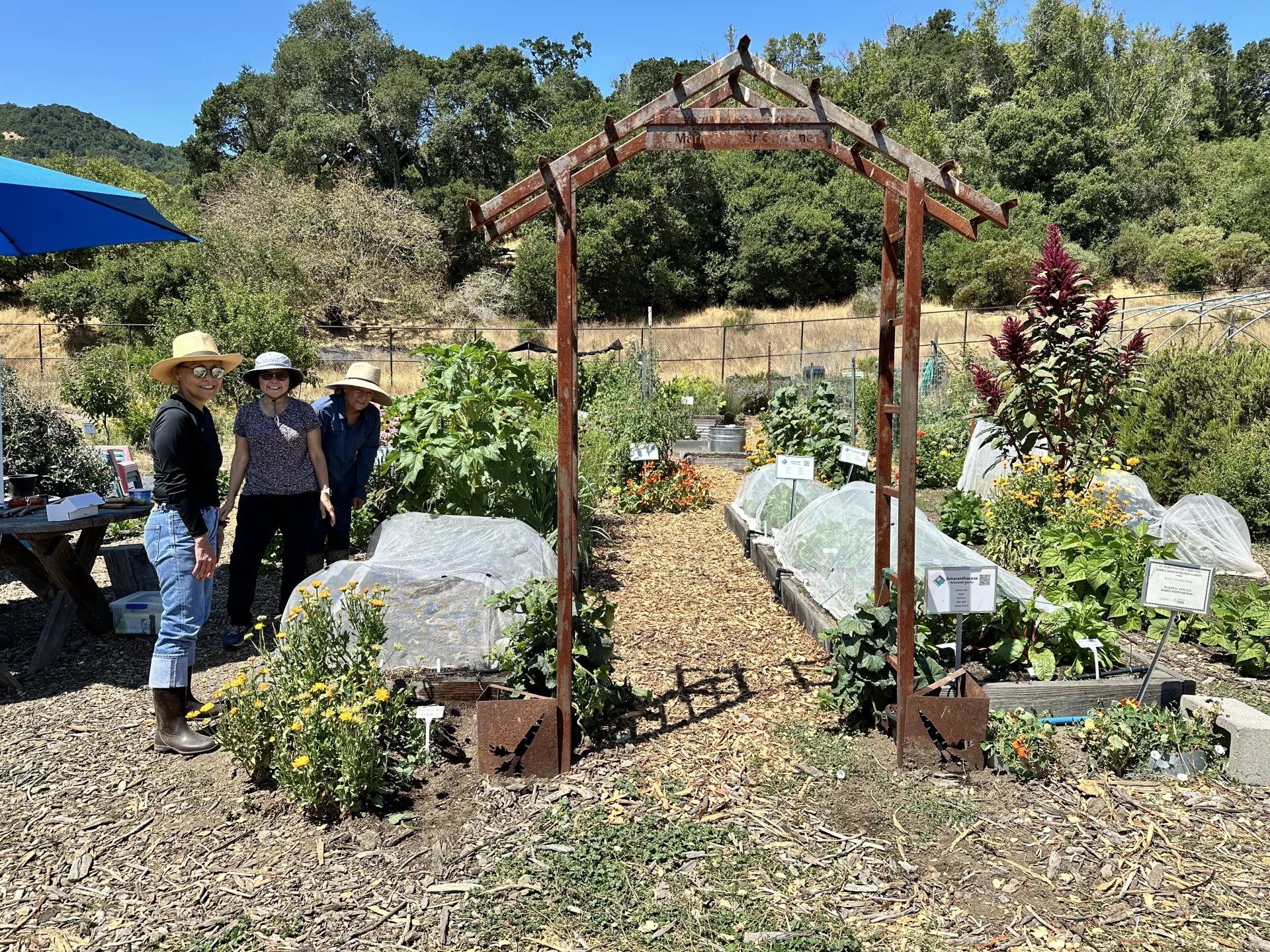
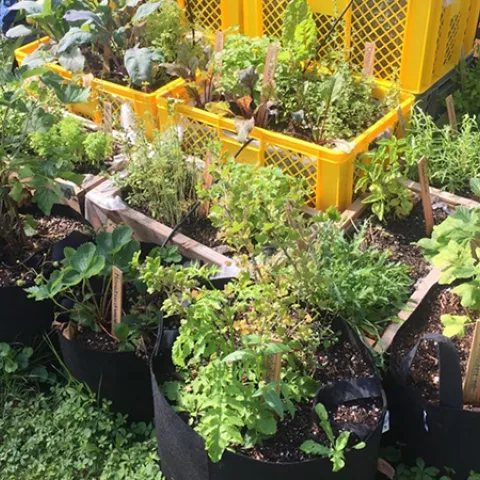
The 2100 sq ft Edible Demonstration Garden at Indian Valley Organic Farm and Garden (IVOFG) in Novato was designed and installed by UC Marin Master Gardeners in 2016 and is a hands-on teaching tool for UC MMG and the public. The garden showcases sustainable agricultural practices while growing over 100 varieties of vegetables, flowers, fruit and herbs using a variety of growing situations that are options for Marin gardeners.
News from the Edible Demo Garden
What you can do at the Edible Demo Garden

Visit the garden
Drop in any first Friday of the month between 9am-11am. We will give you a tour and answer any gardening questions.
Guided group tours
Private educational tours and training are available to groups. To schedule a private tour, contact us at EdibleDemoGarden@MarinMG.org
Buy our sustainably-grown, organic produce at the Farm Stand
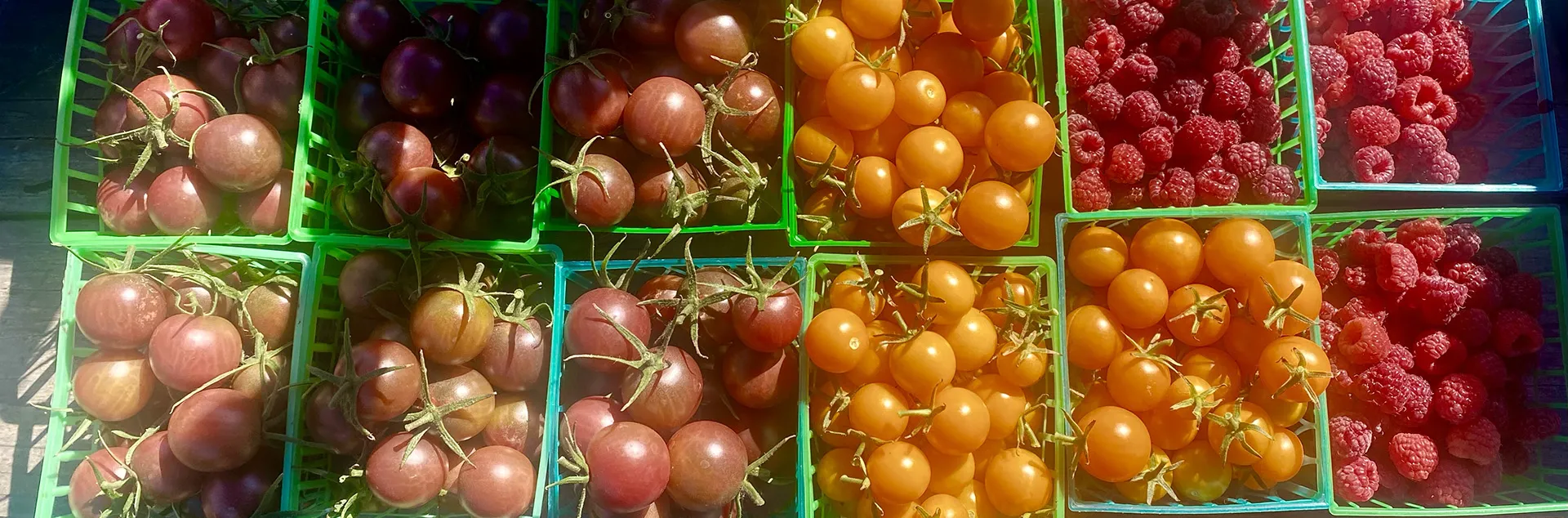
All produce grown in the garden meets the Marin Organic Certified Agriculture (MOCA) requirements and is sold at the IVOFG farm stand or included in the farm's CSA boxes. The farm stand is open Saturdays 10am - 1pm July through October.
Learn from our workshops:
• Offered periodically on Saturday mornings during the year
• Learn how to plant, maintain and harvest vegetables, identify and manage pests and problems, and maintain soil fertility.
• Check for upcoming workshops/events on our events calendar
Email us at the Edible Demo Garden for more information
HOW TO GET THERE
College of Marin Indian Valley Campus
1800 Ignacio Blvd
Novato CA 94949
> Directions to Indian Valley Organic Farm & Garden
OTHER UC MMG
DEMONSTRATION GARDENS
> Harvey's Garden at Blackie's Pasture, Tiburon
> Falkirk Demonstration Garden, San Rafael
LEARN HOW TO GROW EDIBLES IN STRAW BALES
> BACK TO ASK US
January 2023: Welcoming Worms


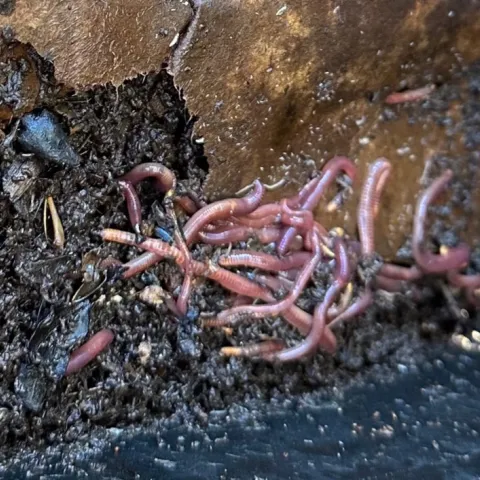
Not all the worms in the Edible Demo Garden hang out in the garden beds. There are captive worms living in a specially designed worm bin. These worms are turning cardboard, paper, and discarded produce into compost, or more specifically, vermicompost. The practice of raising worms to make compost is known as vermiculture. Because these worms are not free to roam the garden, they need a regular supply of food, sufficient moisture, and protection from temperature extremes. Worms can eat their own weight each day. When fed regularly, captive worms can survive year around in a cool, shady spot in Marin’s temperate coastal climate,
Are all earthworms the same?

Maintaining a worm friendly garden
Good garden practices are also good for earthworms. Regular additions of compost and mulch provide food and protection for plants and worms. Both thrive in soil that is moist but not soggy or too dry. Also, like plants, earthworms prefer fertile soil with a pH between 6.0 and 7.0 so the same organic amendments benefit both.

Why raise worms?
Historically, worms were not always appreciated. Charles Darwin is credited with bringing attention to their abilities and usefulness. Raising worms can be an interesting hobby with benefits. As pets, they are quiet and undemanding and when properly cared for, they don’t smell. They dispose of unwanted food scraps and produce compost that can improve the quality of edible crops. There is a seasonal sequence to their work and if they overpopulate the worm bin, they can be set free in the garden.
Watch below for instructions on how to make a worm bin, from the Marin Master Gardeners YouTube Channel!
December 2022: Horseradish Harvest


What kind of plant is horseradish?
Horseradish, Armoracia rusticana, is an herbaceous plant in the Brassicaceae or mustard family. It can be considered a root vegetable, although it is primarily used as a spice or condiment. It is native to southeastern Europe and has been cultivated for around 3,000 years for both its taste and its medicinal properties. It is rich in vitamin C, calcium, and other nutrients and has been shown to have anti-inflammatory, anti-bacterial, and even anti-cancer health benefits.
Horseradish is related to Wasabi japonica, the source of the wasabi paste usually eaten with sushi. Due to limitations in the cultivation and availability of the Japanese wasabi plant, western horseradish, with green coloring added, is often used as a substitute for true wasabi.

Horse radish plants are grown from root cuttings planted in late winter or early spring. Although classified as a perennial, horseradish plants are best treated as an annual because after two or three years the roots become too large and tough. The plants prefer a sunny location with well-amended soil and regular watering. Any fertilizer used should be high in potassium and phosphorus and low in nitrogen. Too much nitrogen encourages leafy growth and underdeveloped roots.
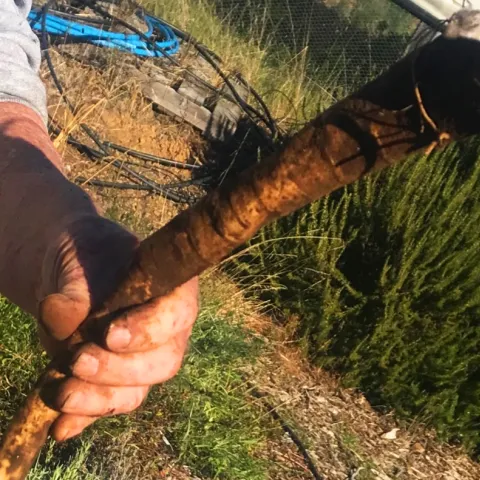
In the spring the horseradish plant produces large, weedy-looking green leaves. Underground, the white, fleshy roots develop. By late fall the roots should be around the size of a large carrot and ready to be harvested. The roots are fragile and need to be dug up carefully. Even in the fine textured soil in the Edible Garden raised beds, it took considerable care and effort to successfully extract the intact roots. While harvesting, some root cuttings were preserved and replanted for next year’s crop.
Horseradish is relatively easy to grow, and one plant can provide enough for the average family. However, it works best in a dedicated garden area because any root fragments left in the ground after harvest will produce a new plant.

The bite and sinus-clearing aroma of horseradish is produced by the volatile compounds that are released when the root cells are crushed. The roots are prepared by cleaning them, peeling them, and grating them finely. The grating is best done in a food processor with a little water added to aid in the grinding process. Ground up fresh horseradish is very potent, much more than chopped onions, so good ventilation and eye protection is strongly advised.
Once the root is finely ground, it’s time to add a tablespoon or two of vinegar to the mixture. Vinegar stops the reaction of the volatile compounds and controls the hotness of the ground horseradish. The grated horseradish can then be transferred to jars. It will keep in the refrigerator for at least a month and can be used in a variety of recipes. Most who have tried it agree that the taste of fresh horseradish is far superior to the supermarket options.
November 2022: Fall Garden Activity


As in the spring, conditioning the soil has high priority. When the warm season plants finished production, they were consigned to the compost bins where they will decompose and eventually be returned to the garden. To replace the nutrients used up by the summer crops, compost and amendments were added to the vacant beds in preparation for the new seeds and starts. The area known as the “back forty”, was cleared and prepared for planting field peas and vetch. These cover crops will help to improve the soil structure and increase fertility by adding organic matter. They will also prevent the overgrowth of weeds and reduce erosion.
Growing a Winter Garden

- Cool season crops grow best when air temperature is 55-75 degrees and soil temperature is about 40 degrees. When soil is cooler, plant growth slows.
- Day length and sun exposure also determine the rate of plant growth. Shorter days and less sun result in decreased photosynthesis and slower growth.
- Timing is important. Plants need some time to grow before the weather turns cold. Microclimates can make a difference in determining the best planting time. The sunnier and warmer the location, the later in the fall a winter garden can be planted.
- Frost is more damaging than cold weather alone. If frost is likely, it is best to choose tolerant varieties or plan to provide protection.
- Containers and raised beds can extend wintertime planting and allow for more plant choice options.
Find more information about planting times on this website.

- Leafy greens - arugula, spinach, Swiss chard, lettuces, and kale
- Root crops - carrots, beets, and radishes
- Brassicas - broccoli, cauliflower, and cabbage
- Legumes – peas
- Alliums – onions, garlic, and leeks
Information about the varieties of these cool season crops that grow well in Marin can be found here.
Varieties of cool season crops recently planted in the Edible Demo Garden include ‘Touchstone’ beets, ‘Bilko’ cabbage, ‘Tatsoi’ greens, and ‘Easter egg’ radishes.
August 2022: Managing Pests in the Organic Garden


Cooperation with nature is a guiding principle of organic gardening and this includes the management of unwanted bugs and critters. Organic gardeners steer clear of toxic pesticides and instead implement integrated pest management strategies starting with those least harmful to the environment. This is earth-friendly gardening in practice.
Integrated Pest Management (IPM)
IPM is based on the understanding that the most effective long-term way to manage pests is to use a combination of methods that minimize risks to people and the environment. These approaches fall into the following categories.
- Biological controls – Most of the creatures found in gardens are not pests and are benign or beneficial. Biological controls engage natural enemies in pest management. Good bugs reduce pest damage by eating the bad bugs. Using ladybugs to reduce aphids is only one of many examples of the action of natural enemies. Birds, lizards, and insects, such as praying mantis, are also beneficials but are not as specialized.

- Cultural controls – Good garden practices such as nurturing the soil, clearing out debris, properly managing irrigation, and removing infected plants can also deter pests. Rotating crops reduces the chance that pests will become established in a certain location. Companion plantings can provide protection by luring pests away from their favorite food sources.
- Mechanical and Physical Controls – Blocking pests from access to garden plants is the most effective way to prevent damage. In the Edible Garden, where gophers are abundant, plants are protected with underground wire mesh. The lost sunflowers were in an area of the garden without gopher protection. Row covers effectively keep out both birds and insects but are not useful for plants with flowers requiring pollination.
Frequent monitoring for signs of pests is key to reducing crop damage. Many times, a hard spray of water will wash off sucking insects such as aphids and their ant companions. Hand removal is always an option for larger nuisances such as cucumber beetles, slugs, and hornworms.
- Chemical controls – The use of selective, less toxic pesticides can be included among IPM strategies but only when other methods have been ineffective. Chemicals are rarely used to control pests in the Edible Garden. As part of the Indian Valley Organic Farm and Garden, the Edible Demo Garden must adhere to Marin Organic Certified Agriculture standards in terms of chemical use. Only approved non-synthetic pesticides can be used.
More information on controlling pests is available on this website at: http://marinmg.ucanr.edu/PROBLEMS/
Detailed information on IPM and links to specific pest problems can be found at: http://ipm.ucanr.edu/index.html
July 2022: Plant Partners


Companion Planting

Companion planting as a gardening technique has been practiced for generations, based on discoveries about how combining two or more plant species together can provide mutual advantages and enhance growth and production. The classic example is the Native American “three sisters” plantings combining corn, beans, and squash. Ideally, the corn provides structure to support the pole beans and the squash spreads out underneath the other plants. The best plant companions do more than just grow well side-by-side, they interact and form partnerships which benefit one or more of them.
How Plant Partnerships Work
Many old beliefs about which plants make good companions are based on folklore or trial and error rather than sound science. Fortunately, there are now numerous credible studies and controlled experiments that are helping to explain the ecosystems that enable edible garden plants to thrive. There are many ways in which one plant can influence another by either enhancing conditions for growth or increasing protection against threats.
- Enhancing conditions for growth
Certain plant partners can improve soil composition by breaking up heavy soil or assisting in nitrogen transfer. Companion plants can increase the number and diversity of pollinators leading to higher yields. A sturdy upright plant can serve as a living trellis to support a vine crop. Plant partners can also promote the health of beneficial soil-dwelling organisms and assist in the movement of nutrients within the soil.
- Increasing protection against threats
Probably the most common goal of companion planting is to manage pest insects. Studies have demonstrated that some plant partners are able to confuse pests and make it harder for them to find their preferred host plant on which to feed or lay eggs. The chemical and visual cues on which the insect pests rely are masked by the companion plant. Weed management without herbicides can be another plant partnership benefit. Some plants produce chemical compounds that inhibit weed growth and others act as living mulch. Finally, there is evidence that certain plant diseases can be suppressed through plant partnerships.
A Few Examples of Tested Plant Partners
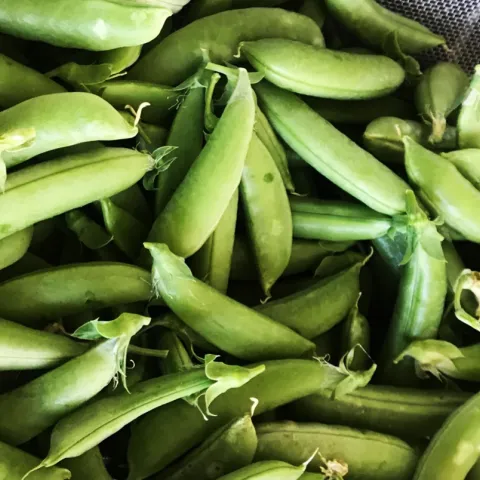
- Peas and Lettuce – Both are cool-season crops with different growth structures. The peas climb while the lettuce stays low. The peas benefit the lettuce by shading them in warmer weather and providing nitrogen via the mycorrhizal network.
- Pak Choi or Radish and Eggplant, Peppers, and Tomatoes – Pak choi and radish are favorites of flea beetles. Planting radish or pak choi a few weeks ahead of the other vegetable crop can serve to trap the flea beetles and reduce damage to other vegetables.
- Tomatoes and Basil – This combination can work in the garden as well as in the kitchen. The basil serves to mask the tomato plants from thrips, small sucking insects that can damage tomato plants and fruit.
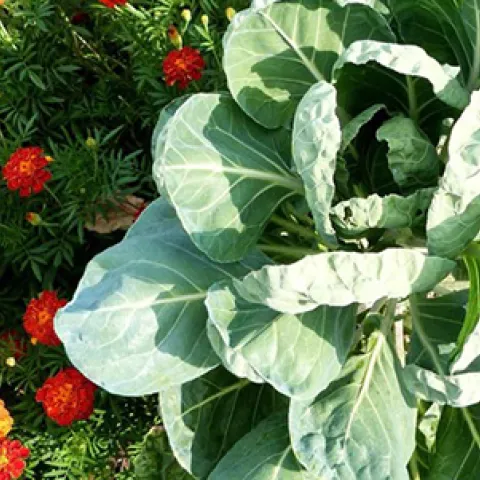
- Cosmos and Cabbage - Combining members of the aster family (which includes coreopsis, yarrow, zinnias, and marigolds) with cabbage, broccoli, cauliflower, kale, and other members of the cabbage family has been shown to reduce aphid numbers by attracting beneficial, aphid-eating insects.
Diversification is Key
Plant partnerships work because they support diversity in the garden and contribute to a healthy ecosystem. Not all plant partnerships work as planned in home gardens. There can be unwanted competition, the timing might be off, or the location might not be right. But even when there seems to be no measurable success, the hidden benefits of an environmentally friendly garden can be appreciated.
More information on growing edibles is available on this website at http://marinmg.ucanr.edu/EDIBLES/.
June 2022: Welcome Pollinators!


What’s so complicated about pollination?
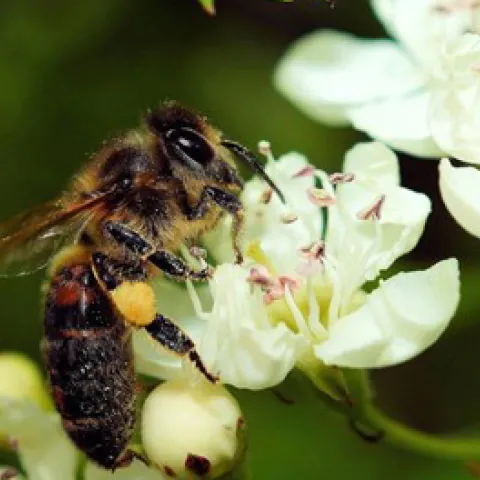
Pollination occurs when pollen from a stamen or male part of a flower is transferred to the pistil or female flower part. Germination begins when the pollen reaches the ovary of the flower and fruit development follows. Most flowers, however, need help getting the pollen onto the pistil and that’s where the pollinators come in. While we commonly think of bees and other insects as pollinators, pollen is also transferred by wind, water, birds, bats, and small mammals. Pollination is the unintended consequence when a bee or butterfly moves from flower to flower to gather pollen or sip nectar and drops off extra grains of pollen in the process.
Types of pollination
While there are many types of pollinators, there are only two types of pollination – self-pollination and cross-pollination.
- Self-Pollination A flower is considered self-pollinating if the whole process can occur within the same flower. Transfer of pollen from stamen to pistil only requires some air movement. Lettuce, peas, beans, tomatoes, eggplant, and peppers are self-pollinating.
- Cross-Pollination Cross-pollination requires the transfer of pollen from the stamen of one flower to the pistil in another flower. In some edibles, the flowers need to be on different plants. Spinach, beets, carrots, corn, onions, cabbage, and squash are cross-pollinating.
Pollination in fruit trees
Most fruit trees are cross-pollinating, and many require pollination between two or more trees, sometimes of a different variety. A lone apple tree, for example, may produce little or no fruit if there is no other apple variety close enough to provide bee or wind carried pollen.
Pollination in cucurbits
Plants in the Cucurbitaceae family, which includes cucumbers, squash, and melons, produce separate male and female flowers. Typically, the male flowers appear first followed in a week or so by the female flowers. The female flowers can be recognized by the swelling at the base of the flower that looks like a miniature fruit. Bees do the major work of transferring the pollen from the male to the female flower.
Pollination Problems
Pollination depends on the right environmental conditions for both plants and pollinators. Too much rain and cold, lack of sun, extreme heat, drought, and the presence of pesticides can all reduce the formation of healthy flowers and discourage pollinators. Pollination may not occur, or it may be incomplete, affecting the quality, amount, and appearance of the fruit. In cucurbits, the timing for the female flowers may be off and there may not be enough male flowers remaining to pollinate them.
Hand-pollination

When natural pollination is deficient, dedicated gardeners can become pollinators. Even in the Edible Demo Garden where there are plenty of flowers to attract bees and the plants are well cared for, the pollinators can sometimes use some human help. When flowers appear and no fruit begins to develop, it could be time to employ one of the following hand-pollinating methods.
- Shaking – In self-pollinating plants, simply shaking the plant may be enough to move the pollen grains within the flowers
- Brushing – A soft artist paintbrush can be used to transfer pollen within or among flowers, mimicking the action of bees.
- Swabbing – Similar to a paintbrush, a cotton swab can also be used to cross-pollinate.
- Using a battery-powered toothbrush – Crazy as it sounds, an electric toothbrush can provide both vibration and direct pollen transfer.
More information on growing edibles is available on this website at http://marinmg.ucanr.edu/EDIBLES/.
May 2022: No Digging Needed to Grow Potatoes


Choosing which potatoes to plant
Whether planting in soil or straw, it’s important to start with seed potatoes that are certified free of pests and diseases. Among the number of factors to consider when choosing which potato varieties to plant are time to maturity, garden size, and determinate versus indeterminate growth type. Determinate varieties mature earlier, require less space, and generally produce smaller tubers. Indeterminate varieties are slower growing, but the yield is higher and the potatoes larger. The four varieties selected for this year’s potato patch are all in the early maturing determinate category:
- Russet Norkotah – brown skinned and oblong, a good potato for baking

- Yukon Gold – gold skin and flesh, very popular for multiple uses
- Dark Red Norland – red skin and white flesh, tasty boiled and in salads
- Huckleberry Gold – purple skin and white flesh, a new low glycemic variety
The straw planting method
- Prepare the planting bed – Although the potatoes will be growing in straw, the soil underneath needs to be weed free and drain well. Adding compost can help with this. In the Edible Garden, the prepared soil was covered with a layer of straw and drip lines were laid on top.
- Plant the seed potatoes – Seed potatoes are planted whole, if small, or cut in pieces if larger. Each piece should have at least one eye, which is where the sprout will develop. If pieces are cut, it’s good to allow them to age a few days before planting to reduce the chance of decay. Space the seed potatoes 6-12 inches apart. In the Edible Garden the potatoes were nestled into the straw along the drip lines and then covered with more straw
- Keep the straw moist but not wet – The roots growing in the straw can dry out quickly if the moisture content in not maintained but too much moisture can cause rotting. When green leaves appear, add more layers of straw around them to keep the roots covered. Potato tubers exposed to sunlight will turn green and be inedible.
- Harvest after the vines have yellowed and begun to die – It’s hard not to peek, but potatoes need undisturbed time to mature. The appearance of blossoms indicates that growth is also occurring underneath the straw layers. Some gardeners pinch off the flowers to favor tuber growth. It’s at harvest time that the straw bed method can be fully appreciated. There’s no need to go digging into the soil to find potatoes, accidently damaging them in the process. The potatoes come out cleanly from the straw with little effort. Then, it’s “bon appetit”!
Find more tips for growing potatoes on our Edible Grow Sheet on potatoes.