Edible Demo Garden
The Edible Demo Garden at IVC Organic Farm & Garden
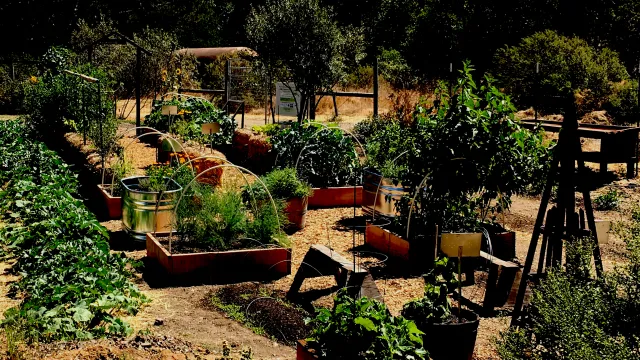
The 2100 sq ft Edible Demonstration Garden at Indian Valley Organic Farm and Garden (IVOFG) in Novato was designed and installed by UC Marin Master Gardeners in 2016 and is a hands-on teaching tool for UC MMG and the public. The garden showcases sustainable agricultural practices while growing over 100 varieties of vegetables, flowers, fruit and herbs using a variety of growing situations that are options for Marin gardeners.
News from the Edible Demo Garden
What you can do at the Edible Demo Garden
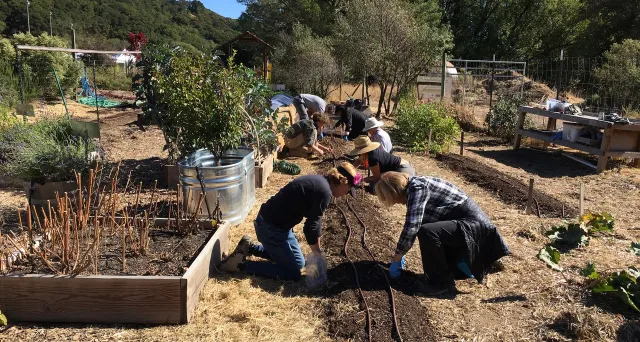
Visit the garden
Drop in any first Friday of the month between 9am-11am. We will give you a tour and answer any gardening questions.
Guided group tours
Private educational tours and training are available to groups. To schedule a private tour, contact us at EdibleDemoGarden@MarinMG.org
Buy our sustainably-grown, organic produce at the Farm Stand
All produce grown in the garden meets the Marin Organic Certified Agriculture (MOCA) requirements and is sold at the IVOFG farm stand or included in the farm's CSA boxes. The farm stand is open Saturdays 10am - 1pm July through October.
Learn from our workshops:
• Offered periodically on Saturday mornings during the year
• Learn how to plant, maintain and harvest vegetables, identify and manage pests and problems, and maintain soil fertility.
• Check for upcoming workshops/events on our events calendar
Email us at the Edible Demo Garden for more information
HOW TO GET THERE
College of Marin Indian Valley Campus
1800 Ignacio Blvd
Novato CA 94949
> Directions to Indian Valley Organic Farm & Garden
OTHER UC MMG
DEMONSTRATION GARDENS
> Harvey's Garden at Blackie's Pasture, Tiburon
> Falkirk Demonstration Garden, San Rafael
LEARN HOW TO GROW EDIBLES IN STRAW BALES
> BACK TO ASK US
News from the Edible Demo Garden
Seasonal Advice and Happenings at our Edible Demonstration Garden
Every month, the team at the Edible Demonstration Garden chronicles what's happening in the garden - planting, harvesting, problems and more. Check out our stories!
> BACK TO THE EDIBLE DEMO GARDEN


November 2024: Experimenting with Different Tomato Varieties
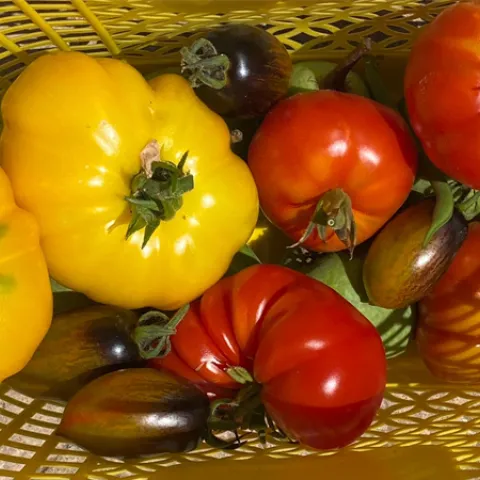
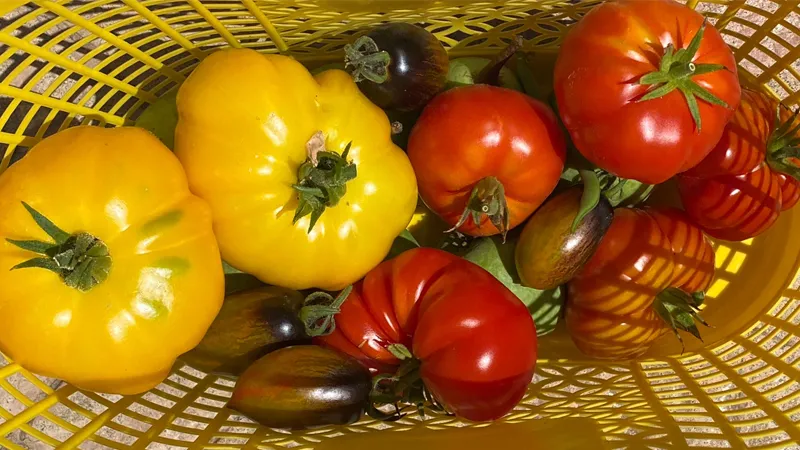
Tomatoes are among the top summer crops in the Edible Demo Garden and each year there are decisions to be made about which varieties to grow. Since there are reported to be over 10,000 varieties of tomatoes, it’s important to narrow down the selection considerably and plant only those varieties that grow well in Marin and are appealing to consumers. However, even within those broad parameters, many choices can be made. The Marin Master Gardeners typically offer sixteen varieties in their annual tomato plant sales. These are the varieties that have proven over the years to be the most popular with customers. Each year one or two new varieties may be offered to replace some that have not fared so well in terms of sales or customer reviews. Choices about new varieties are usually based on members’ recommendations.
The Tomato Experiment
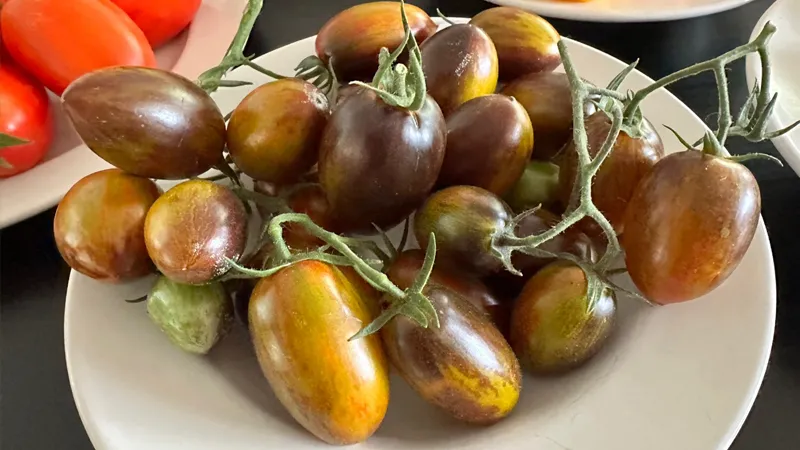
This spring the Edible Demo Garden and the Edibles Guild launched a collaborative experiment to determine which of seven tomato varieties not previously sold in the tomato market, would be most successful in Marin’s different growing conditions. The experiment involved adopting out 132 plants grown in the Indian Valley Organic Farm & Garden greenhouse to 37 Marin Master Gardeners willing to try growing them in their own gardens. The seven varieties were:
- Costoluto Genovese – a classic red Italian heirloom
- Bicolor Marvel Stripe – a marbled red and gold heirloom
- Moonglow – a bright orange heirloom
- Mortgage Lifter – a large meaty red heirloom
- Magic Bullet – an elongated cherry-sized open pollinated variety
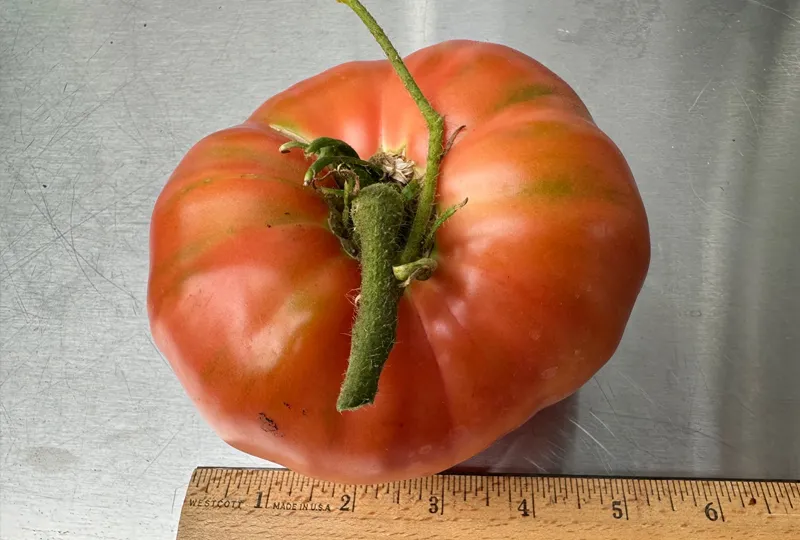
- Pink Berkeley Tie Dye – a wine-colored open pollinated variety with green stripes and pink flesh
- Amish paste – a small bright red heirloom best used for sauces
The tomato adopters agreed to submit data describing their experiences growing the trial tomatoes. They recorded the garden type, location, and microclimate, when the tomatoes were planted, how they were cared for, and when the first tomato was harvested. Then they subjectively rated the tomatoes on yield and taste. Finally, and most importantly, they answered the question – “would you grow this variety again?”.
Which varieties had the best results?
What matters most when choosing tomatoes to plant
One of the most important factors to consider when choosing a tomato variety is the microclimate in the growing location. Tomatoes need sunshine and warm soil. All the experimental tomatoes required temperatures above 65 degrees and some preferred 75 degrees. During a typical spring, in most areas of Marin, around May 1st is when the temperatures are best for planting tomatoes. Tomatoes planted before the air and soil are sufficiently warmed, will sit idly by until the conditions are right. Conversely, tomatoes don’t like extreme heat and will stop production during heat waves like those experienced in parts of Marin this summer.
Linked to microclimate are days to maturity. This is the average time it takes for the first ripe fruit to develop in ideal heat conditions. Magic Bullet, Pink Berkely Tie Dye, and Costoluto Genovese are considered mid-range, requiring 70 to 80 days to mature. The others are late maturers, needing more than 80 days to produce ripe fruit. Bicolor Marvel Stripe takes 95 days to mature. In cool areas of Marin, there may not be enough warm days for some late maturing tomato varieties to reach full production.
Click here for more advice on selecting and growing tomatoes.