
Seasonal Advice and Happenings at our Edible Demonstration Garden
Every month, the team at the Edible Demonstration Garden chronicles what's happening in the garden - planting, harvesting, problems and more. Check out our stories!
> BACK TO THE EDIBLE DEMO GARDEN


May 2025: Drip Irrigation Troubleshooting
When the winter rains end, it’s time for gardeners to focus on providing spring and summer edibles with the water they need to grow and produce. While hand watering may be the simplest way to adjust watering to the needs of individual plants, it’s not the most efficient means for getting the right amount of water to an entire garden.
Drip irrigation has proven to be the best option for home gardeners. It is particularly suitable for edible gardens because it delivers the water at the soil level and avoids water on the plant leaves which can lead to problems with mold and mildew.
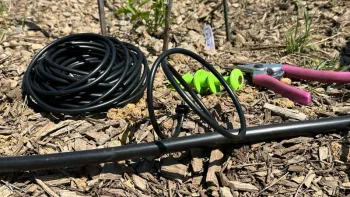
Drip irrigation is also waterwise, reducing loss by evaporation and runoff and maintaining a desirable balance of air and water in the soil through slow application of water to plant roots.
What can go wrong with drip irrigation?
Whether installed by professionals or as a do-it-yourself project, drip irrigation requires routine maintenance. It’s recommended that the lines be checked monthly when the system is operating. It is especially critical when the drip irrigation is first turned on in the spring. Here are some common problems to look for:
- Leaks. The dreaded geyser is a sure sign that there is a break in the line somewhere. It could be a dislodged emitter or a damaged line. Thirsty rodents like to chew on the tubing and lines can be unintentionally broken by shovels and spades.
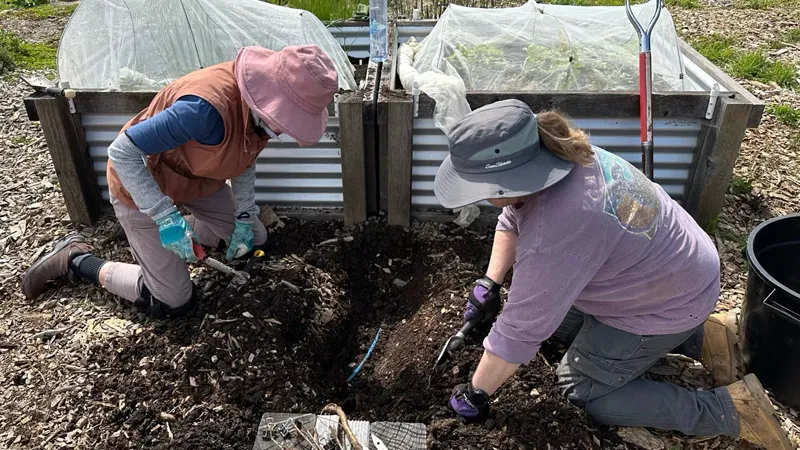
Finding a wet spot where there is no emitter can signal a problem in the supply line. If the line is buried, it will take some digging to find the leak. This was a recent problem in the Edible Demo Garden. The drip irrigation was installed some time ago and it was unclear which lines led to which bed. The search for this particular leak is still continuing.
- Blocked lines and emitters. Lines may get clogged, and emitters can be plugged by debris, mineral buildup, and algae. Pinched lines, especially the smaller feeder lines, can also be a problem. Periodically walking the circuit and checking flow from the emitters while the system is running is a good way to spot irrigation problems before plants start showing signs of distress.
- Low water pressure. Drip irrigation operates at 15-25 pounds per square inch (psi) which is much lower than sprinkler systems which can require up to 50 psi, and household systems running at 50-80 psi. A pressure regulator is needed to reduce the incoming household pressure to that for which the drip systems are designed. However, pressure in the lines can be lowered further by elevation gain, friction in the tubing, and long line lengths. It is recommended that 1/2” supply lines be limited to 200 feet in a single zone and the number of one gallon per hour emitters per line not exceed 200. If a drip emitter at the end of a line is not delivering sufficient water, it could be a low-pressure problem.
Fixing drip problems
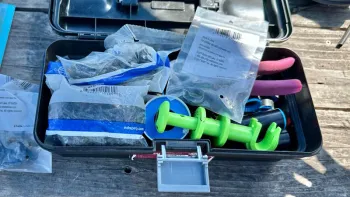
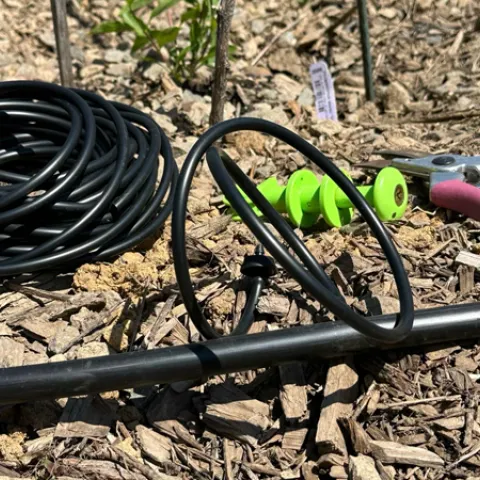
With the right supplies, many common irrigation problems can be easily fixed. An emergency drip repair kit should include spare flow emitters of different sizes, connectors (both straight and elbow), line plugs, end caps, and tubing. It’s also handy to have a tool for cutting tubing, a punch to make holes in 1/2” line, and metal staples for securing the lines. The same supplies are useful when drip lines need to be added for new plants.
Lines can be flushed to remove debris, and clogged emitters can be cleaned or replaced. Small holes in lines can be plugged. Larger damaged sections in lines can be removed and connectors used to join the undamaged sections.
A water pressure test gauge, available at hardware stores, is helpful in determining if the pressure in the drip system is in the right range. Low pressure problems due to overly long lengths of supply line or too many drip emitters might involve changing the drip line layout or adding another zone to the system.
Controlling drip irrigation
Drip systems require control valves to direct water into the system. These are generally automated with an AC or battery powered controller/timer that makes it easy to set irrigation frequency and duration. These devices range from simple timers to more complicated “smart” controllers. All these devices include the option to run the system manually, allowing gardeners to conduct their periodic system maintenance checks.
Click here for more information on irrigation systems.
April 2025: The Joys of Selecting and Planting Seeds
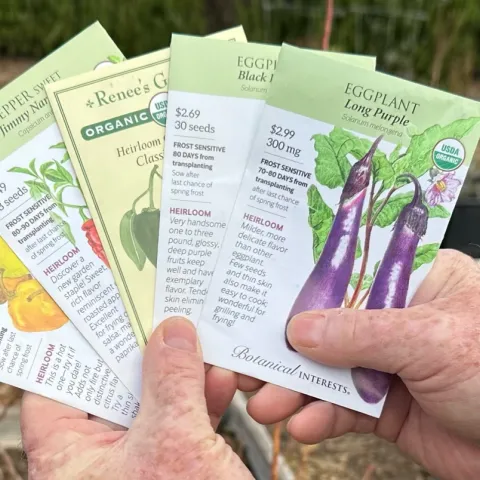
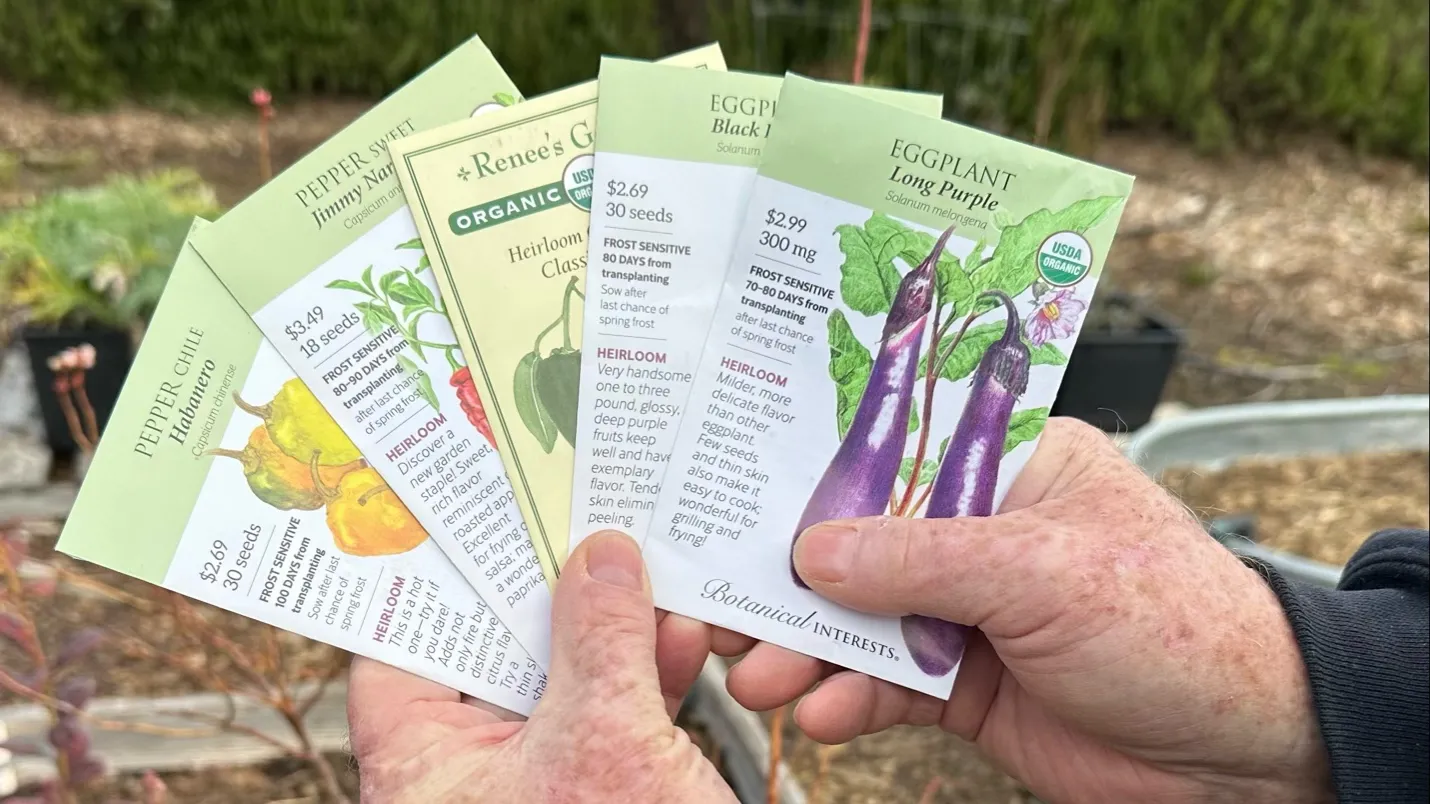
It’s hard to find a gardener who doesn’t love checking out new seed varieties and anticipating the abundant and tasty harvest they promise. The photos and descriptions are tantalizing and the names intriguing. Who wouldn’t be curious about a pumpkin variety called ‘Abominable’, a pepper named ‘Frodo’, or a tomato tagged ‘Dancing with Smurfs’? With so many seed varieties to select from, narrowing down the choices can be challenging. In January this year, a team of EDG volunteers had a lot of fun picking out varieties for our spring and summer crops.
How Seeds are Selected
Seed selection starts with a garden plan, taking into consideration the space available for each type of crop. Once decisions are made about which crops to plant and where to plant them, choosing the right varieties becomes the focus. The Demo Garden is the perfect place to try out some of those new and different seed options while continuing to plant those varieties that have proven to be reliable. Planting more than one variety of each crop makes it possible to directly compare them in terms of growth and productivity.
Time to maturity is important in determining which summer crop varieties to plant. The soil must be consistently warm (over 55 degrees) for the time specified in the variety description to produce a crop. The climate in the Indian Valley Organic Farm and Garden where the Edible Demo Garden is located provides a long enough growing time for most summer crops. However, varieties requiring more than 120 days to maturity may not achieve full production before the weather turns cool.
Seeds planted in the Edible Demo Garden must be organic certified. Organic seeds are from plants grown in compliance with federal standards which exclude the use of synthetic fertilizers, pesticides, and genetically modified technologies. Seed choices for the Demo Garden are often based on the descriptions provided by organic seed companies and it’s up to the volunteers to determine which varieties seem well suited for the garden conditions and promise the best taste.
Planting the Seeds
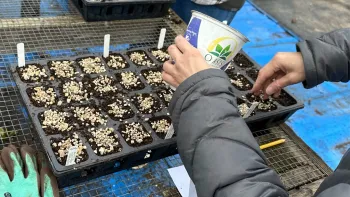
On February 27th, the new MMG training class got hand-on practice in seed starting. Seeds are planted in a starting soil mix in flats of cells with 2 or 3 seeds per cell. Supervised by EDG volunteers, the trainees planted 60 cells of cucumbers (‘Armenian’, ‘Crystal Apple’, ‘Jin Yang’ and ‘Early Fortune’) and 90 cells of sweet peppers (‘Pusztagold’ and ‘Bacskai Feher’), along with 30 cells of green onions and 72 cells of lettuce. The class will have the chance to take some of the cucumber and pepper starts home to plant in their own gardens where they can assess how well they grow in our different microclimates. The planted seeds are now germinating in the greenhouse.
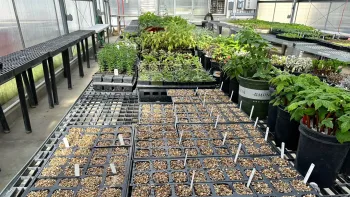
Starting plants in the greenhouse gives them an advantage and allows better timing for optimum crop production. They are not ready for transplanting outside until they have developed at least one set of true leaves. The first set of leaves to appear are embryonic leaves called cotyledons. They look different from the plant’s typical foliage. True leaves are the more recognizable leaves that develop above the cotyledons. The time required for seedlings to be ready for transplanting varies. Beans can be ready in 3 to 4 weeks while peppers can take more than 8 weeks.
New Varieties in the Demo Garden
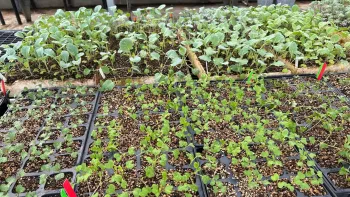
EDG volunteers look forward to growing the new seed varieties they have selected for the summer. The seeds have been ordered but not all have been planted. ‘Dancing with Smurfs’, an indigo-colored cherry tomato, along with ‘Altai Orange’ and ‘Woodstock’ are among the new tomato varieties. Two new melon varieties, ‘Sweet Freckles’ and ‘Farthest North Galia’ will be tried in the garden. The ‘Pusztagold’, and ‘Bacskai Feher’ peppers, now germinating in the greenhouse, are small, sweet Hungarian type peppers. Last summer’s pepper crop included an overabundance of hot peppers, so it’s sweet peppers in demand this year.
Starting with seeds is rewarding. There is the pleasure of choosing seeds from the many available varieties and the joy of nurturing them and watching them grow into tiny plants. It’s even better when the veggies and fruits turn out to be as yummy as the seed descriptions promise.
Click here for more information on planting from seeds.
February 2025: Choosing the Right Garden Tools
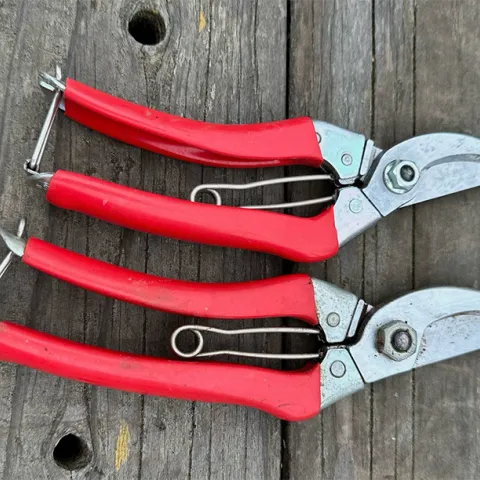
In January, the 2025 Marin Master Gardener training class was welcomed into the Edible Demonstration Garden for a discussion and demonstration on the use and care of garden tools. The right tools make the difference between gardening that is pleasurable and gardening that is a struggle. Your first experience with a garden tool might have been that pointed stick you used when digging in the dirt as a child. Now as a gardener, you are presented with an array of better tool choices, some essential for basic garden work and some designed for specific tasks. There are tools for pruning, tools for digging, tools for raking, and tools to make gardening easier. Here are some of the more popular tools in those categories.
Pruning Tools
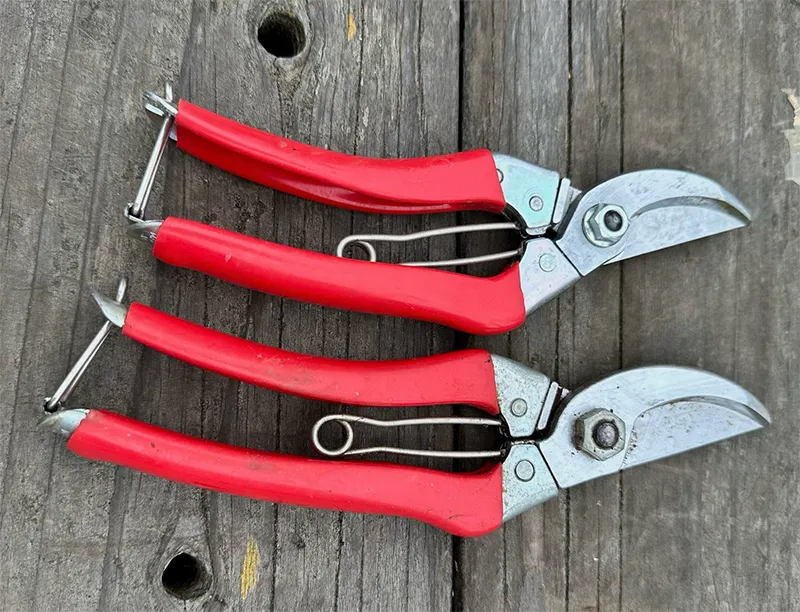
Hand pruners are the favorite tool for most home gardeners. They are the tools used most often for cutting and thinning small branches to maintain plant health and appearance. They are also used for cutting flowers and harvesting vegetables. By-pass pruners, which work like scissors, are best for making clean cuts on living plants. Anvil pruners crush branch tissue and are good for removing and cutting up dead branches.
- Pruning saws are used to remove branches larger than what hand pruners can remove. They can have a fixed or folding blade.
- Loppers are long-handled by-pass pruners that can help access higher and hard to reach branches. The long handles also provide leverage to enable pruning thicker branches.
Digging Tools
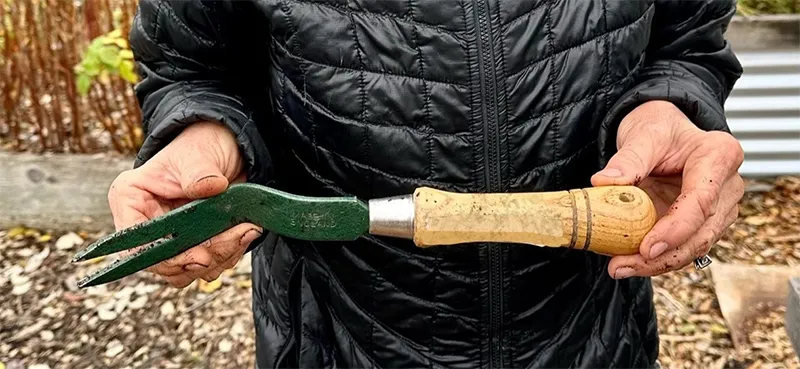
Trowels are essential for digging, planting, potting, and weeding. A trowel is a spade-shaped hand tool with a slightly scooped blade.
- Garden knives are a type of trowel with a sharp narrow blade and a pointed end. One blade edge is usually serrated. Hori-Hori garden knives are a Japanese design that has proven to be so useful for digging and weeding that the name is often applied to any type of garden knife.
- Shovels and spades are long-handled digging and soil lifting tools with the shape of blade and the length of the handle determining their particular uses.
Raking Tools
- Rakes are useful for cleaning up leaves, removing debris, and spreading out soil amendments like compost and mulch. Hand rakes are great for getting into small spaces. Rakes with flexible, fan-shaped tines work well for cleaning up lighter debris and are sometimes called leaf rakes. Garden rakes have larger stiff metal tines and are intended for heavier use in soil or larger debris.
- Forks are used for raking out stones and weeds. Like a dinner fork, a garden fork has four strong tines which can push easily into the ground and enable it to double as a digging tool for loosening and turning over the soil.
Gardening Comfort Tools
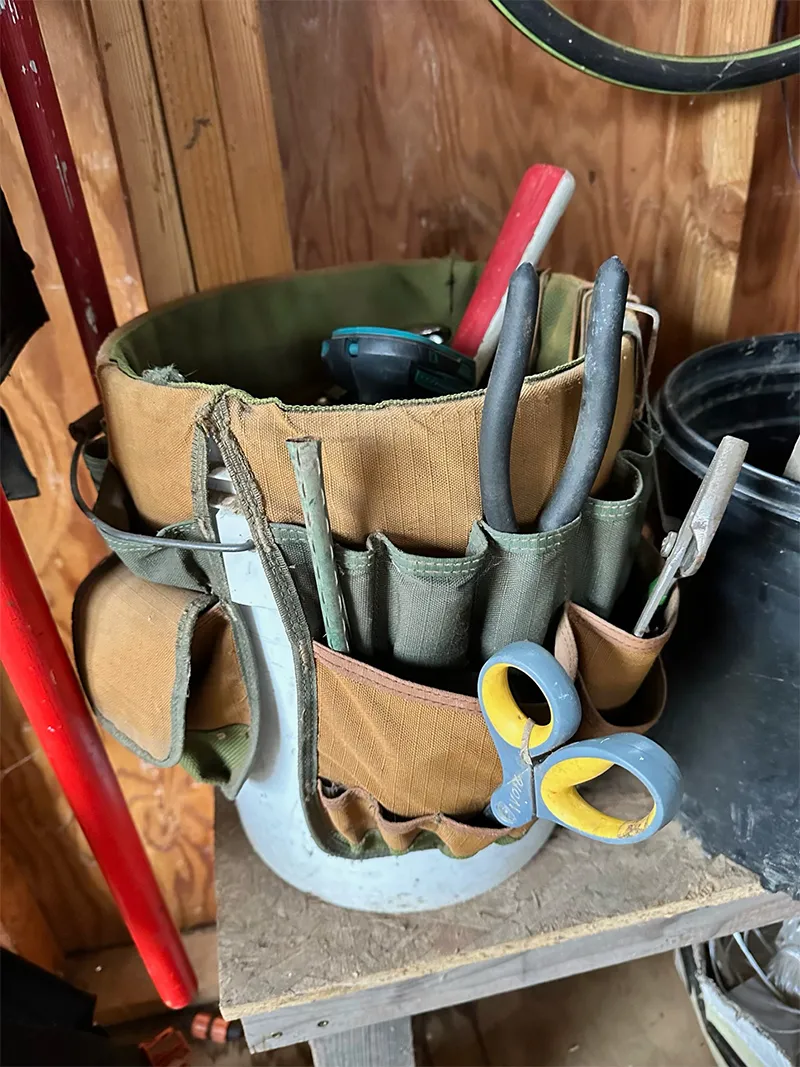
Gloves provide the hand protection every gardener needs. They are a barrier against pricks, cuts, abrasions, blisters, insect bites, and other skin irritations. While most gardeners don’t mind getting their hands dirty, getting jabbed with a nasty thorn is not only painful, but it can also lead to serious infections. There are many types of gloves to choose from depending on the type of protection required. Most important is that they fit well and are comfortable to wear.
- Kneelers cushions protect the knees when planting, weeding, and performing other low to ground garden tasks. Kneelers made of rectangular shaped heavy foam are the simplest type. However, kneelers with handles that are lightweight and easy to fold up can make the up and down movements around the garden easier. Some even flip over to form a bench.
- Ergonomically modified tools can help gardeners get more done with less effort by enabling good body alignment and reducing joint strain. Grips should be comfortable to hold and keep hands and wrists in natural positions. Handles should be the right length to enable good posture without excessive bending and twisting.
Tool Care
Tools need to be kept clean, sharpened, in good repair, and organized to keep them working well. Surface dirt and dried sap should be brushed or washed off after each use. Periodically applying a light layer of oil will reduce rust. Pruners need regular sharpening and should be sanitized with a 10% bleach solution following contact with diseased plant material. Storing tools in dry place where they can be easily accessed will ensure they are ready for work when you are.
Click here to learn more about choosing and caring for garden tools.
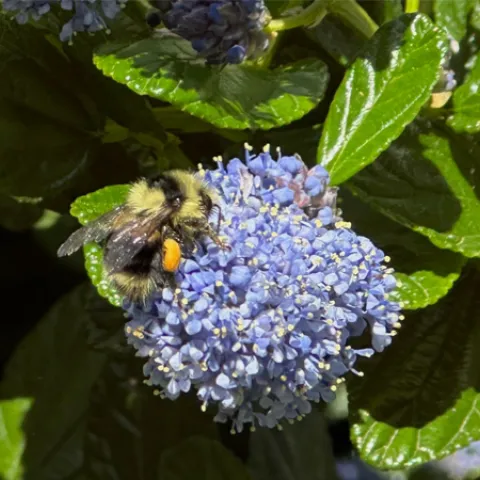
December 2024: Giving the Garden a Rest
Planting cover crops
There are many advantages to planting cover crops. Cover crops, sometimes referred to as “green manure”, are an excellent way to protect and improve soil. They increase organic matter, suppress weeds, prevent damage from wind and water erosion, and support beneficial insects and earthworms. Plus, they can look attractive while nurturing the garden.
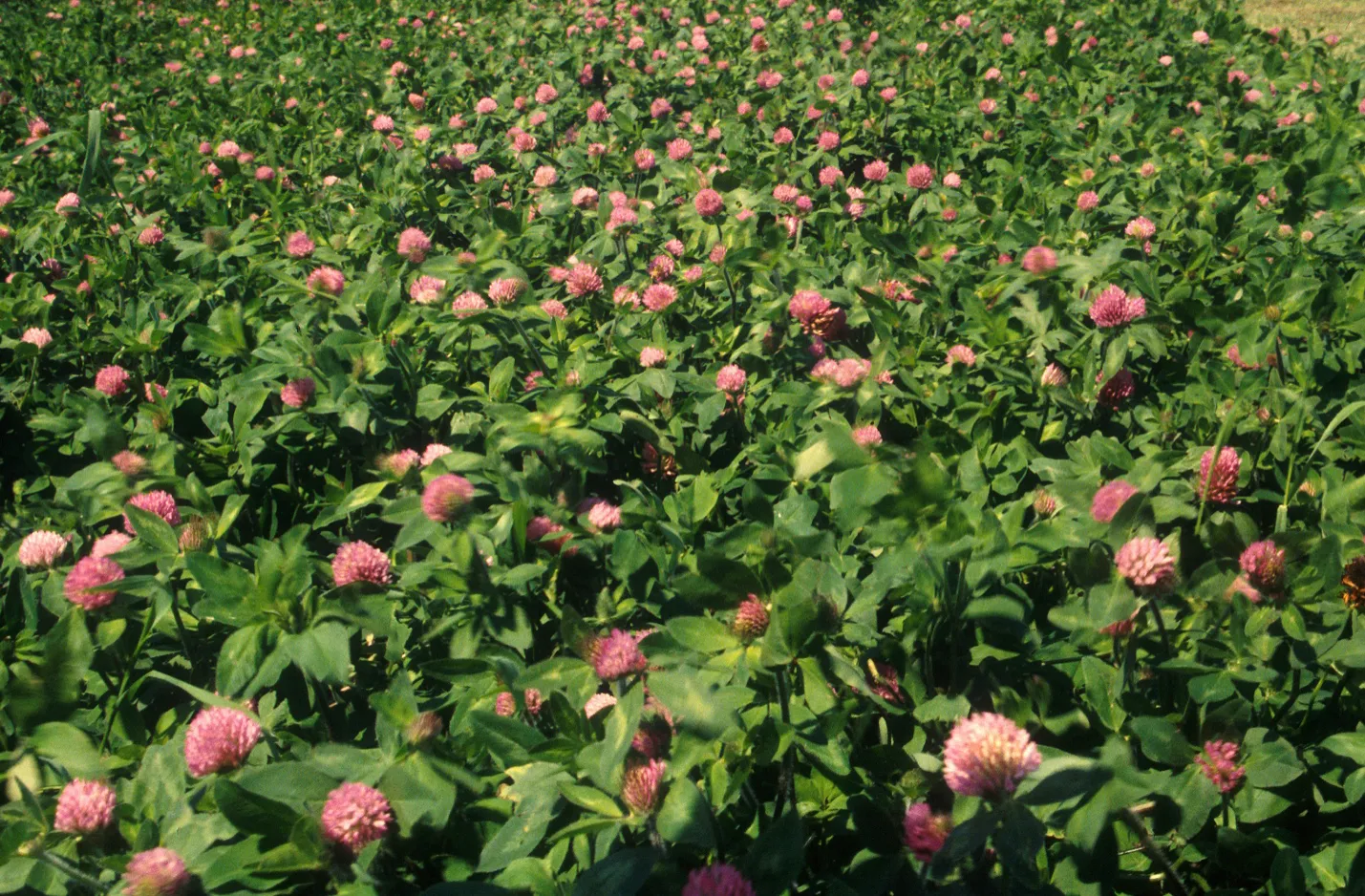
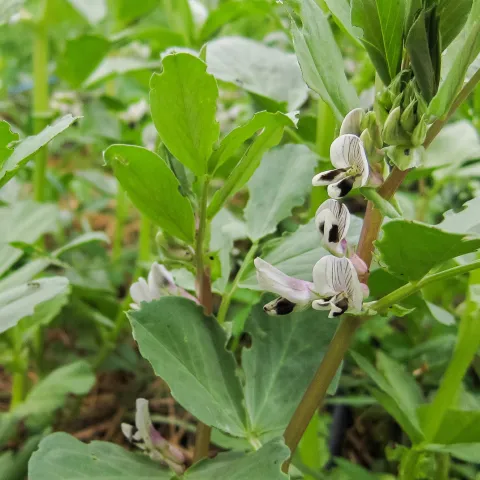
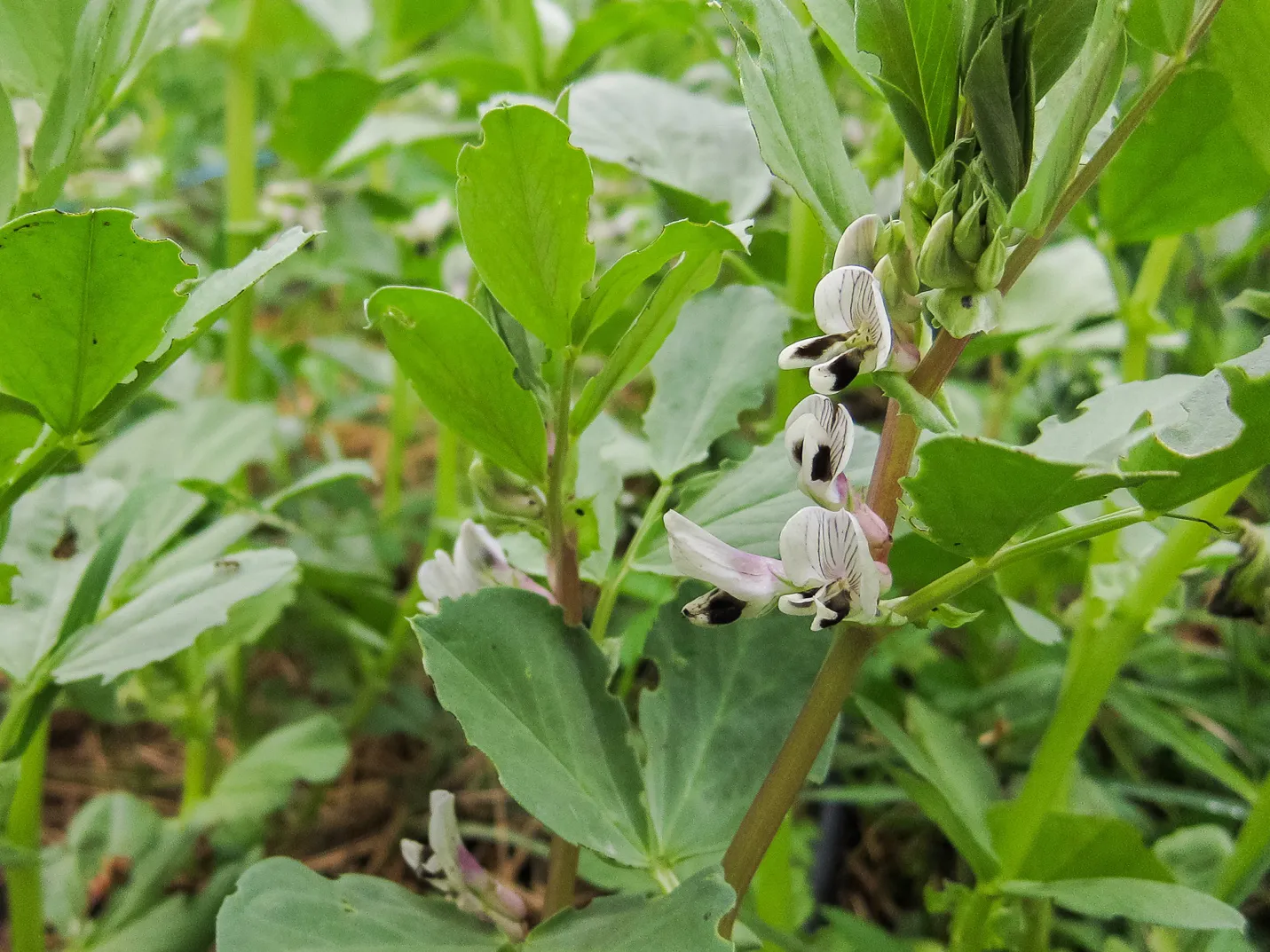
Two different cover crops were chosen for the Edible Demo Garden. Fava beans were planted in several of the garden beds and in the straw bales used for the summer crops. The latter is an experiment to determine if there is sufficient residual fertility in the straw bales to support another crop. In order to aid in germination and enhance their nitrogen fixing effects, the fava bean seeds were soaked in an inoculant containing rhizobacteria prior to planting. As an alternative cover crop, a green manure mix of bell beans, field peas, and purple/hairy vetch was planted in some of the raised beds. Past experience with crows eating the sprouting seeds necessitated the use of compost, straw, and protective netting to give the cover crop seedlings a fighting chance. The effectiveness of the different cover crops will be tested in spring when it is time to plant again.
Allowing beds to remain fallow
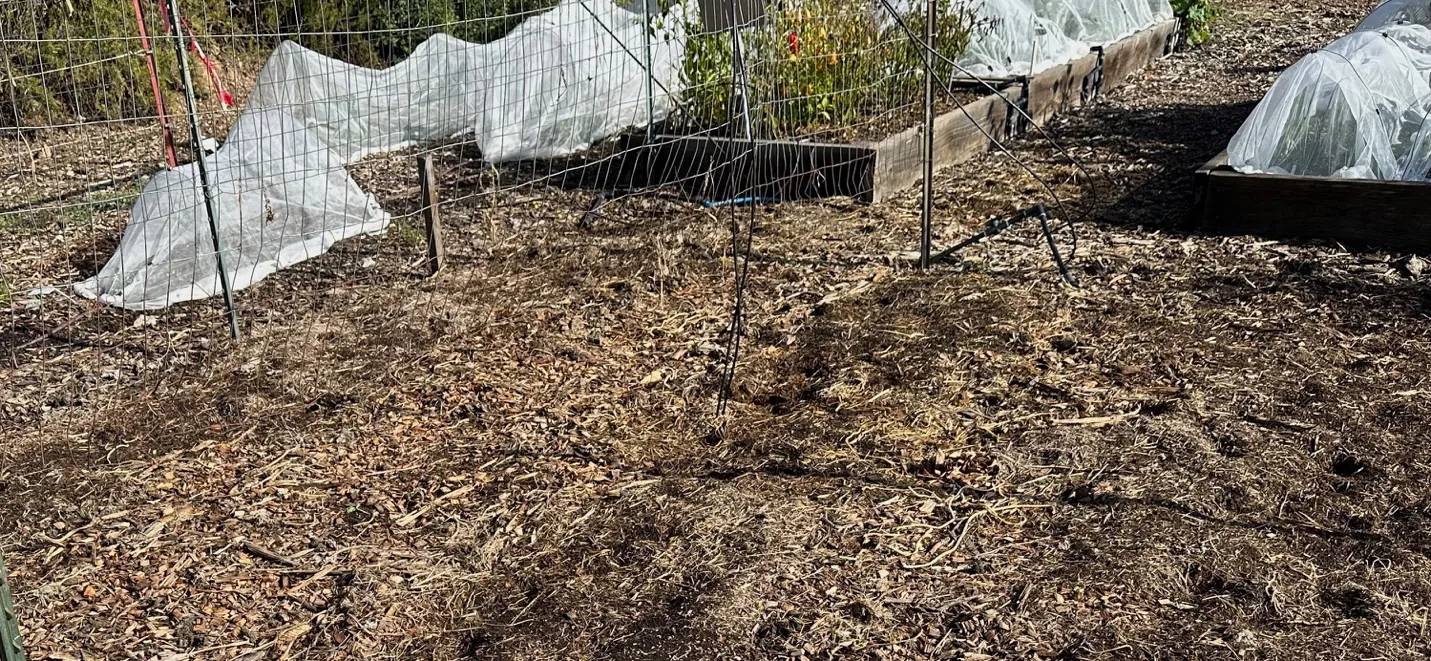
Click here for more information on cover crops and soil enhancement in the off-season.
October 2024: Herbs Among the Edibles
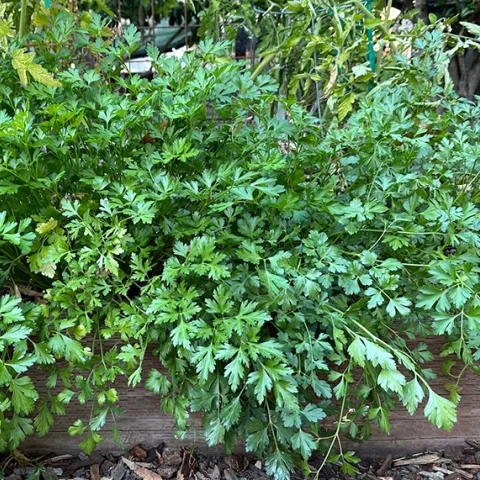
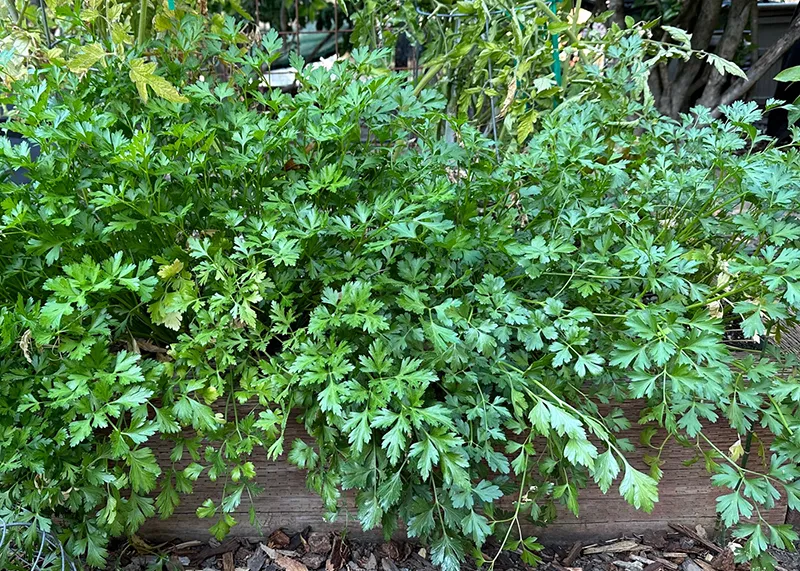
The supporting cast of herbs in the Edible Demo Garden includes basil, oregano, thyme, lemon verbena, chives, Mexican tarragon, anise hyssop, chocolate mint, lavender, pineapple sage, and rosemary. Some are harvested and sold fresh at the Indian Valley Organic Farm and Garden farm stand and others are dried and offered as seasonings and teas. They are among the most reliable plants in the garden.
What is an Herb?
The word “herb” can be applied to any non-woody plant with leaves, seeds, or flowers used for seasoning, medicine, or fragrance. It’s the culinary uses that most commonly interest home gardeners. Herbs are considered different from spices based on the part of the plant that is used. Spices are derived from the roots, bark, fruit, berries, and seeds of plants. Some plants can be both an herb and a spice. Coriandrum sativum, also known as Chinese parsley, is called cilantro when the green leaves are used as an herb and coriander when the seeds are used as a spice.
Why Grow Herbs?
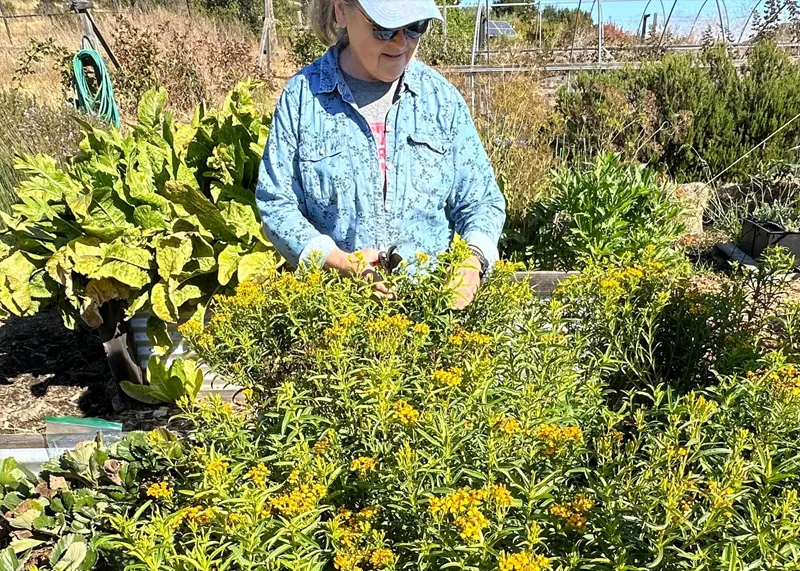
- Herbs make good neighbors with other plants and can be easily integrated into both edible and landscape gardens. They are attractive enough to do double duty as ornamentals.
- Herbs are cost-effective. They are inexpensive to grow and can be harvested in the amounts required for a recipe. No need to spend money at the supermarket on packages of herbs.
- The blossoms on herbs attract pollinators and other beneficial insects.
- Herbs are usually not bothered by pests and diseases. Some herbs have been shown to repel pests affecting companion plants. An example is the ability of basil to deter thrips from invading tomato plants.
- Deer usually leave herbs alone, especially those with strong tastes and scents.
- Herbs grow well in containers and are a good choice when garden space is limited.
Tips on Growing Herbs
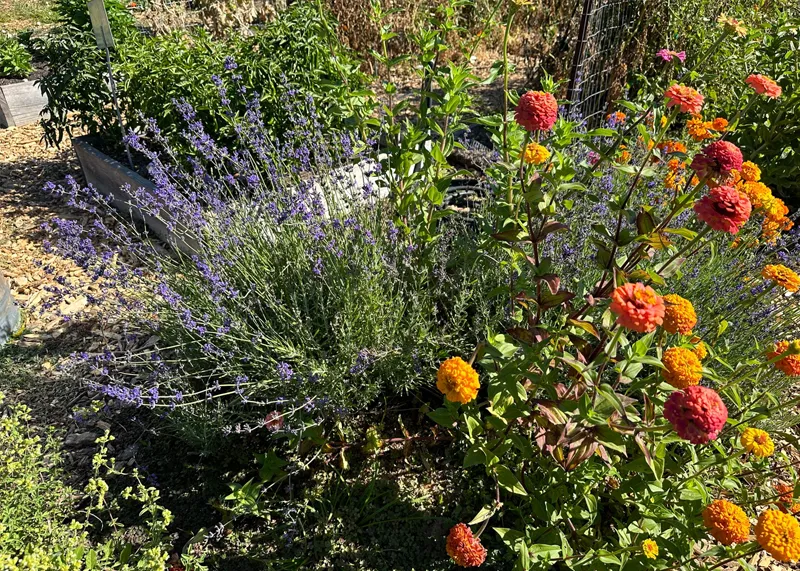
Some herbs are started from seed while others are easy to grow from cuttings. Information on the growing needs of common edible herbs can be found at http://marinmg.ucanr.edu/EDIBLES/EDIBLES_GROW_SHEETS/
Check the upcoming events listings on this website to register for a hands-on public workshop on growing and using popular edible herbs. There will be a workshop held on the College of Marin Indian Valley Campus on November 2, 2024, from 10:00 am to 12:00 pm.