How to Plant Your Edible Garden

Take care to plan out your edible garden before diving in. Consider any theme or general approach to your garden, how your plants will be organized, how to invite pollinators, and whether you'll be planting your crops from seeds or starts. Most importantly, be sure you plant at the correct time. Here's how to manage it all.
APPROACH: Getting started
There are many ways to grow edibles, whether incorporated in the ornamental landscape or in a separate area of the garden.
Edible landscape
Use edibles in place of ornamentals in your landscape or integrate them within existing ornamentals. Blueberries and artichokes are beautiful ornamental shrubs. Blackberries, asparagus and raspberries make a nice hedgerow. Herbs make a lovely border.
Theme gardens
Edible flowers, ratatouille or salad niçoise garden, tea or salsa garden, etc.
Planting space & relative square foot value
• If space is tight: High-yield per square foot plants
Herbs, parsley, carrots, and beets provide the greatest yield per square foot. In other words, you get the most produce from the smallest amount of space. If space is tight, these edibles are good choices.
• If space is not an issue: Low-yield per square foot plants
Winter squash, sweet corn, watermelon. and pumpkin have the least yield per square foot. Grow these if space is not an issue or if you don't mind edible vines creeping through your ornamental beds.
Others crops are somewhere in between.
GROUPING PLANTS: How to organize your edible garden
Use the guidelines below to create a planting plan for your edible garden.
MOST IMPORTANT: Hydrozones and plant spacing
Hydrozones
Place edibles with similar water needs together. Plants with similar root depth have similar water requirements.
• Most edible plants are shallow rooting (approximately 12 inches or less). Examples include lettuce, arugula, basil, chives, garlic, kale, mustard greens, and some carrots.
• Deeply rooting plants include artichokes, asparagus, parsnips, rhubarb and tomatoes.
• Most annuals need one inch of water per week and up to two inches in hot weather. Learn how to calculate an inch of water.
• Tomatoes need less water after fruit has set.
• Perennial herbs need less water after they're established.
Plant spacing
Place crops according to size at maturity or according to spacing suggestions. Vegetables harvested before full maturity, such as beets or greens, may be placed more closely.
Plant placement
Consider:
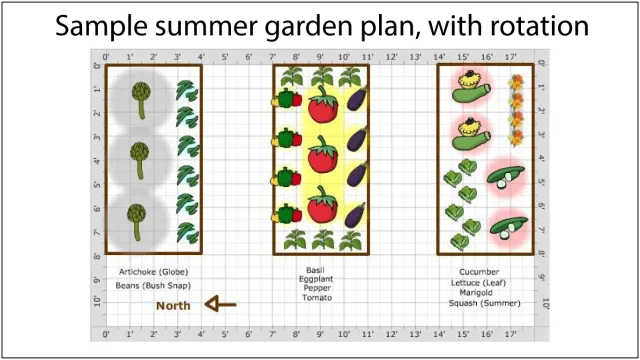
• Shade: Place taller plants on the north side of your bed/garden so they will not shade shorter plants. Plant crops that enjoy light shade, such as lettuce, in the shadow of taller plants.
• Ease of access: Group shorter plants near the front of beds so they're easy to reach.
Rotation
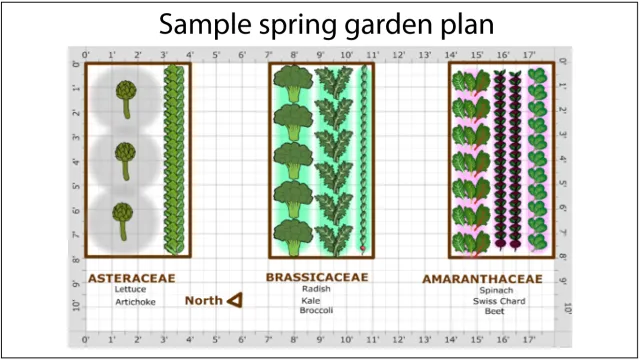
Group plant families together for easier seasonal crop rotation.
Frost-sensitive plants
Place frost-sensitive plants such as peas and citrus in protected areas near a structure, fence, or in an otherwise protected spot. Use cold frames to get seedlings started outdoors.
Perennials
If space allows, grow perennials such as asparagus, artichokes, berries, herbs, fruit trees, sunchokes, and walking collards in separate beds or containers.
POLLINATORS: how to attract them
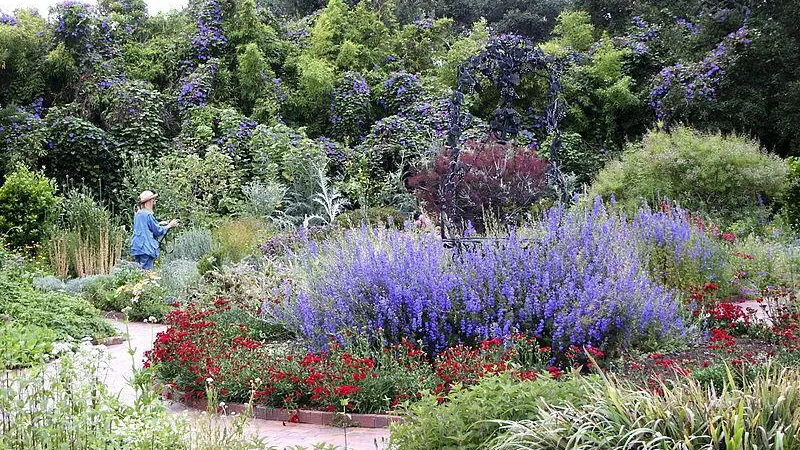
If not for pollination, our food gardens would be lovely, under-productive patches of green. In fact, pollination accounts for one out of every three bites of food we eat. That said, the need for pollination varies by crop:
| Require no pollination | Carrots, kale, and other edibles, which we eat before pollination occurs |
| Self-pollinating | Beans, peas and tomatoes |
| Wind-pollinated | Beets, chard, and corn |
| Require pollination | Brassicas, cucumbers, melons, okra, pumpkins, squash and many fruit trees Pollinated by hummingbirds, bees and other insects, and in their absence, humans! |
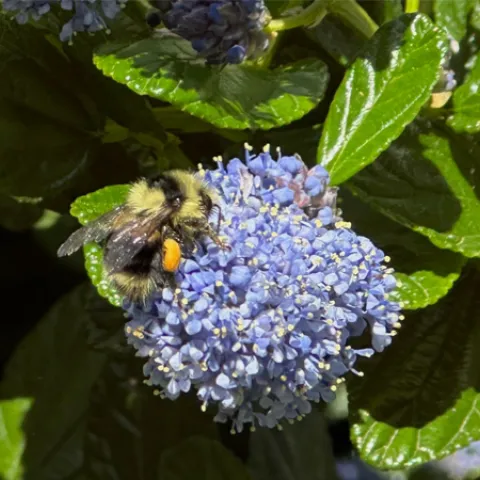
Use our lists of Plants for Bees, Hummingbirds, and Butterflies. These plants are easy to grow, bloom heavily, and are good company for edible crops. They create spots of color, texture, and scent. The result is so much more than an edible garden. It is a resilient, sustainable, fascinating ecosystem. Learn more about habitat gardening, pollination, and pollinators.
KNOW YOUR SOIL TEMPERATURE: Guidelines for warm & cool season crops
Edible crops are not only sensitive to air temperatures; they are also sensitive to soil temperatures. Whether planting seeds or starts make sure soil temperature is adequate:
Warm season crops need soil temperature at 60 to 65 degrees.
Cool season crops need soil temperature at about 40 degrees.
How to take your soil's temperature
• Use an instant read thermometer, the kind used in the kitchen. Insert it into the soil about 3 inches deep.
• The best time to check soil temperature prior to planting seeds and seedlings is in the morning because this will be the coolest soil temperature of the day. If you want to know the warmest soil temperature, check the soil in late afternoon.
To raise soil temperature
• Cover the bed for a few days with a dark material, such as heavy weed cloth.
PLANTING: SEEDS OR STARTS?
When planting your garden, you have a choice between planting seeds or starts. Most gardens include plants propagated from both seeds and starts.
WHAT ARE STARTS?

Starts are plants you buy at the nursery or grow yourself from seed.
HOW TO PLANT STARTS • Harden off: If you have grown your own starts, be sure to harden them off for about a week before planting in the garden by leaving the plants outside each day for longer and longer periods of time but bringing them in at night. Starts purchased from a nursery are already hardened off. |
SEEDS: Growing your own starts
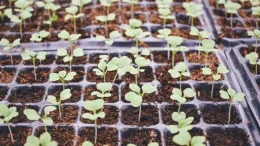
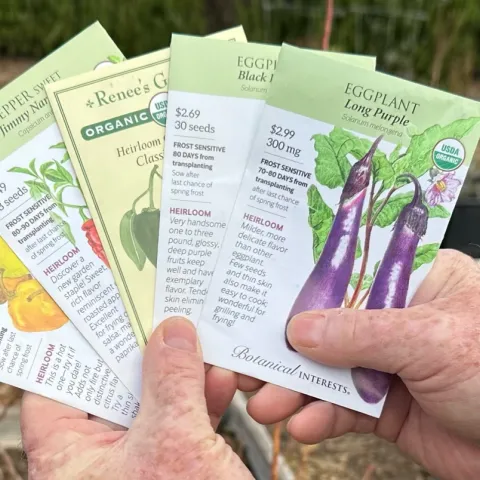
Follow directions on seed packets and decide if you are going to start the seed indoors in a container or direct sow into the garden.
Benefits of growing edibles from seed:
• Variety: Starting with seed reveals a world of vegetables that you will never find in the market or nursery.
• Cost: Growing from seed is less expensive than buying starts.
• Sharing: You can exchange different varieties with friends.
• Disease resistance: Growing from seed reduces the risk of introducing diseases into your garden.
• More control over timing: This can help when rotating crops or doing succession planting.
| HOW TO SOW SEEDS INDOORS or in a cold frame outdoors • Begin 3-6 weeks before planting into the garden. • Use a fine textured seeding mix • Use any kind of container that is at least 2 inches deep and drains. • Fill the container or flat with seeding mix. • Level out. • Place seeds more densely than recommended on the seed packet, as some will not germinate. • Once the seedlings are about 1-inch high, thin with scissors, giving each seedling 2 inches of space all around. • When the seedling has at least 2-3 true leaves, feed with fish emulsion diluted to half the standard strength. (Seeding mix does not usually contain nutrients since the seed uses nutrients stored in the seed.) • Transplant in the spring after danger of frost or according to the recommended planting time. |
Seed types to sow indoors or in a cold frame:
• Smaller seeds are usually started in a flat in a protected environment (indoors or out) and transplanted after a full-set of leaves has formed and the plants have been hardened off (gradually exposed to outdoor elements). An exception are small seeds that mature quickly, such as lettuce and arugula, which may be directly sown into the garden.
• Large seeds such as beans, peas or squash may be started indoors and transplanted to provide a head start on the growing season.
• Medium size seeds such as those for eggplants, tomatoes and peppers are started indoors and transplanted outdoors.
| HOW TO SOW SEEDS DIRECTLY into the garden • Plant large seeds the depth recommended on the seed packet (usually about the length of the seed). • Scatter small seeds on the surface of the bed, then top lightly with soil. • Thin with scissors to recommended planting spacing when seedlings are 1 to 2 inches tall. • Cover with tulle to protect from birds. |
Edible crops to sow directly by seed into the garden:
• Large seeds: beans, pumpkins, squash, peas
• Root crops: beets, carrots, parsnips, radishes, turnips
• Quickly maturing seeds: braising mix, lettuce, microgreens
TIMING: when should you start growing?
In the edible garden, this is a critical question that could mean the difference between success and failure. Check online for information on specific plants, or use our planting calendar and our grow sheets as a guide.
BACK TO EDIBLES
> What Edible Gardens Need
> Best Choices for Marin
> How to Prepare
> How to Plant
> Edibles in Containers
> Planting Calendar
> Grow & Care Sheets for Vegetables, Herbs & Fruits
> Tips & Techniques
> How to Maintain
> Fruit Trees
> Top 20 Edible Garden Problems
> Cover Crops & Soil Enhancements in the Off-season
> Conserving Water
•••••••••
Visit our EDIBLE DEMO GARDEN at IVC Organic Farm & Garden
June 2025: Patio Gardening


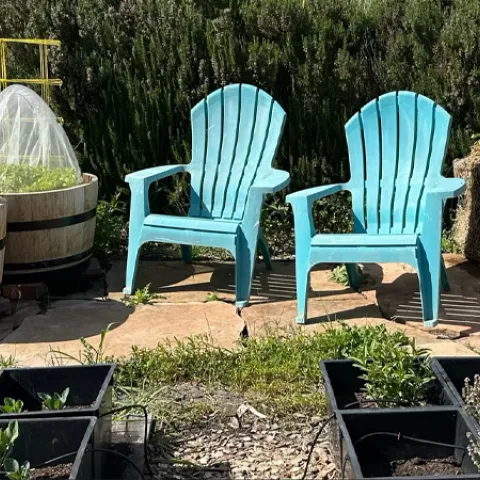
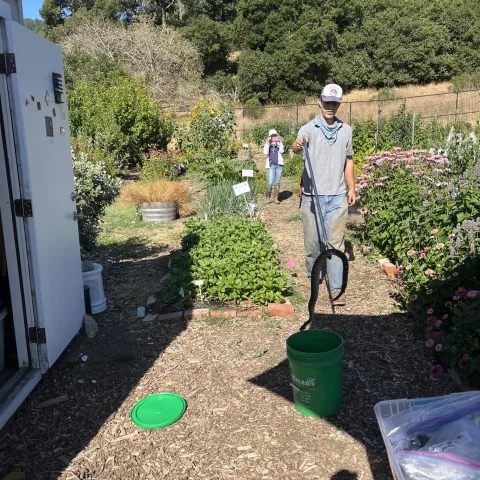
This past month EDG volunteers created a small “patio” in the garden to demonstrate how edibles can be successfully grown in limited space. Too often gardeners are discouraged from growing edibles, believing that it takes a large back yard with room for long rows of plants. However, with the imaginative use of containers even a small deck, patio, or balcony can be converted into flourishing garden.
What are the basic requirements for growing edibles in small spaces?

Sun – Edibles need 4 to 6 hours of sunlight. Regardless of the size of the growing area, sun exposure is essential. Leafy crops such as lettuce and chard require at least 4 hours of sun per day and fruiting crops like tomatoes, melons, and beans need at least 6 hours of sunlight daily. It’s important to choose the sunniest spot on a deck or patio for an edible garden area.
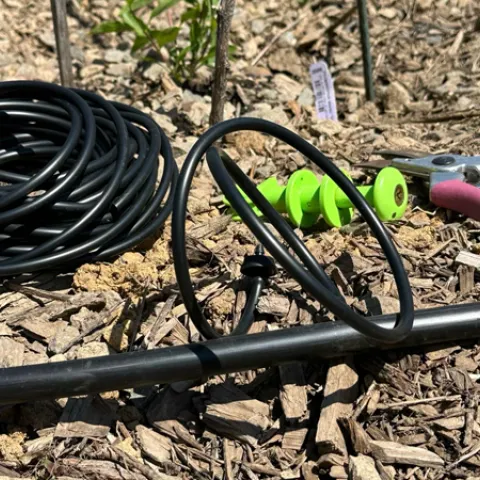
Water – Container plants need water more often than those grown in the ground. The need to transport water to growing plants with buckets or watering cans can diminish the pleasure in growing edibles. While drip irrigation is ideal, a hose attached to a water source will suffice.
Containers – The possibilities for garden containers are numerous and range from commercial pots, planters, troughs, and bags to the creative repurposing of old pans and buckets, wooden crates, wheelbarrows, and, of course, wine barrels. A used filing cabinet with the drawers removed can make a great container for edibles. In the Demo Garden, a straw bale provides a patio container for yellow fin squash. Regardless of the type of container, good drainage is important so it may be necessary to drill holes to allow water to flow through easily.

Containers need to be deep enough to provide sufficient space for root growth. Depth requirements vary with the type of crop. Salad greens and some herbs can grow in 6- to 10-inch-deep containers while peas, eggplant, and peppers need at least 14 to 16 inches to develop a strong root system. Tomatoes in containers require a minimum soil depth of 18 inches.
Soil – The potting mix used in containers should be porous and fast draining, yet moisture retentive. A high-quality mix that contains compost and other organic matter is best. Garden soil is too heavy, difficult to keep evenly moist, and can harbor disease. Organic fertilizers should be added in frequent but light amounts as the watering that container plants require leaches nutrients from the soil.
Additional tips for small space edible gardening

Credit: PickPik
Take advantage of vertical space – Trellises and stakes help tall and vining plants to grow upward. Use walls or fences as additional planting space by adding shelves, racks, or hanging baskets. A recycled step ladder is an inexpensive vertical gardening option.
Avoid damage to structures – Use blocks or bricks under containers to prevent rotting wooden decks or stairs. Consider the weight of the soil and container when planting on a balcony.
Protect against animals and pests – Plants in containers are susceptible to the same pests as in-ground plants. Cages or netting might be necessary to protect against birds, squirrels, and other critters.
Don’t forget the pollinators – Adding a few flowering plants to a container garden can help to attract pollinators to the edibles and increase veggie and fruit production.
Click here for more information on growing edibles in containers.
February 2025: Choosing the Right Garden Tools

In January, the 2025 Marin Master Gardener training class was welcomed into the Edible Demonstration Garden for a discussion and demonstration on the use and care of garden tools. The right tools make the difference between gardening that is pleasurable and gardening that is a struggle. Your first experience with a garden tool might have been that pointed stick you used when digging in the dirt as a child. Now as a gardener, you are presented with an array of better tool choices, some essential for basic garden work and some designed for specific tasks. There are tools for pruning, tools for digging, tools for raking, and tools to make gardening easier. Here are some of the more popular tools in those categories.
Pruning Tools

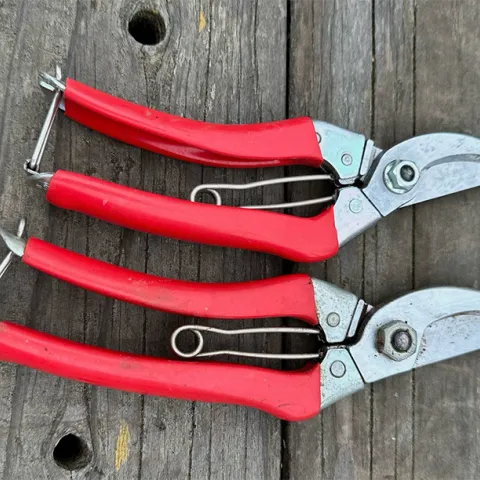
Hand pruners are the favorite tool for most home gardeners. They are the tools used most often for cutting and thinning small branches to maintain plant health and appearance. They are also used for cutting flowers and harvesting vegetables. By-pass pruners, which work like scissors, are best for making clean cuts on living plants. Anvil pruners crush branch tissue and are good for removing and cutting up dead branches.
- Pruning saws are used to remove branches larger than what hand pruners can remove. They can have a fixed or folding blade.
- Loppers are long-handled by-pass pruners that can help access higher and hard to reach branches. The long handles also provide leverage to enable pruning thicker branches.
Digging Tools

Trowels are essential for digging, planting, potting, and weeding. A trowel is a spade-shaped hand tool with a slightly scooped blade.
- Garden knives are a type of trowel with a sharp narrow blade and a pointed end. One blade edge is usually serrated. Hori-Hori garden knives are a Japanese design that has proven to be so useful for digging and weeding that the name is often applied to any type of garden knife.
- Shovels and spades are long-handled digging and soil lifting tools with the shape of blade and the length of the handle determining their particular uses.
Raking Tools
- Rakes are useful for cleaning up leaves, removing debris, and spreading out soil amendments like compost and mulch. Hand rakes are great for getting into small spaces. Rakes with flexible, fan-shaped tines work well for cleaning up lighter debris and are sometimes called leaf rakes. Garden rakes have larger stiff metal tines and are intended for heavier use in soil or larger debris.
- Forks are used for raking out stones and weeds. Like a dinner fork, a garden fork has four strong tines which can push easily into the ground and enable it to double as a digging tool for loosening and turning over the soil.
Gardening Comfort Tools

Gloves provide the hand protection every gardener needs. They are a barrier against pricks, cuts, abrasions, blisters, insect bites, and other skin irritations. While most gardeners don’t mind getting their hands dirty, getting jabbed with a nasty thorn is not only painful, but it can also lead to serious infections. There are many types of gloves to choose from depending on the type of protection required. Most important is that they fit well and are comfortable to wear.
- Kneelers cushions protect the knees when planting, weeding, and performing other low to ground garden tasks. Kneelers made of rectangular shaped heavy foam are the simplest type. However, kneelers with handles that are lightweight and easy to fold up can make the up and down movements around the garden easier. Some even flip over to form a bench.
- Ergonomically modified tools can help gardeners get more done with less effort by enabling good body alignment and reducing joint strain. Grips should be comfortable to hold and keep hands and wrists in natural positions. Handles should be the right length to enable good posture without excessive bending and twisting.
Tool Care
Tools need to be kept clean, sharpened, in good repair, and organized to keep them working well. Surface dirt and dried sap should be brushed or washed off after each use. Periodically applying a light layer of oil will reduce rust. Pruners need regular sharpening and should be sanitized with a 10% bleach solution following contact with diseased plant material. Storing tools in dry place where they can be easily accessed will ensure they are ready for work when you are.
Click here to learn more about choosing and caring for garden tools.
October 2024: Herbs Among the Edibles


The supporting cast of herbs in the Edible Demo Garden includes basil, oregano, thyme, lemon verbena, chives, Mexican tarragon, anise hyssop, chocolate mint, lavender, pineapple sage, and rosemary. Some are harvested and sold fresh at the Indian Valley Organic Farm and Garden farm stand and others are dried and offered as seasonings and teas. They are among the most reliable plants in the garden.
What is an Herb?
The word “herb” can be applied to any non-woody plant with leaves, seeds, or flowers used for seasoning, medicine, or fragrance. It’s the culinary uses that most commonly interest home gardeners. Herbs are considered different from spices based on the part of the plant that is used. Spices are derived from the roots, bark, fruit, berries, and seeds of plants. Some plants can be both an herb and a spice. Coriandrum sativum, also known as Chinese parsley, is called cilantro when the green leaves are used as an herb and coriander when the seeds are used as a spice.
Why Grow Herbs?

- Herbs make good neighbors with other plants and can be easily integrated into both edible and landscape gardens. They are attractive enough to do double duty as ornamentals.
- Herbs are cost-effective. They are inexpensive to grow and can be harvested in the amounts required for a recipe. No need to spend money at the supermarket on packages of herbs.
- The blossoms on herbs attract pollinators and other beneficial insects.
- Herbs are usually not bothered by pests and diseases. Some herbs have been shown to repel pests affecting companion plants. An example is the ability of basil to deter thrips from invading tomato plants.
- Deer usually leave herbs alone, especially those with strong tastes and scents.
- Herbs grow well in containers and are a good choice when garden space is limited.
Tips on Growing Herbs

Some herbs are started from seed while others are easy to grow from cuttings. Information on the growing needs of common edible herbs can be found at http://marinmg.ucanr.edu/EDIBLES/EDIBLES_GROW_SHEETS/
Check the upcoming events listings on this website to register for a hands-on public workshop on growing and using popular edible herbs. There will be a workshop held on the College of Marin Indian Valley Campus on November 2, 2024, from 10:00 am to 12:00 pm.