Growing Edibles in Containers
Containers can provide a quick and easy way to grow edibles
• A great solution when growing space is limited
• Locate to be convenient and accessible
• Relocate to protect edibles from bad weather
• Create visual interest in outside living areas
• Avoids soil borne diseases in native garden soil
• Reduces accessibility of some pests
**Note: Container plants require more frequent watering and fertilizing
Any vegetable & herb that you can grow in the ground or in a raised bed can be successfully grown in a container.
Choose your containers:
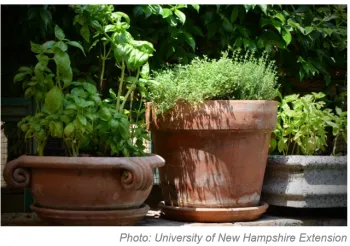
• Most containers will work if you have good drainage
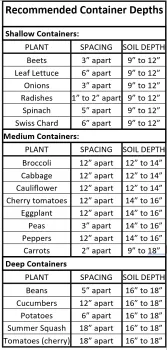
• Containers should be a minimum of 6 inches deep
• Some plants require more depth
Important considerations:
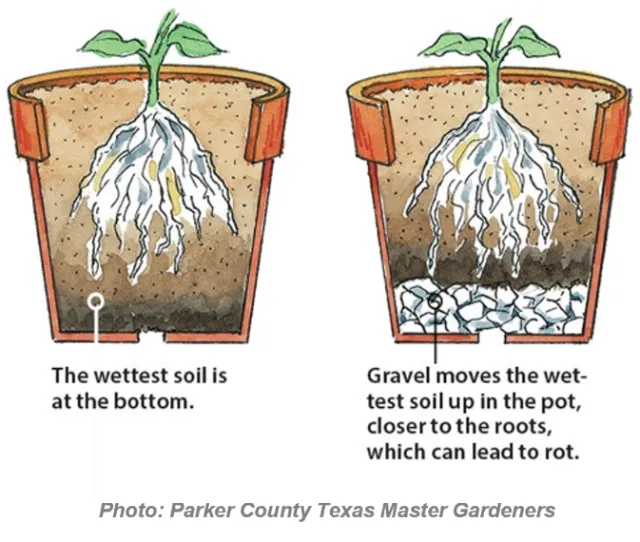
• Drainage holes are essential to allow excess water to drain so roots do not rot from sitting in stagnant water.
• Don’t add gravel, pebbles, or sand to the bottom of containers. This will make it more difficult for excess water to drain away from roots.
• Smaller containers and unglazed clay pots dry out very quickly in summer. They require more watering and have less room for roots to grow.
• Deeper containers provide more space for roots to grow down into in search of moisture and cooler temperatures.
This enables plants to thrive during the long, warm summer days which cause soil to dry out fast.
• Choose containers large enough to support plant root systems when they are full grown.
• If you are using recycled containers, scrub them well and rinse in a solution of nine parts water to one part bleach.
• Never choose a container that held toxic products.
Site your containers:
• Most vegetables need a minimum 6 hours of direct sun per day.
• Some leafy greens like lettuce, spinach, chard, and kale will tolerate part shade (3-4 hours minimum of sun per day).
• You can extend your growing season of some vegetables like leafy greens by moving their containers to a less sunny position during warm weather.
• Some herbs in small containers can be grown indoors.
Add Potting Mix:
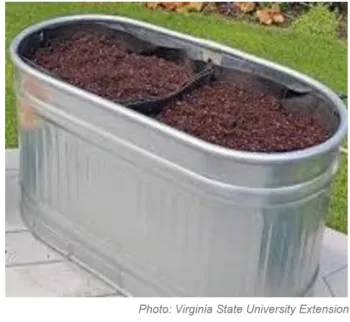
Potting mix is one of the most important factors to growing happy and productive container plants. It supplies the roots with nutrients, air, and water. It allows space for root growth and it physically supports the plant.
• Garden soil should usually be avoided in containers as it can harbor disease, weed seed, and create drainage problems.
• Add high-quality fresh potting mix that is light, porous, and quick draining.
• The soil-less mix should retain moisture but also have plenty of air spaces for the roots.
• Water soil mix well and let it sit for a day to dampen and settle.
Plant seeds or seedlings:
• To get the most out of limited space, choose high yielding and dwarf varieties with small- to-moderate sized fruit.
• For plants that vine or trail, add stakes or trellis when you first plant so you will not damage roots by adding them later.
• Eggplant, peppers, and tomatoes are best planted as seedlings due to the seed germination needs.
• Plant beans, beets, carrots, cucumbers, lettuce, peas, radishes and summer squash from seed or seedlings.
• Remember to dampen your soil before you plant and gently water after.
Water
All containers dry out quickly. Watering requirements will vary according to the season, type of container, soil mix and sun exposure.
• Keep the soil moist. Do not allow the soil to dry out, especially while plants are young.
• Check containers daily. Stick your finger or moisture meter into the top inch of soil. If it is dry, water until some runs out the bottom of the container.
• Water early in the morning to avoid wet leaves at night when temperatures drop and mildew and disease organisms flourish. Use a slow even spray.
• In mid-summer and on windy days water requirements will be higher.
• To reduce evaporation and plant stress along with and saving water, mulch plants with straw or other non-woody material from June through the summer.
• Irregular watering contributes to stressed plants that may fail to thrive.
Fertilize
Use an organic fertilizer balanced for growing vegetables to be certain your plants get adequate nutrients.
• Confined root systems demand frequent but light fertilizing during their growing period.
• Nutrients are leached from the soil with every watering and need to be replenished regularly.
• Follow the package directions. Liquid and granular products can both be found on nursery shelves.
Be creative - most containers will work!
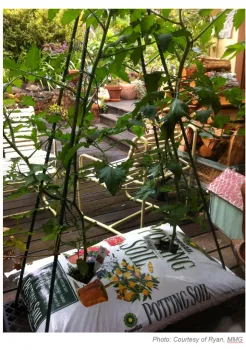
• These tomatoes are growing directly in a bag of potting soil.
• Holes were made in the bag for excess water to drain.
• A trellis provides support for the plants.
BACK TO EDIBLES
> What Edible Gardens Need
> Best Choices for Marin
> How to Prepare
> How to Plant
> Edibles in Containers
> Planting Calendar
> Grow & Care Sheets for Vegetables, Herbs & Fruits
> Tips & Techniques
> How to Maintain
> Fruit Trees
> Top 20 Edible Garden Problems
> Cover Crops & Soil Enhancements in the Off-season
> Conserving Water
•••••••••
Visit our EDIBLE DEMO GARDEN at IVC Organic Farm & Garden