
Program Overview:
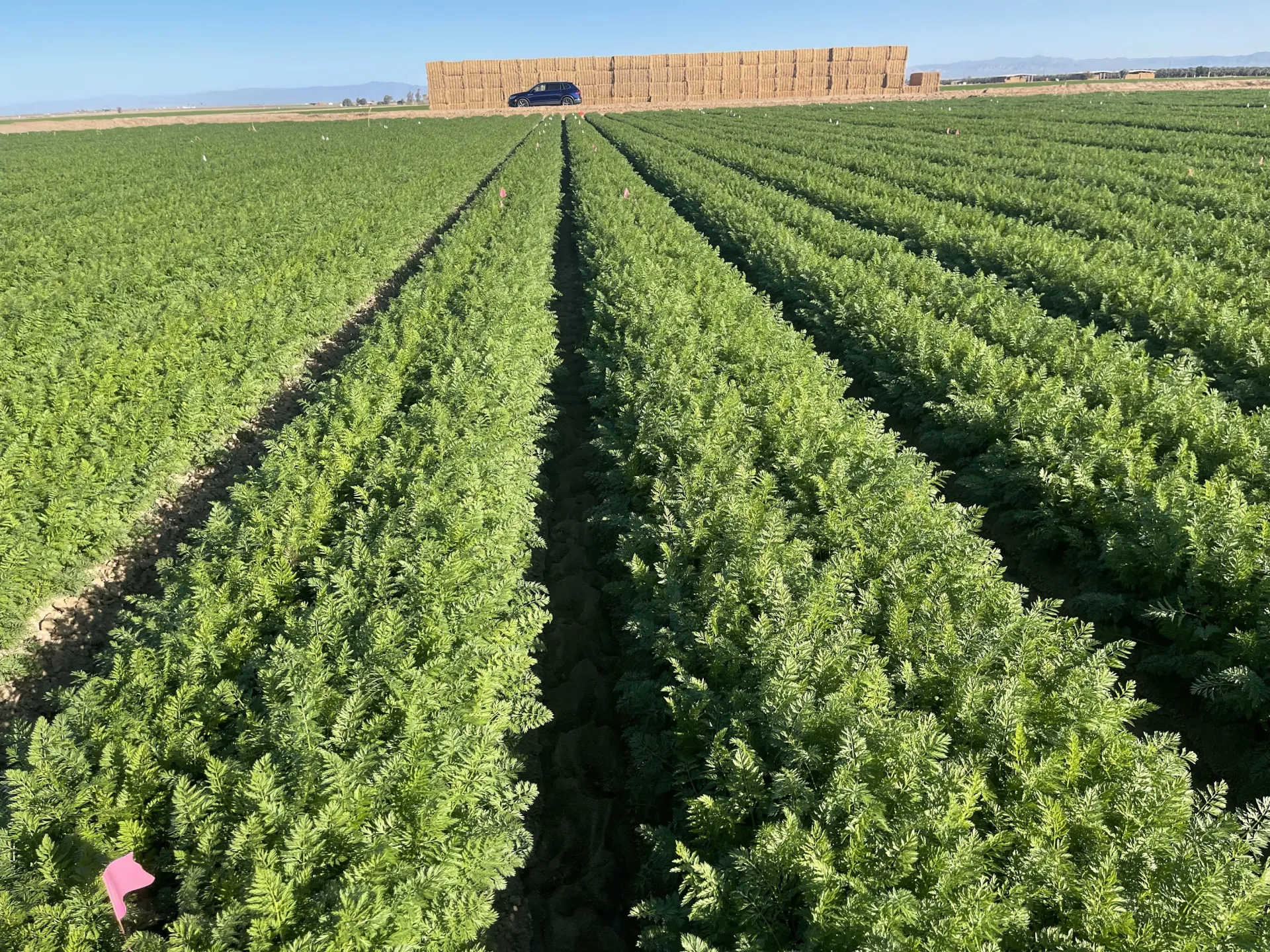
Vegetable crops comprise only 22% of the total crop land in Imperial County but generate more than 58% of the total crop returns providing over 500 million dollars in farm gate revenue. The total economic impact of vegetable crops to the local community can be estimated at nearly 1.5 billion dollars. The main vegetables grown in Imperial County are iceberg lettuce, leaf lettuce, broccoli, cauliflower, cantaloupes, honeydews, dry bulb onions, processor onions, carrots, sweet corn, spinach, spring mix and watermelons.
Vegetable production requires large economic inputs when compared to traditional agronomic crops. Due to increasing regulations and public concerns, management practices more than ever call for the use of new and emerging technologies. In addition to the customary; crop, labor, pest, and economic management, growers are increasingly faced with new issues such as food safety and environmental management. Therefore, today’s vegetable producers must be at the top of their game in order to provide a safe, healthy product while securing their investments and hopefully realizing a profit.
The University of California Cooperative Extension Vegetable Crops Program provides information, research, and educational opportunities aimed at supporting the vegetable crops industry in Imperial County and the greater community. If you need information on vegetable crops or have vegetable crops related issues that require new research initiatives, contact us at (760) 905-5204.
About Vegetable Crop Advisor: Philip Waisen

Philip Waisen is a Vegetable Crops Advisor at the University of California Cooperative Extension (UCCE). He started on January 10, 2022, and works out of Palm Desert Office in Riverside with responsibilities both in Riverside and Imperial counties. Prior to joining UCCE, Philip was a postdoctoral researcher at the University of Hawaii at Manoa, where he worked on Western SARE-funded research projects on nematode and soil health management in agroecosystems (tomato, peppers, cucurbits, asparagus, banana, brassicas). He also taught a graduate-level Plant Nematology course for a semester while as a postdoctoral researcher. For the whole of 2021, Philip was attached with his undergraduate school, the Papua New Guinea University of Technology as a part-time lecturer teaching Plant Pathology, Research Methods, and Horticultural Sciences courses.
Here at UCCE, Philip develops Research and Extension Programs focused on Pest and Disease Management, Soil Health Management, and Soil Fertility Management in Low Desert Vegetable Cropping Systems.
Current Projects
- Effects of reduced-risk nematicides on root-knot nematode, beneficial nematodes, soil microbiome, and impacts on nutrient cycling in rhizosphere of fruiting vegetables.
- Insecticide efficacy trials targeting aphids and Lepidopteran (diamondback moth, cabbage looper, and imported cabbageworm) pests on leafy vegetables.
- Assessing mechanical harvestability of fresh market onions in low desert growing conditions.
- Soil health and soilborne disease management using soil conservation practices including cover crops, compost, biochar, and spirulina by-products.
- Relationship between soil-applied low risk nematicides and rhizosphere microbiome (bacterial, fungal and nematode communities) and impact on nutrient cycling in vegetable crops.
Extension Publications
- Waisen, P. 2026. Effects of low risk nematicides on nematode community, microbiome and nutrient cycling in cantaloupe rhizosphere in low desert of California. Abstract. National Association of County Agricultural Agents Annual Meeting. Denver, CO, July 8-12. (Access)
- Bachie, O and Waisen, P. 2025 Vegetable Crops Guidelines for Imperial County. University of California Cooperative Extension Circular 104-V (Access)
- Waisen, P. 2025. Efficacy of reduced-risk nematicide on root-knot nematodes on cantaloupes in low desert growing conditions. Imperial Agricultural Briefs 28(1):15-19. (Access)
- Waisen, P., Nguyen, H.C, Lofton, E., Bachie, O., Montazar, A., and Resendiz, A. 2025. Environmental DNA analysis revealed cover cropping in the low desert increased microbial activity and improved nutrient cycling and okra crop yield. Imperial Agricultural Briefs 28(3):62-68. (Access)
- Waisen, P., Bachie, O., Montazar, A., Nguyen, H. C., Lofton, E., Resendiz, A. 2025. Metabarcoding soil environmental DNA revealed cover cropping in low desert increased microbial activity and improved nutrient cycling and crop yield. Abstract. American Phytopathological Society Plant Health Annual Meeting. Honolulu, HI, August 1-5 (Access).
- Waisen, P. 2025. Understanding the impacts of nematicide treatments on rhizosphere microbiome and nutrient cycling in melons. Imperial Agricultural Briefs 28(5):118-123 (Access).
- Lutgen, H., Baldos, O., Waisen, P., DeFrank, J. 2024. Evaluation of Physical Barriers to Suppress Purple Nutsedge (Cyperus rotundus) in Landscape Beds in Maui, Hawai'i. College of Tropical Agriculture and Human Resources, University of Hawaii at Manoa (Access).
- Waisen, P. 2024. Nematode community and plant growth response to root leachate treatments on fruiting vegetables in low desert of California. Abstract. National Association of County Agricultural Agents Annual Meeting. Dallas, TX, July 14-18. (Access)
- Waisen, P. 2024. Nematode community and plant growth response to root leachate treatments on fruiting vegetables in low desert of California. National Association of County Agricultural Agents Annual Meeting, Dallas, TX, July 14-18 (Access)
- Waisen, P., Nguyen, H.C, Mosase, E., Bachie, O., Montazar, A., and Resendiz, A. 2024. Pre-Plant Benefits of Summer Cover Crops in Low Desert Vegetable Production. Imperial Agricultural Briefs 27(8):98-105. (Access)
- Olmedo-Velarde, A; Shakhzadyan, H; West-Ortiz, M; Norton, R; Rethwisch, M; Waisen, P; Wilson, B; Heck, M. 2024. Redefinition of cotton leafroll dwarf virus as an emerging, possibly endemic virus in the United States. Abstract. American Phytopathological Society Plant Health Annual Meeting. Memphis, TN, July 27-30. (Access)
- Waisen, P. 2024. Root leachate treatment increased beneficial nematodes and improved plant growth – a potential organic option for growers in low desert. Imperial Agricultural Briefs 27(3):33-37 (Access)
- Waisen, P. 2023. Effects of Reduced-Risk Nematicides on Target and Non-Target Nematodes In Low Desert Vegetable Cropping System. Abstract. National Association of County Agricultural Agents Annual Meeting, Des Moines, IA, August 13-17 (Access)
- Waisen, P. 2023. Effects of reduced-risk selective nematicides on target and non-target nematodes in low desert vegetable production systems – Final report. Imperial Agricultural Briefs 26(1):133-137. (Access)
- Waisen, P. 2023. Efficacy of Senstar® on green peach aphid (Myzus persicae) on lettuce in Coachella Valley. Imperial Agricultural Briefs 26(4):58-61. (Access)
- Wang, K-H., Paudel, R., Marquez, J., Waisen, P. 2023. Nematode linkage to regenerative agriculture in the tropics/subtropics. Abstract. Journal of Nematology. 55(1):125. (Access)
- Waisen, P. 2023. Response of the nematode community to reduced-risk nematicides in low desert vegetable cropping systems. Abstract. Journal of Nematology 55(1):123. (Access)
- Waisen, P. and Resendiz, A. 2023. Root leachate and reduced-risk nematicide treatments affected melon plant growth parameters in low desert growing conditions. Imperial Agricultural Briefs 26(6):83-87. (Access)
- Waisen, P. 2023. Soil health and nematode response to integrating Sudan grass rotation and reduced-risk nematicides on carrots in southern desert valleys of California. Abstract. National Association of County Agricultural Agents Meeting, Des Moines, IA. August 13-17, 2023 (Access)
- Waisen, P. 2023. Soil health and nematode response to integrating Sudan grass rotation with reduced-risk nematicides on carrot in Imperial Valley – A progress report. Imperial Agricultural Briefs 26(3):39-43. (Access)
- Waisen, P. 2022. Post-harvest nematicide treatment and tillage showed promise in reducing the initial root-knot nematode population on bell pepper. Imperial Agricultural Briefs 25(7):107-111. (Access)
- Waisen, P., and Rethwisch, M. 2022. Root-knot nematode (Meloidogyne spp.) distribution in weedy fallow and in-season okra fields. Imperial Agricultural Briefs 25(6):93-97 (Access)
- Waisen, P. 2022. Vegetable planting and harvesting guide for the Coachella Valley. Imperial Agricultural Briefs 25(6):100-102 (Access)