
Demonstration Gardens > Martial Cottle Park
Mornings at Martial Cottle Park provides three different field trips to schools, homeschoolers, and other groups throughout Santa Clara County. The target age group is kindergarten through 3rd grade.
UC Master Gardeners of Santa Clara County have created an engaging set of nutrition and science lessons for students to experience in the garden.
- We focus on garden-based curricula that support California life science standards and nutrition program objectives.
- Hands-on activities help make the learning fun and meaningful.
- Children, teachers, and adult chaperones can all participate in the activities and enjoy learning in a garden setting.
Field trips offered
We offer three different field trips once a week in the morning, described in detail below.
| Field trip | Length | Months offered | Min # of children | Max # of children |
|---|---|---|---|---|
| Lessons in the Garden | ~2 to 2½ hours | September to November | 20 | 50 |
| Vermicomposting for Kids | ~2 to 2½ hours | September to November April to June | 20 | 40 |
| Native Bees in Our Backyard | ~2 to 2½ hours | April to June | 20 | 50 |
How to schedule
Sorry, we are completely full for the 2026–27 school year and cannot provide any more field trips this year.
Check back in August 2027 for 2027–28 field trips.
Field Trip 1: Lessons in the Garden
This field trip introduces the students to the concepts of:
- Plant life cycle
- Nutrition, including parts of the plant we eat, and eating the colors of the rainbow
- Beneficials and pests
First, we introduce the students to the garden, then they rotate through three interactive stations. We conclude by reviewing the key concepts and lesson objectives in a question-and-response format.
Time required: approximately 2 to 2½ hours.
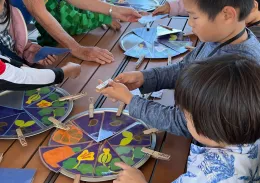 Plant Life Cycle StationStudents learn about the plant life cycle from seed back to seed. The students visit our Three Sisters Garden and get to choose a pumpkin, squash, or gourd to take home. |
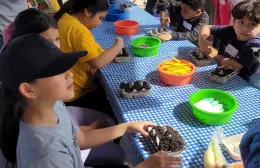 Nutrition StationStudents explore, harvest, and use their senses to learn about vegetables and herbs, including the benefits of eating different colors of vegetables. They plant seeds that represent different colors and different edible parts of plants. |
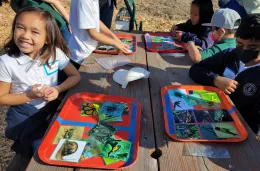 Beneficials and Pests StationStudents learn about beneficial garden critters and how to define garden pests. To reinforce the lesson, they sort photos of garden critters into beneficial and pest categories. We also explain what integrated pest management means and show them seven ways to get rid of pests without using chemicals. The students participate in a scavenger hunt looking for the beneficials and pests that they learned about |
Field Trip 2: Vermicomposting for Kids
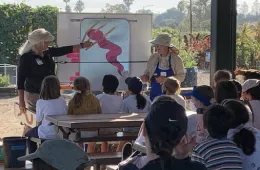
This field trip introduces the students to the concepts of:
- Vermicomposting: What is it? Why do it?
- The anatomy of a red wiggler
- The benefits of vermicomposting
- How to build, maintain, and harvest a small vermicomposting bin
- How to use vermicompost
Students learn that vermicomposting is the process by which worms convert organic materials into compost. We show them red wiggler worms, various types of worm bins, and explain what ingredients go into the bins. Then the students make a mini vermicompost bin.
Time required: approximately 2 to 2½ hours.
Please note: 35 students maximum.
Field Trip 3: Native Bees in Our Backyard
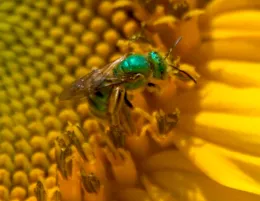
This field trip introduces students to the concepts of:
- Native bees in our area
- Bee anatomy
- Pollination by native bees
First, we introduce students to the garden, then they rotate through three interactive stations described below. We conclude by reviewing the key concepts and lesson objectives in a question-and-response format.
Time required: approximately 2 to 2½ hours.
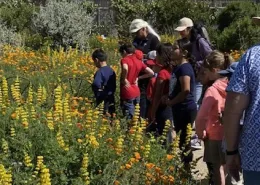 Different Types of Native Bees StationStudents learn about three types of native bees (Ultra-Green Sweat Bee, Valley Carpenter Bee, and Yellow-faced Bumblebee), what is unique about each type, and how they benefit our gardens. They will observe native bees and other insects in the gardens. |
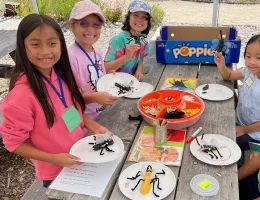 Native Bee Anatomy StationStudents learn about the anatomy of the three native bees and their anatomical differences. They make a playdoh bee based on one of the three native bees to take home. |
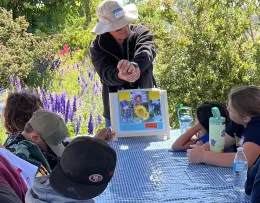 Native Bees and Pollination StationStudents learn what pollination means, what type of flowers different native bees like to visit, and how native bees contribute to the pollination of plants. They make a seed ball using clay and native wildflower seeds to take home to plant. |
About Us
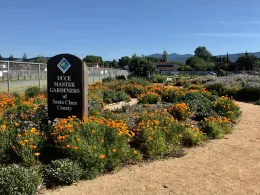
The field trips for kindergarten through 3rd grade are conducted at the UC Master Gardeners Demonstration Garden and Community Education Center. Our four-acre parcel is within Santa Clara County’s 287-acre Martial Cottle Park, which showcases the area’s farming past and celebrates the agricultural heritage of Santa Clara Valley. We demonstrate many aspects of gardening in this parcel, from native plants to vegetables to fruit trees and more. We are located at Martial Cottle Park, 5283 Snell Ave, San Jose, CA 95136.
“Lessons in the Garden” is a garden-based curricula that support California life science standards and nutrition program objectives. A pilot field trip program was conducted in fall 2017. We received the Santa Clara County Open Space Authority (OSA) Measure Q grant which provided transportation funds for six Title 1 and/or schools in low-income communities from 2017-2019.
This program won a 2020 UCCE statewide competition “Search for Excellence Award” that recognizes outstanding UC Master Gardener projects that support the mission of the UC Master Gardener Program.
During “field trip season,” we run trips once a week, with 6 in the fall and 8 in the spring.
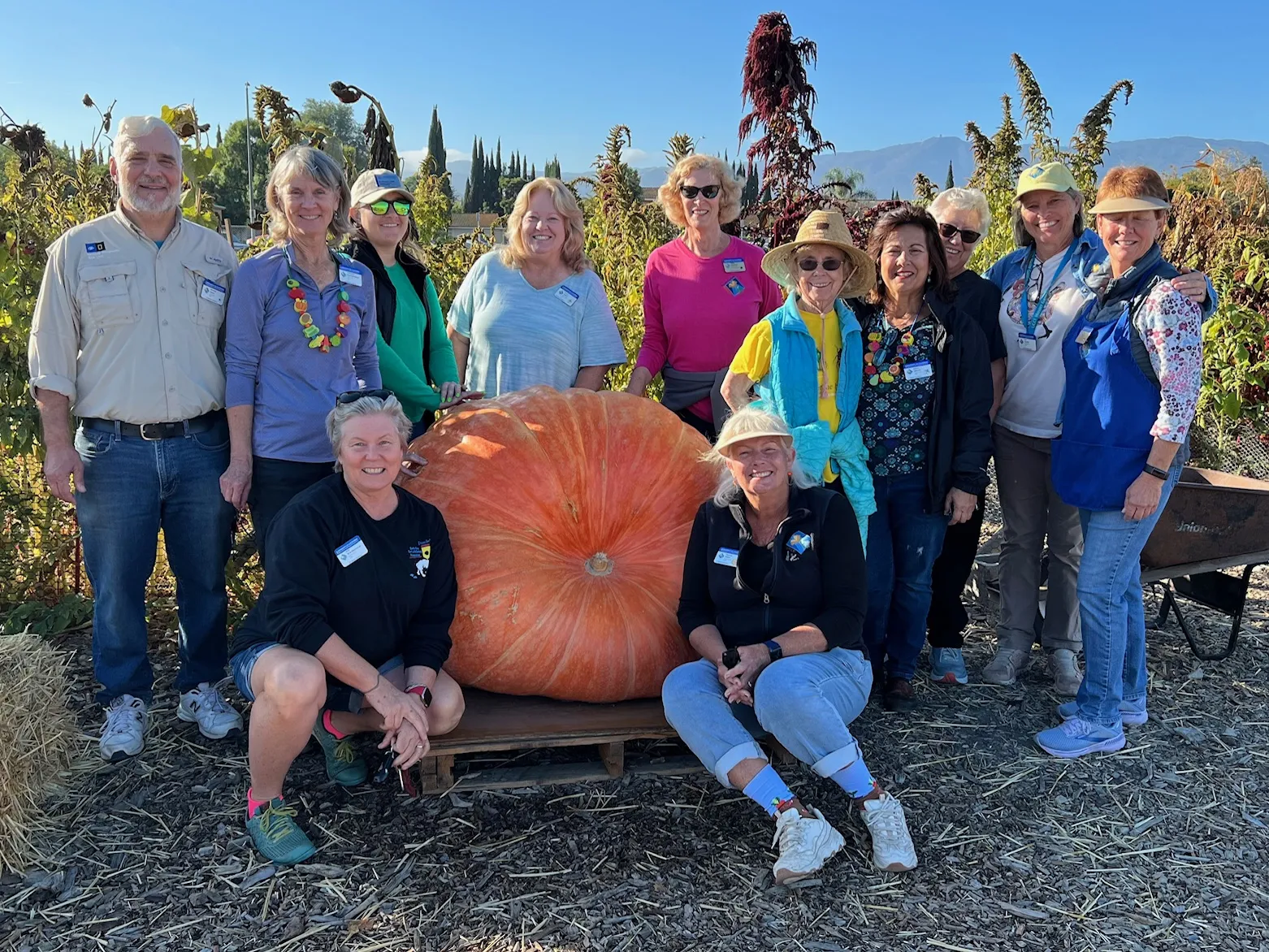
Operated in partnership with the Santa Clara County Parks & Recreation Department.