
Tomatoes > Public Tomato Trial
About the Trial
In 2025, the Santa Clara County Master Gardeners invited gardeners to join them in trialing three tomato varieties: Green Doctors, Queen of the Night, and Sart Roloise. The purpose of this citizen science project was to learn how the tomatoes would perform for gardeners across the county under a variety of growing conditions. Variables include different microclimates, different types of gardens, and people with different preferences for tomato appearance and flavor. Participants evaluated tomatoes for four traits: blossom end rot resistance, flavor, vigor, and yield.
Summary of Results
Green Doctors
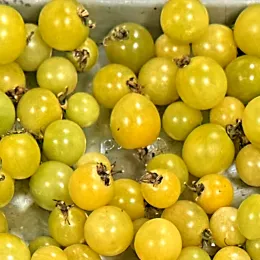
Of the three varieties, Green Doctors received the highest ratings, performing well in yield, vigor, and flavor. Gardeners generally enjoyed the flavor, commenting that it was “very sweet when ripe” and had a “good combination of sweetness and acidity.” They noted that the tomatoes should be fully ripened for optimal flavor, but that the bright green color could make it “more difficult than other varieties to tell when ripe.” Yield and vigor both showed mixed responses: some reported it had “vigorous growth” and a “very abundant yield,” while others said it was “not as abundant as other cherry tomatoes.” Gardeners also warned that the ripe fruit is prone to splitting. Green Doctors had no issues with blossom end rot.
58% of gardeners said they would grow Green Doctors again.
Queen of the Night
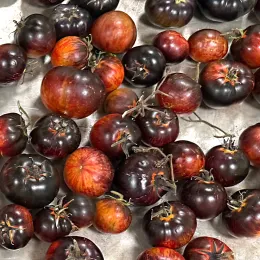
Queen of the Night had mixed reviews. The most positively reviewed aspect of this variety was its appearance, with many people remarking on the dramatic dark purple, red, and orange coloring. While some liked the taste, calling it “sweet with a hint of tartness,” others commented negatively on the tomatoes’ very thick skin and slightly mushy texture. The vigor and yield were ranked as average. Queen of the Night had no issues with blossom end rot.
53% of gardeners said they would grow Queen of the Night again.
Sart Roloise
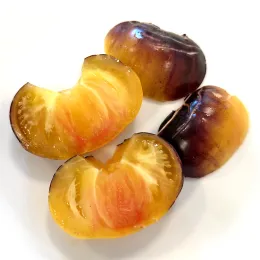
Comments on the Sart Roloise variety were mixed, but generally negative. The main complaint was its mild taste. Although some gardeners enjoyed it, most found the flavor to be bland and the texture “mushy.” This variety seemed more susceptible to disease than the others, but some found it vigorous. Additionally, this variety experienced issues with blossom end rot at the beginning of the season, although this diminished over time. The yield also received mixed reviews. The coloring of this tomato is a dark purple, which “changed to partly yellow to indicate that the tomato is ripe.”
48% of gardeners said they would grow Sart Roloise again.
Average Ratings for Trial Tomatoes
Each trait was rated on a scale from 1 (very poor) to 5 (very good). Higher numbers mean a more favorable rating.
Trait | Green Doctors | Queen of the NIght | Sart Roloise |
|---|---|---|---|
Yield | 3.8 | 3.7 | 3.2 |
Vigor | 3.9 | 3.7 | 3.5 |
Flavor | 4.1 | 3.7 | 3.5 |
About the Participants
94 people recorded their tomato results. Some provided additional information about their gardens.
Most common garden types
- Raised beds – 39%
- Containers – 23%
- In ground – 23%
Common ways of watering
- Drip irrigation – 42%
- Garden hose – 35%
Feeding the soil
- Added compost – 68%
- Added fertilizer – 45%
Growing conditions
- 58% of participants reported that summer 2025 was cooler than average
- 35% said it was average temperature
Growing challenges
- Vertebrate pests (such as deer, birds, and squirrels) – 26%
- Plant disease – 26%
Participant locations
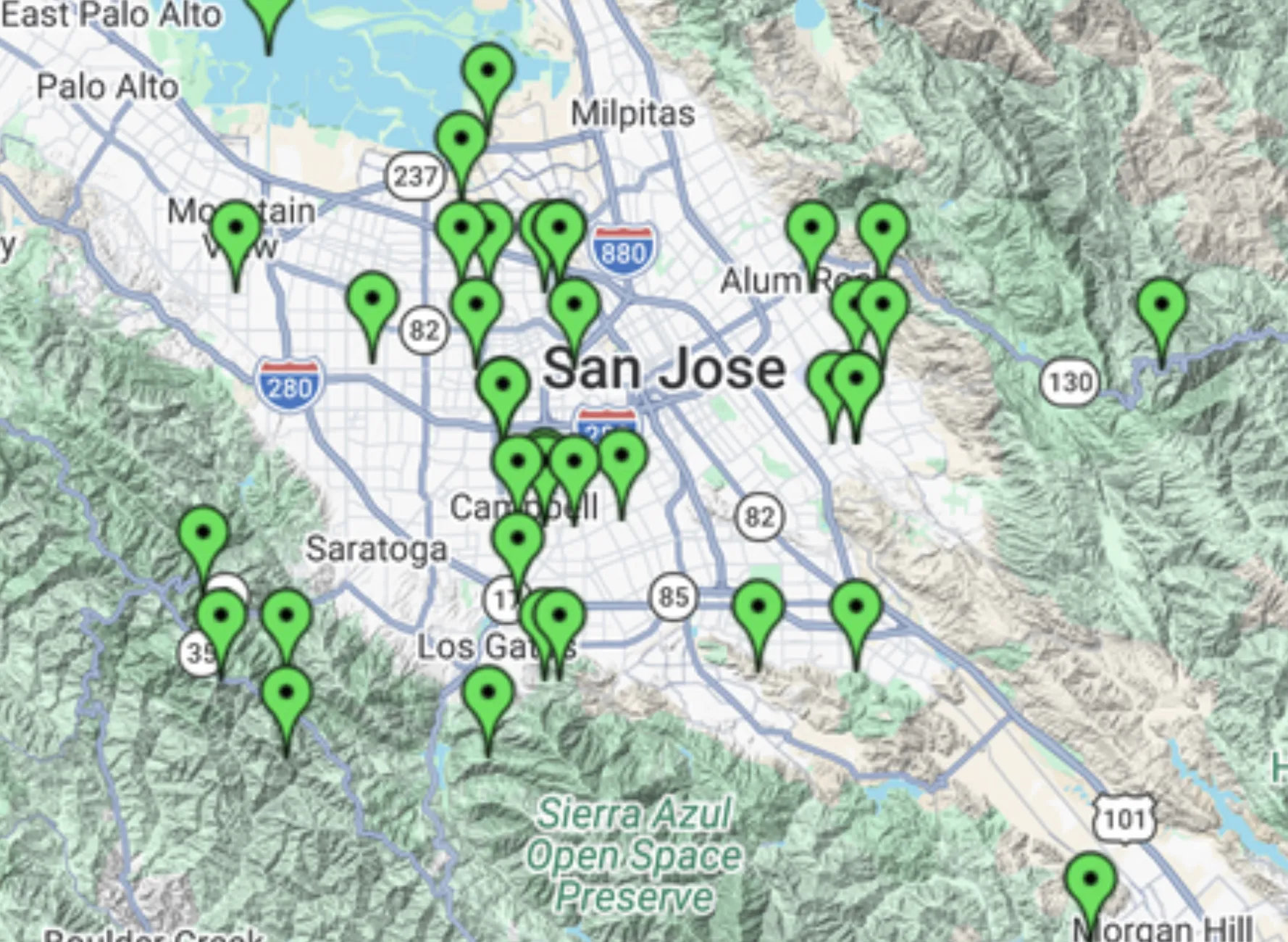
Tomatoes were grown in a variety of growing conditions across Santa Clara County.
Compiled by Lucy Diekmann and Lauren von Aspen, March 2026