UC Master Gardeners of El Dorado County

Central Sierra: Master Gardener Articles | El Dorado County

Published in local periodicals, this collection of articles is a treasure trove of advice from UC Master Gardeners of El Dorado County for the residents of this beautiful region. 
Central Sierra: Benefits of Gardening with California Native Plants | El Dorado County

Body

Native plants are adapted to the dry climate, support ecosystem's biodiversity. 

Spring is a good time to evaluate your landscape and make potential changes to decrease your water use in 2026. A good starting point is to incorporate a California native plant or two into the garden. Many native plants can survive with minimal supplemental water once they have become established.

California includes many different native plant communities. 

Native plants come from across the state and are adapted to varying habitat conditions that include coastal, inland, foothill, and desert. The natives for ornamental plantings in El Dorado County are best if of local origin that have adapted to our soil and microclimate conditions.  

Native plants from appropriate plant communities can mix with other plants from similar climates with like water requirements. Natives should not be planted near a lawn, or with plants that have high water needs. Very good drainage and careful watering the first year, along with planting a bit above grade so water percolates away from the crown of the plant help ensure success. Native plants should go in native soil, be watered deeply and infrequently once they are established.

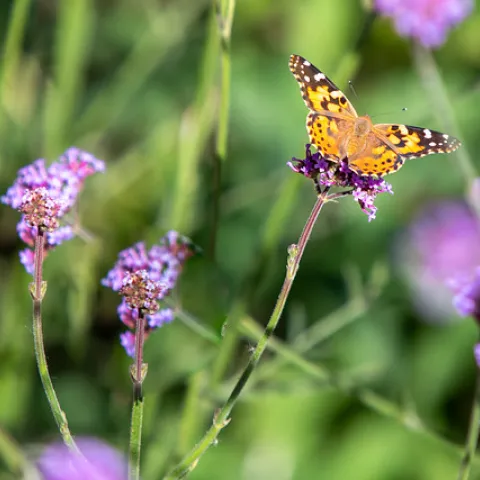
Using natives that are adapted to our area will also attract local wildlife. 

The local native plants are food sources for wildlife as well as shelter from weather and predators and offer nesting sites. At the UC Master Gardeners of El Dorado County's Sherwood Demonstration Garden, home to sixteen different types of gardens, the winter native garden is home to a variety of resident and migrating bird species. Winter blooming plants provide nectar and pollen for residents like hummingbirds and native bees. Two native shrubs that offer berries for birds are Toyon, Heteromeles arbutifolia, and Oregon Grape, Berberis aquifolium. Western Redbud, Cercis occidentalis, offers seeds and spectacular spring flowers. Native oaks provide acorns and host a wide variety of insects eaten by birds. Hummingbirds are drawn to the red flowers of California Fuchsia, Epilobium canum, and the lovely blooms of the Red Flowering Currant, Ribes sanguineum

Another excellent Natives Garden can be found within the U.C. Davis Arboretum. The Mary Wattis Brown Garden of California Natives features an extensive collection of native plants, a natives meadow and native grass landscapes. 

Look for inspiration in native gardens around you, and then make some additions to your own landscape. 

This article, by UC Master Gardener of El Dorado County Debbie Hagar, originally appeared in the Mountain Democrat in April, 2026


Visit the Natives Garden at the Sherwood Demonstration Garden, 6699 Campus Dr. Placerville, CA. Open hours are season-dependent, and can be found on this page of our website

If you would like to speak with a UC Master Gardener of El Dorado County, please reach out! 

Ask a Master Gardener

UC Master Gardeners of El Dorado County

Central Sierra: Save Water with Drip Irrigation | El Dorado County

Primary Image
agricultural field shows rows of plants alternating with drip irrigation lines
Body

Drip irrigation is well-suited to the El Dorado County landscape. 

It is doubtful that anyone living in El Dorado County, or the whole of California for that matter, is not aware of drought conditions impacting everything from household water use, home gardening, commercial agriculture, new home construction, etc. The list is a long one. We all need to do our part to help conserve what water is available, and this article, I hope, will help sway gardeners to switch to drip irrigation for their landscapes. 

The history of drip irrigation

Very crude drip systems were used in ancient times, but modern drip irrigation was developed in Israel in 1959, because of the need to grow food crops in their dry, desert country. Drip irrigating expanded through the decades to enable farmers, nurserymen and home gardeners to more efficiently use water to grow everything from crops to ornamentals. This is primarily because drip irrigation technology applies water slowly and directly to the targeted plant’s root zone. Another bonus is that oddly shaped areas or hilly terrains are much better irrigated with drip systems than overhead sprinklers. 

Installing and maintaining drip irrigation

Drip irrigation involves placing tubing with appropriately spaced emitters on the ground alongside the plants, and the emitters slowly drip water into the soil at the root zone. Irrigating using this method has many benefits, including:

  • Minimizing diseases due to water not contacting leaves and stems
  • Reducing weed growth in dry rows between plants
  • Increasing effective watering on uneven ground
  • Reducing leaching of water and nutrients below the root zone.

Initially setting up a drip irrigation system is time intensive, but once it is done, the only maintenance necessary is periodically checking to see that emitters are functioning properly and not clogged; many gardeners walk around their landscapes on a weekly basis to see that everything is working properly. Newer tubing is much better than in the past and does not deteriorate as quickly when exposed to sun. It can be covered with mulch if the appearance on top of the ground is not appealing, but one word of caution – it is a good idea to take a picture of a system once it is installed and before covering with mulch. This lessens the chance of cutting into it with a shovel or other garden tool. 

In recent years, in-line tubing has become more readily available. This innovation precludes having to punch into lines to insert emitters because they are already installed inside the drip tubing. Manufacturers claim that this type of system does not become clogged with dirt or insects and is much better adapted to being covered with soil or mulch. Spacing of the built-in emitters is usually every nine or twelve inches and can be used in straight rows, as in vegetable beds, or wound around a landscape in various patterns. 

Everyone needs to do their part for water conservation and in the garden utilizing drip irrigation is a big step toward helping reduce water use.

This article, by UC Master Gardener of El Dorado County Sue McDavid, originally appeared in the Mountain Democrat in April 2026. 


If you have any questions about the best way to irrigate your garden in El Dorado County, please reach out to us and we'll give you research-backed information to help you water most efficiently. 

Ask a Master Gardener

UC Master Gardeners of El Dorado County

Central Sierra: Best Plants for Imagination Gardens | El Dorado County

Primary Image
small container garden contains three small echiveria and other succulents, pebbles and a tiny wooden A-frame house
Body

Imagination gardens are a fun way to plant container gardens 

Almost all these tiny plants do best in indirect light and in moderate temperatures; in other words, indoors in the summer and winter. They may outgrow a small container but can be divided or pinched back to stay in scale. Do keep their feet damp but not wet, except the air plants, which prefer only misting or a weekly rinse. Most of these plants will live 3-4 years, the exception is the gloxinia which last only one season but may regrow after dying back. Most will need to be divided after a while, so you can use the cuttings for new plantings, or change out the look in your garden for variety.

Most of these will do well in shallow soil, 3-8 inches deep. It should be well-drained, in a saucer, so you can water frequently in warm weather but not allow the roots to be waterlogged. Use indoor potting soil, or a succulent potting mix if you will be planting echeveria and aloes. 

Do not use “planting mix,” “garden soil,” or “top soil” as your primary soil component. These are too heavy or otherwise unsuited as a container medium. You can mix these with vermiculite or other soil amendments, but it is easier just to buy the "potting mix." Do not use gravel in the bottom- it aggravates drainage issues. 

Consistent, sufficient watering is important for containers because they can dry out quickly. Check containers daily. Stick your finger into the top inch of soil. If it feels damp there is no immediate need for water. If it feels dry, water until some runs out the bottom of the container. Note: If a container dries out completely and the soil becomes hydrophobic, water may run through the container without actually moistening the soil. You may need to soak the entire pot.

Succulents  

  • Echeveria minima, echeveria elegans – white, or echeveria elora – pink
  • Small aloes – some stay quite tiny
  • Kalanchoe, stays small for months, can be pinched back

Mosses  

  • Pillow, mood, java, and feather moss are smaller varieties
  • Scotch moss Sagina Subulata Aurea, has tiny white flowers

Ferns 

  • Button ferns or asplenium (spleenwort ferns)
  • Maidenhair is slow growing but will outgrow a small container
  • Nephrolepis exaltata ‘Fluffy Ruffles’

Air plants 

  • Tillandsia spp. - silver or gray-leaved varieties tolerate drier conditions than green varieties, and some are colorful-such as Tillandsia maxima with red leaves

Small shade-plants 

  • Hostas
  • Oregano, and Cuban oregano -Plectranthus amboinicusis
  • Small leaf varieties of mint
  • Miniature ivy

Tiny flowers

  • Sinningia pusilla (and other miniature gloxinias) grow just 3 inches tall. Will die back before they regrow and bloom again.
  • Ageratum has small species that top out at 6-8 inches, with blue fluffy flowers

Have questions about building your imagination garden or anything else home garden related? Reach out to the UC Master Gardeners of El Dorado County by phone, 530-621-5512, or with the link to our Ask a Master Gardener survey. 

Ask a Master Gardener

UC Master Gardeners of El Dorado County

Central Sierra: Grow a Loofah from a Seed

Primary Image
a long skinny green vegetable grows on the ground under green leaves
Body

The versatile loofah (or luffa) is edible, but famous as a natural sponge  

Luffa, often spelled loofah, Luffa aegyptiaca, is a vining gourd in the cucumber family. It can be used as a vegetable when it is young and the cucumber-like fruit is only six inches or less. It is rich in nutrients and high in fiber, often used in stir-fries and other Asian cuisine. Once it has matured, it dries into a fibrous, stringy interior, and is then used as a biodegradable sponge for the kitchen or bath.

a long skinny green vegetable grows on the ground under green leaves
luffa aegyptiaca photo by J. Hobbs

Seeds can be started indoors four to eight weeks prior to last frost. Luffa has a long growing season of 100 to 180 days. For best results, soak seeds for 24 hours to help with germination. Seeds need consistent warmth to germinate, between 75-90 degrees F. A heat mat works well for this. Seeds can also be direct sown in warm soil, usually around mid-May in many areas. You should start your seeds indoors soon for harvest in September. 

Once the danger of frost has passed, seedlings can be hardened off by leaving them outdoors for several hours each day. 

The tricks for planting and growing luffa

Plant luffa in well drained fertile soil rich in organic matter. Ideal soil is neutral to slightly alkaline with high moisture and good drainage. Keep soil consistently moist but not soggy. Approximately five gallons of water per plant per week is a good guide. Fertilize using balanced fertilizer when flowers appear, as you would with cucumbers. 

Small seedlings grow slowly, while the roots become strong, and luffas prefer warm dry climates. Luffa grows best in full sun; plants produce flowers in two months after planting. Flowers are bright yellow.

Pruning is a must to keep the vines healthy. The vines will grow everywhere if not kept under control. If grown in optimal conditions, gardeners may get between 10-40 gourds per plant! Each luffa can produce between 100-300 seeds on average. However, for every three seeds you plant, only two will grow, even for professional growers. You can grow luffa in a 25-to-30-gallon pot or large grow bag with a trellis of some sort to support growth. 

Harvesting for sponges is the fun part 

Harvesting luffa for sponges is the fun rewarding part of growing this plant. Gourds should be ready to harvest in the fall. To use as kitchen or bath sponges, the luffa should be dried out, be yellow to brown in color, and light weight. If you shake them, you can hear the seeds rattling inside. You can shake out any seeds to keep for your spring planting and share some with friends.

If it is close to fall frosts, you can harvest them and allow them to dry inside your home, just watch for signs of mold.  Peel off the outer brittle brown skin, revealing fibrous, spongy material inside. Rinse and wash the luffa then let it dry completely, then cut the luffa into your desired sizes. Use your sponges as cleaning tools, and of course for your relaxing baths. Happy Planting!

This article by UC Master Gardener Judy Hobbs originally appeared in a March 2026 issue of the Mountain Democrat

If you would like to discuss luffas or any other plant in your home garden, you can Ask a Master Gardener for help. Submit your question through our online survey tool. 

Ask a Master Gardener

UC Master Gardeners of El Dorado County

Central Sierra: Spring Shrubs Bring Alluring Fragrance to the Air

Primary Image
pink four-petaled blossom bunch on long dark green leaves
Body

Scents of Spring Shrubs 

Ahhhh…Spring! Our California foothills spring flowering shrubs are not only stunning to look at but also provide alluring fragrances. In planning for the future, here are some of the most fragrant early blooming spring shrubs that you can add to your garden, which provide the promise that winter will soon be ending.

Let’s start with common Lilacs, Syringa vulgaris. There is nothing quite like the air being perfumed by these springtime favorites. They are also loved for their toughness and reliability. Once established, these shrubs can live for over 100 years. The floral stems are great for cutting and bringing inside to enjoy. Pollinators, such as butterflies, seek out lilacs. The blooms usually come in a fluffy variety of purple colors, pale to very dark. There are also varieties of white, cream, and pink.

Even though it is not in the same botanical family as common Lilacs, you may want to consider getting California Wild Lilac, Ceanothus spp. A native, drought tolerant, fragrant, perennial shrub, it can also act as a ground cover. This beloved native shrub turns the California hillsides blue. They do well in infertile conditions, have natural nitrogen fixing abilities and do not need feeding. They appreciate our Mediterranean climate. Bees and butterflies love them!

Who could resist the early blooms and fragrance of the Sweet Box plant, Sarcococca? Its tiny white flowers, with vanilla scent, fills the air for weeks in February and March. Dark green leafed, this evergreen ornamental shrub is outstanding. It thrives in partial shade, is tolerant of tree roots, low irrigation, and does well in a large container. Another plus, deer don’t seem to like really them.

pink four-petaled blossom bunch on long dark green leaves
daphne odora, by P. Atkins. Used with permission. 

The intoxicating scent of Winter Daphne, Daphne odora, will make guests at your spring garden say, “What smells so good?” Clusters of the scented pink and white flowers open gradually, but when they do, you immediately know Daphne is blooming. The fragrance is exquisite. Good drainage is key in successfully growing this shrub. Add ample compost to lighten the soil, so it will drain quickly. Ideal in large pots, situate it in partial shade near your door, so you can enjoy its delightful floral perfume as you are leaving or coming home.

Once established, the luscious four-petaled, citrus scented white blooms of the native California Mock Orange, Philadelphus lewisii, can beautifully frame a garden gate or trellis. This native plant was discovered and collected in 1806 by Lewis & Clark during their famous overland expedition to the West. It is a tough, drought tolerant shrub that needs little supplemental water. The early season nectar supports pollinators including bees, birds, and insects. The arching woody branches provide nesting cover for birds. Easy to grow, plant in full or partial sun, using average garden soil. 

If one of your gardening goals is to experience a scent-sational, springtime yard, consider adding some of these uniquely fragrant shrubs. The moment you get a delightful whiff, you’ll wonder how you ever lived without them.

This article by UC Master Gardener of El Dorado County Pauline Atkins originally appeared in the Mountain Democrat in March 2026. 

UC Master Gardeners of El Dorado County

Central Sierra: Tech Can Help You Build a Smart Home Garden

Primary Image
a finger manipulates an app on an iPhone sitting on a surface
Body

Technology for the Home Gardener 

Technology can help the home gardener in myriad ways. Technology applies scientific knowledge for practical purposes to solve problems and make life better. Technology is a tool for the garden and gardeners. We can use it to complete routine tasks or tackle more complicated matters, all in an effort to accomplish our gardening goals. 

Technology for the garden much of the time comes in the form of an app, short for computer application, which is software designed to perform specific functions. Apps are downloaded to computers and other electronic devices. Many apps use artificial intelligence (AI), a system that performs tasks without significant human effort or oversight. 

Smart weather stations give us timely, detailed information about our weather by tracking temperature, barometric pressure, wind strength and direction, rainfall, and UV rays. Originally, SMART stood for Self-Monitoring, Analysis and Reporting Technology, but today SMART is also a broad range of intelligence and advanced technology.  

A comprehensive smart garden integrates technology to streamline gardening processes to make them more efficient and sustainable. 

There are solar-powered smart irrigation systems that utilize our garden’s current weather data, using past microclimate temperatures and humidity. There are weather-based sensors that can help us apply proper irrigation to prevent over- and under-watering. The sensors are automated and can be adjusted for a plant’s age, the current weather and the condition of the soil. There is an app that tracks sunlight. 

Healthy garden soil is essential and there is technology that can determine soil texture. With that information, we can learn about our soil’s water drainage and retention, workability, and nutrient retention. Also available are soil monitors that can measure soil moisture content, pH, temperature, and natural nutrients. 

With a detection app, we can know when a critter visits our garden. Early detection may prevent damage. There are apps to determine whether it is a pest or a beneficial. If it is a pest, we can utilize a pest management app and / or visit the UC Master Gardeners of El Dorado County website to learn about research-based management, control, and treatment for natural solutions to create a more sustainable garden. 

There are many plant recognition apps that operate from our photos of a plant’s leaf or flower or a succulent, cactus, or mushroom. Utilizing again our own photos, there are apps to identify and diagnose plant needs, problems, and diseases. 

Living in the foothills, we might want to use an app that will alert us of an upcoming temperature drop. We can plan our garden with a planning app to place the right plant in the right place, that will strengthen the likelihood of a thriving garden. There is technology for all facets of composting. Robots can assist in producing and weeding vegetable gardens and can mow our lawn. 

We would be wise to use the tools of technology that were developed specifically to help us have beautiful and healthy gardens.  

This article, written by UC Master Gardener of El Dorado County Kit Smith, originally appeared in the February, 2026 issue of Around Here Magazine. 

Have a Gardening question? Ask a Master Gardener! Call 530-621-5512 or complete the survey linked below

Ask a Master Gardener

UC Master Gardeners of El Dorado County

Central Sierra: From Now Til March, It's Time to Prune Your Roses

Primary Image
a red rose closeup
Body

An Invitation to Garden Beauty: A Rose Pruning Primer  

It’s that pruning time of year! The period from Christmas until early March (depending on elevation) is the best time to get started. Your bushes will look more attractive and produce larger flowers with good pruning, and you can shape them to the proper size for your garden. The removal of dead and diseased canes also improves rose bush health by stimulating the production of new growth with the emergence of vigorous new canes from its base. Even if your bushes still have leaves and flowers, their removal now is a chance to wipe away last year’s problems and set a new path for the coming season.

The best tools required for rose pruning 

Use sharp bypass hand pruners for most cuts, and long-handled bypass loppers for thicker canes and hard-to-reach places. A fine-toothed curved saw will remove the thickest canes. A pair of leather gloves reaching to the elbows protects from thorn pricks.

The parts of the rose that should be pruned away 

Completely remove all dead canes (grayish or brown in color and shriveled looking) and canes that have been less productive with a clean cut close to where they emerge from the crown at the base of the bush. Completely remove diseased and damaged canes or cut them back to healthy wood at least one inch below the affected area so the inner wood (pith) is white. Remove all suckers coming from the root stock beneath the bush. Select the strongest three to six outer canes (smooth and green or bronze in color) to become the foundation for next year’s growth. They will ideally be arranged in a vase-like shape around the open center of the bush when pruning is finished. 

Remove with a clean cut at the parent stem any growth that is smaller than a pencil and which crosses or rubs other growth. Direct new growth away from the center by making cuts at a 45-degree angle, one-quarter inch above a bud that faces upward and to the outside of the bush. Buds can be found at leaf attachments; some will look like red dots or green smiles, while others might already be pushing leaf growth out. Remove all growth headed toward the plant’s center to discourage fungal diseases by improving sunlight access and air flow. Shorten the remaining canes on established hybrid tea, floribunda, and grandiflora varieties by one-third to one-half in length. Shrub and English roses should be given a lighter pruning, with 6-8 healthy canes left on the bush.

Post-pruning tasks for healthy, beautiful roses

After pruning, remove and dispose of all remaining leaves, along with pruned cuttings, fallen leaves, and debris collected from under the bush – no composting. Make a heavy application of dormant spray or horticultural oil on a day where there is no wind and there will be no wet weather for at least 24 hours. Thoroughly spray the bush and the ground beneath it to suffocate any remaining insect eggs or fungal spores. Apply a layer of mulch 2-3 inches deep, pulled away from the base of the plant. Fertilize about four weeks after pruning; water deeply after application. 

Enjoy a wonderful rose year!

Have a rose pruning question? Ask a Master Gardener in El Dorado County by clicking the button to our information survey below or call 530-621-5512 and leave us a message. A volunteer will get back to you during our office hours. 

Ask a Master Gardener

This article, written by Donna Marshall, UC Master Gardener of El Dorado County, originally appeared in the Mountain Democrat in January 2026. 

UC Master Gardeners of El Dorado County

Central Sierra: Seed Starting Using the Winter Sowing Method

Primary Image
a green seedling emerges from dark soil
Body

What is the Winter Sowing method of seed starting?  

An effective, simple, and low-cost seed starting method, Winter Sowing is the process of starting seeds in containers outside during the winter months. Planting seeds in clear or translucent containers, such as milk jugs, creates a greenhouse effect, trapping heat and moisture, thus allowing the seeds to naturally stratify in the winter environment. As temperatures fluctuate, seeds are protected from the harsh winter elements and are exposed to natural freeze-thaw cycles. This exposure hardens the seeds and results in sturdy seedlings that are already acclimated to outdoor conditions.

What equipment is needed to start seeds when Winter Sowing?  

  • Recycled, clean and well-rinsed milk jugs (Using jugs and bottles, salad containers, or storage totes have also been used with success)
  • Sharp scissors
  • Exacto knife
  • Plant labels
  • Weather resistant marker
  • Duct tape
  • Seeds suited to winter sowing

Step One: Prepare the jugs for seed starting 

Cut the container horizontally in half about four inches up from the bottom leaving a small hinge to allow for easy opening and closing. The small area of plastic directly below the handle is a great location for the hinge.

Make four to six holes in the bottom of the jug with a sharp knife or screwdriver to allow for drainage. This is essential as the jugs are open to the elements and this allows moisture to freely drain out of the bottom.

Fill the bottom four inches of the jug with a quality potting mix that has been moistened. The soil should hold its shape when squeezed.

Step Two: Choose suitable seeds for Winter Sowing 

Not all seeds are suitable for this seed starting method. Choose cold hardy seeds that will tolerate winter sowing and follow the instructions on the seed packet as directed for spacing and depth of planting. Some good choices include:

Amaranth, Aster, Bachelor Button, Bells of Ireland, Broccoli, Calendula, Cauliflower, Coneflower, Cosmos, Foxglove, Hollyhock, Lupine, Milkweed, Oregano, Radish, Rudbeckia, Salad Greens, Thyme, and Yarrow. 

Step Three: Label and seal the jug 

It’s helpful to label both the outside of the jug and include a plant label inside. Seal the jug closed. Use duct tape to connect the cut edges back together all the way around. Leave the top open. Keeping the cap off provides ventilation.

Step Four: Set the jugs in a sunny spot outside 

The jugs generally stay moist throughout the winter enduring rain, snow, and fluctuating temperatures. Water if needed. Open jugs in spring after seeds sprout and danger of frost has passed. When seedlings are at least two inches tall with two sets of true leaves, begin transplanting the seedlings into your garden beds or containers.

Starting seeds in containers outside during the winter months is a good way to grow sturdy seedlings that are already acclimated to outdoor conditions when it's time to plant in the spring. By trapping heat and moisture, the container creates a greenhouse effect, and the seeds are able to experience the required weathering process naturally at the same time that seeds are protected from the harsh winter elements. 

This article by Sara Elledge, UC Master Gardener of El Dorado County, originally appeared in the Mountain Democrat in December 2025. 

Have a winter gardening question? Ask us! Use our survey tool - click the button below - to send the details of your question and a UC Master Gardener of El Dorado County will get back to you. 

Ask a Master Gardener

UC Master Gardeners of El Dorado County

Central Sierra: Take Advantage of Winter Dormancy for a Gorgeous Spring Bloom

Primary Image
artichoke blossoms
Body

Winter Dormancy: Gardening For the Fourth Season 

The winter holidays are just around the corner, and hopefully you have your garden in order. Spring bulbs are planted. Garlic and potatoes are in the ground. Your garden has been “put to bed.” Tools have been sharpened and put away. Tender plants are mulched and waiting for the anticipated winter rains. Most plants are entering their dormant cycle and you, no doubt, are ready to join them. 

Not so fast! Winter in the garden is a time for planting, pruning, and planning. 

Take advantage of winter dormancy with bare-root plants

artichoke blossoms

Now is the time to take advantage of winter dormancy. From December through March, your local nursery will have bare-root plants. These are plants that are dug while they are dormant, and they will have their roots exposed. Often, they are more affordable than containerized plants, and they are easier to handle. 

You’ll find fruit trees, cane berries, asparagus, artichoke crowns, rhubarb, kiwi, strawberries, grapes, roses, and vines available as bare-root plants. Check with your local nursery early and after the first of the year. This gives you an opportunity to plan your location, prepare the planting hole when the ground is pliable but not soggy and get ready to welcome some new plants into your garden.

Understand the best time to prune

Mark your calendar: January is time for winter pruning, but you’ll want to plan and space your tasks between bouts of precipitation. Perennials that weren’t cut back in fall should be pruned in January. This is also the time to prune cane berries. 

Fruit trees require pruning to shape the tree and open the tree center for the spring growth. If you already have fruit trees, January is the time to apply horticultural oil to control scale, mites, aphids, and other insects. Once again, check the weather and make certain that there are at least 24 hours of dry weather around the application. 

Design with plant rotation in mind

Now before you relax and reach for the seed catalogues, grab a sheet of paper and make a quick drawing of last season’s vegetable and annual garden. Note where you planted each plant family and think about where you can rotate your plantings for the upcoming year. Plant rotation is an important step in sustainable gardening. Plant rotation builds and sustains helpful soil microbes, reduces the spread of soil-borne disease, helps plants take in more nutrients, and makes for a healthier garden. 

The goal with plant rotation is to avoid planting the same plant families in the same location year upon year. Ideally, you will rotate plant families from one bed to another over at least a four-year period. 

Planning is important before you shop those seed catalogues, because you don’t want to plan for too many tomatoes or melons if you haven’t set up a good rotation. Learning to identify which plants belong to the same family is your initial task. Tomato, pepper, eggplant, and potato belong together. Cucumber, melon, squash, pumpkins and gourds are related. Cabbage, broccoli, Brussels sprouts, kale, cauliflower, radishes are another family. 

Once you have your families grouped and a rotation schedule established, you can finally kick off your shoes, surround yourself with your seed catalogues, and slip into the gardeners’ relaxed winter dormancy and dream of spring. 

This article by Ola Jane Gow, UC Master Gardener of El Dorado County, first appeared in the Mountain Democrat

Have a Gardening question? Use the “Ask a Master Gardener” button below or call 530-621-5512.

Ask a Master Gardener

UC Master Gardeners of El Dorado County

Central Sierra: Pruning Effectively for Strong, Beautiful Trees

Body

The Basics of Pruning 

Pruning isn’t just about keeping plants tidy, it’s about enhancing the health, structure, and appearance of your landscape. With the right tools and a little know-how, you can promote stronger growth, reduce disease, and even increase flowering in your trees and shrubs.

Pruning effectively starts with the tools

Effective pruning starts with having the right tools for the job. Hand pruners or clippers are ideal for small branches. Bypass pruners make clean, precise cuts; ratcheted pruners offer more power for tougher stems. Loppers with strong blades are great for medium to thick branches. Hedge shears are used for shaping hedges or shearing soft-stemmed plants. Saws are designed to cut through thick, woody branches cleanly, and pole pruners help reach tall limbs without needing a ladder. Battery-powered tools are wonderful, but always watch your fingers! The quality of your tools matters. Well-made tools are a smart investment, but they must be kept clean, sharp, and lightly oiled to prevent rust and plant disease transmission.

Prune trees and shrubs with a plan

Before you start snipping, take a moment to plan—envision your landscape at maturity. Consider how tall and wide your plants will get, and how your plantings fit with each other. Once you have in mind what you’d like your garden to look like in five years, you’re ready to start pruning. 

How, and also when you prune your plants matters

Removing suckers can be done any time of the year. These energy-draining shoots steal strength from the main plant and should be cut off at the base. Thinning crowded branches increases light penetration and airflow, preventing branches from rubbing, and thus reducing pests and diseases. Use heading cuts to control the height and width of trees and bushes. Cutting just above a bud encourages growth in the direction that bud faces. If major size reduction or redirection is needed, prune back to a lateral branch. This can strengthen the structure, slow down overgrowth, and shape the plant’s appearance. 

Try to not pollard a tree which is cutting branches off to be stubs. This creates weak connected branches and doesn’t create an aesthetically pleasing plant. Evergreens respond well to heading cuts, but be strategic. Since where you cut is where growth stops, prune with the plant’s final shape in mind to avoid awkward or no regrowth areas. Always remove dead wood, and if rejuvenating, usually the oldest, widest branches are cut out. A hard and fast rule is to never prune more than one-third of a tree or bush.

Proper timing of your pruning is critical for flowering shrubs and trees. Shrubs that bloom on new wood, like Rose-of-Sharon, Hibiscus syriacus, Butterfly Bush, Buddleja davidii, or Weigela should be pruned in late winter or early spring. Spring-flowering shrubs that bloom on old wood such as lilacs, forsythia, many hydrangeas, or azaleas, should be pruned immediately after flowering. This gives them the rest of the season to grow new branches and develop next year’s flower buds or even a second bloom cycle. 

Pruning can dramatically enhance the beauty and health of your yard. With the right timing, tools, and techniques, your garden will not only look better, but it will also thrive for years to come.

Reach out to the UC Master Gardeners in your county for specific guidance with your yard pruning. 

Have a gardening question? Use the “Ask a Master Gardener” button below, or, in El Dorado County, call 530-621-5512.

Ask a Master Gardener

This article, written by UC Master Gardener of El Dorado County Phyllis Lee, originally appeared in the Mountain Democrat

UC Master Gardeners of El Dorado County