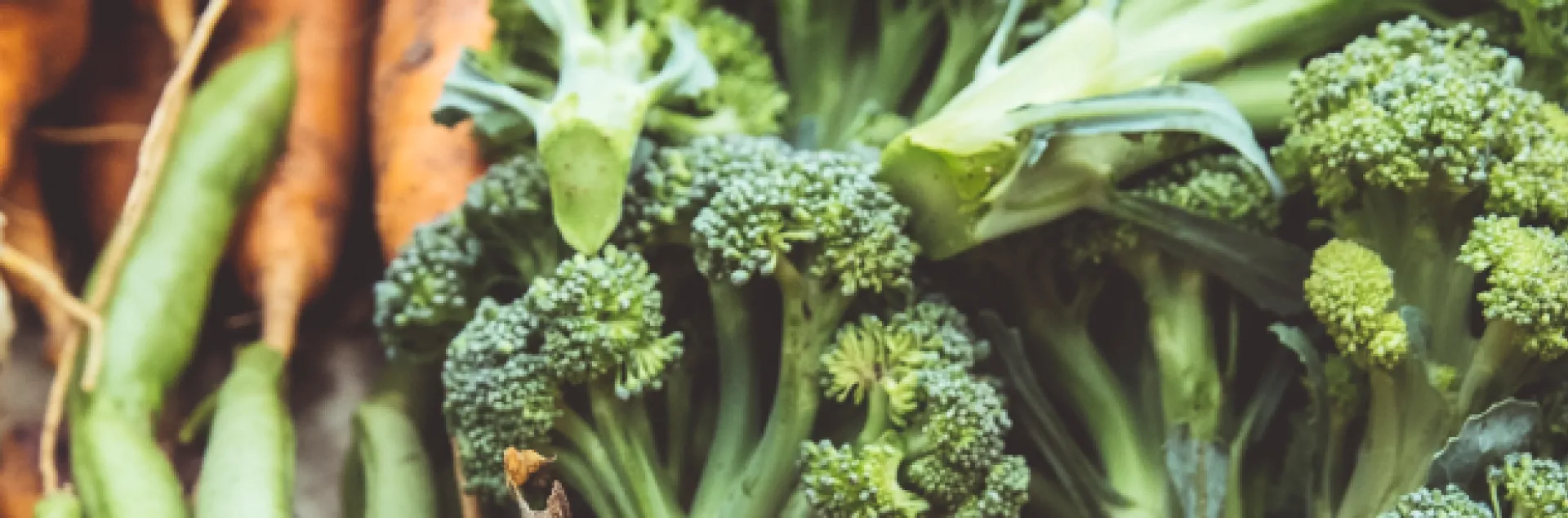
What Does an Edible Garden Need?
Growing a successful edible garden takes planning, correct timing, and a little know-how. But once you have it down it is such a pleasure to eat homegrown produce fresh from the garden. Here's what you need to get started.
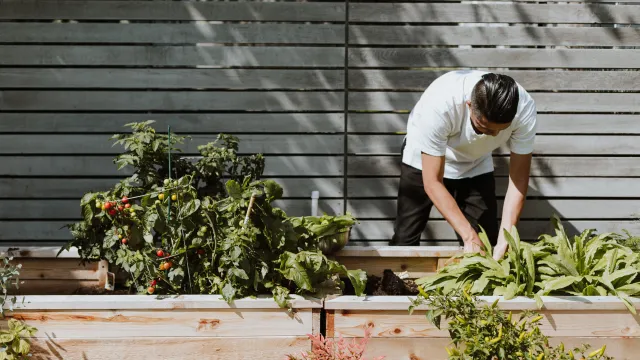
Plenty of sun
Choose a site with a minimum of six hours of full sun -- eight to ten hours is even better. Southern exposure is ideal. Most edible plants prefer full sun; however, root and leafy crops can tolerate light shade.
Climate that's a good fit for what you're growing
• Know your ->climate zone
• Assess your ->microclimate
• Be aware of frost dates
Most edibles prefer to be grown during frost-free periods, which vary within Marin’s many microclimates. For a rule of thumb, begin watching for frost around Thanksgiving and consider planting frost sensitive edibles after St. Patrick’s Day. (These dates are derived from 30 years of historical data from the National Oceanic Atmospheric Administration). Many cool season crops may be planted before the end of winter frost, including beets, broccoli, cabbage, carrots, chard and kale. Check seed packets for instructions.
Rich soil
Edible crops prefer fertile, loamy soil that drains well and holds water on hot days.
A layer of mulch
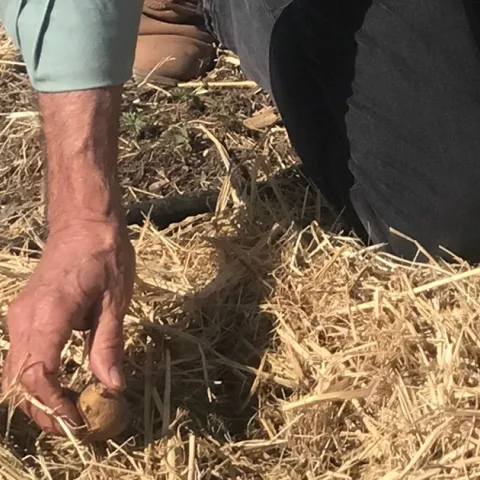
Use mulch to protect against moisture loss, suppress weeds, and keep plant roots cool in hot weather. Learn more.
Easy access to water
Be sure a nearby faucet and hose is easily accessible. Use a ->drip irrigation system if possible.
Ample air flow but not too windy
Choose a site that has air movement but not high winds.
Level topography
A level garden is the easiest to prepare, plant, irrigate, maintain and harvest. On slopes, consider constructing level terraces or raised beds so that water does not pool or run off. Many edibles can be grown successfully in containers.
Adequate drainage
Avoid low areas where water may pool or where ground water stands. Poorly drained soils may create anaerobic soil conditions with inadequate air (evidence: stinky soil). Look for moving surface water and correct if possible (evidence: erosion, exposed tree roots, channels in soil). Redirect drainage as necessary.
Easy access
A conveniently located edible garden encourages frequent visits for care and enjoyment.
A well thought out location
Mitigate any potential problems before you plant. Raised beds solve many problems.
• Identify limitations above ground: wires, structures, street lamps, trees and structures that cast shade, eaves, setbacks, and easements.
• Identify limitations below ground: utilities, plumbing, roots, bedrock, groundwater, etc.
Crops growing at the correct time
A planting calendar is a vegetable gardener's best friend.
Safe food growing and handling
Use best practices to ensure your crops are as safe as they are delicious.
> Visit our Edible Demonstration Garden at IVC Organic Farm & Garden in Novato!
November 2021: Integrating Native Plants in Your Edible Garden


Natives help you reduce water use
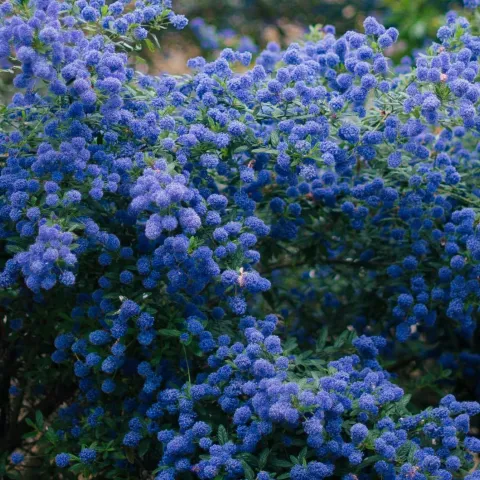
With drought conditions, many people are replacing their higher water use ornamentals or even lawns with native plants. With some native plants like our beautiful Ceanothus, you can stop irrigation totally once the plant is established. Many other plants, like Penstemon, and Salvias require no summer irrigation at all. As we experience more drought years, native plants will be essential for providing needed ornamentals in our landscaping. But why would we need these plants in an edibles garden?
They attract animal life that edible plants need
Native plants attract butterflies, insects, birds, and other animals by providing a consistent supply of nectar, pollen and seeds. They support a steady population of beneficial insects, both insects that pollinate and those that control pests. Native plants aid all kinds of pollinators including native bees, butterflies, moths, and other insects that pollinate our edibles. They also provide natural pest control by bringing to our gardens both predators and parasitic wasps, one of the most important biological controls that gardeners have. Predators like the aphid-eating lady beetle can find refuge under the plants, as well as native bees a nesting site for over-wintering. With native plants in your garden, you have built-in pollinators and pest control.
Natives support a healthy environment
Native plants have evolved to thrive in our native soil. Fertilizers are not needed and in fact, natives do not like rich soil or added compost. Also, because they are so great at attracting insects and animals that control garden pests, there is no need or less need for pesticides in your garden.
Easy to care for
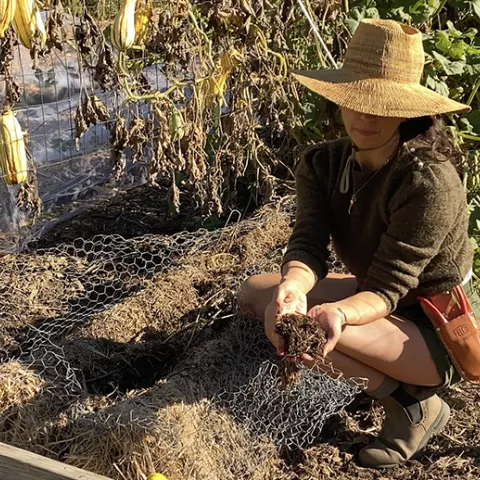
At the end of the summer in the edibles garden, our team spends a lot of time cleaning up plant debris and adding compost to our soil. Native plants need none of this except for some deadheading of flowers and cutting back. For natives, it is best to do minimal ground clean up in the fall so that beneficial insects have the protection to successfully over-winter and emerge healthy in the spring. The native plant area decreases the impact of the more intense edibles clean up that is necessary to reduce diseases in the soil. Our beneficial insects will have their own refuge for the winter.
If you are considering adding some natives to your garden this fall, here is the list of plants that the Native Plant Guild chose for ours. This was an amazing gift to our garden.
| SHRUBS | |
![]() | Ceanothus 'Concha'; Concha California lilac |
![]() | Salvia apiana; Sacred white sage |
![]() | Salvia brandegeei; Brandegee's sage |
![]() | Trichostema lanatum; Woolly blue curls |
| PERENNIALS | |
![]() | Anaphalis margaritacea; Western pearly everlasting |
![]() | Penstemon ‘Blue Springs’; Electric blue penstamon |
![]() | Salvia clevelandii ‘Pozo Blue’; Grey musk sage |
![]() | Sisyrinchium californicum; Yellow-eyed grass |
![]() | Sphaeralcea ambigua; Apricot mallow |