

There are two main concerns regarding the fire safety of exterior siding: 1) the penetration of flames through walls and stud cavities and 2) the spreading of flames into the attic through the soffit/eave area. The siding of a house is generally at risk when the material is combustible or when design and maintenance considerations have been overlooked. If other building components, such as decks or fences, are burning close to the exterior wall, the siding may be exposed to direct flame contact. The siding can also be damaged or ignited by radiant heat, especially if a neighboring structure is burning. Combustible panels and horizontal siding with more complicated lap joints (e.g., tongue and groove, ship lap) are more resistant to flame penetration.
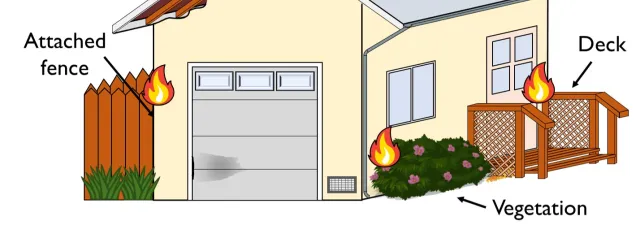
Diagram illustrating the different vulnerabilities of siding to wildfire.
There are many different types of siding, all with different vulnerabilities. Below is a list of common examples of siding materials.
Siding Type | Description and Vulnerabilities |
Bevel Siding 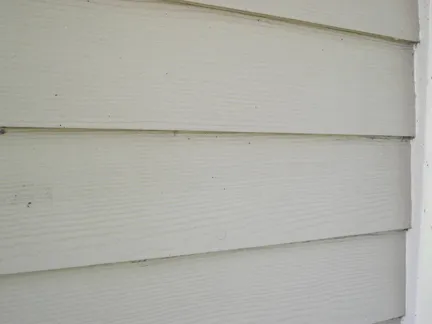 |
|
Log Wall Siding 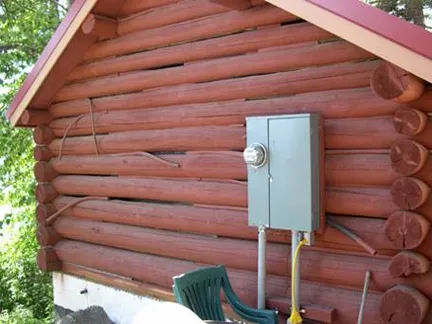 |
|
Vinyl Siding 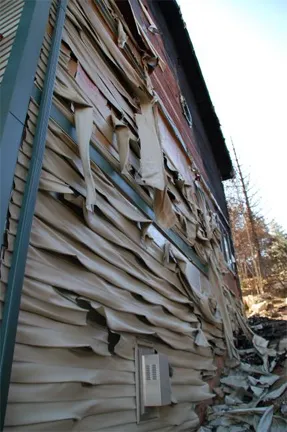 |
|
How Can You Protect Your Siding?
A home ignition zone that is carefully developed and maintained will minimize the risk of exposure of exterior walls. By following the recommendations for the other components of a building (fences, decks, windows, etc.), and implementing defensible space, you will be able to reduce the risk of direct flame contact with the siding as well. If your home is within 30 feet of neighboring homes, noncombustible or ignition-resistant siding materials should be used. Under the siding, fire-retardant gypsum board can be installed to increase the wall's fire resistance.
California Regulations
According to Chapter 7A of the California Building Code, exterior walls shall comply with one of the following requirements:
- Made of noncombustible or ignition-resistant material.
- Heavy timber or logs are used to construct the exterior wall assembly.
- The wall assembly can resist a 10-minute flame exposure according to the SFM Standard 12-7A-1.
The most common example of an ignition-resistant material is exterior-rated, fire-retardant treated wood. Products that will comply as noncombustible include fiber cement siding products (lap or panel), metal siding, and traditional three-coat stucco. Untreated combustible siding products will have to be tested and comply with the penetration resistant requirements of SFM 12-7A-1. Products with a more complicated lap joint (vertical or horizontal), will be more likely to pass. Horizontal lap wood siding products usually comply by using sheathing (plywood or oriented strand board) in the assembly.
Products and assemblies that have complied with Chapter 7A can be found in the WUI Product Handbook.
What About Gel Coatings?
The gel coating contains water adsorbent polymers that, when activated by water, provide an insulating layer. Once applied, these coatings will lose effectiveness with time as they dry out. Therefore, their effectiveness during a wildfire will be partly determined by the length of time between application (evacuation) and exposure. Firefighters will spray the home with water to rehydrate the gel coating if they know it has been applied.
Several commercial gel coatings are available for the protection of buildings against wildfires. They can be used by firefighting professionals or by homeowners. Gel is intended to be applied to exterior surfaces (siding, windows, vents, decks) and even nearby vegetation prior to evacuation. Their effectiveness depends on weather conditions and may vary based on the time of application. Since gel coatings are generally difficult to install and only provide protection for a limited period of time, they are not recommended.
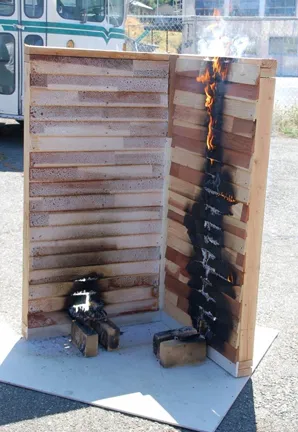
Testing the Effects of Gel Coatings
During a fire demonstration, a gel product was applied to the wall on the left in this corner section approximately 2 hours prior to the fire exposure. The siding is a nominal 4” wide end-and edge glued redwood siding having a rabbeted-bevel lap joint. Burning 'B' brands were placed at the base of each wall section to provide a flame exposure to the wall. Near the end of the demonstration, the fire had burned up the uncoated wall and was still burning. Flame did not travel far up the gel-coated wall. Fire penetrated both the coated and uncoated siding in the vicinity of the 'B' brand. In both cases, the fire was able to move into the stud cavity.
Additional Resources
Check out these siding-related wildfire preparedness resources from our colleagues!