
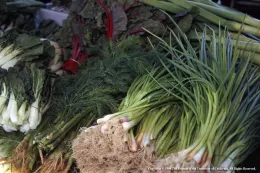
Amaranthus (Amaranthus gangeticus/tricolor, Amaranthus cruentus)
- Harvest: When the plants are only a few inches tall, thin them to one foot apart to grow full-sized plants.
- Technique: By hand, selecting the young, tender leaves and shoots. If growing as a cut-and-come-again crop, harvest with scissors as needed.
- Cooking: Cook only briefly, as it gets mushy. Stir-fry or add it to soup.
Baby pak choi (Brassica rapa var. chinensis)
- Harvest: When they are about one foot tall.
- Technique: Harvest entire plant.
- Cooking: Blanch and serve with cooked mushrooms or seafood.
Pak choi (Brassica rapa var. chinensis)
- Harvest: Leaves can be harvested when plants are about 10 to 12 inches tall.
- Technique: Break or cut off the outside leaves at the base of the plant, or cut the entire plant back to 2 inches.
- Cooking: Commonly used in stir-fries and soups.
Bitter melon (Momordica charantia)
- Harvest: While they are young and still firm, in the white or green stage. They grow bitter as they mature.
- Technique: Harvest regularly and do not let them ripen on the vine; they will continue to ripen after harvesting.
- Cooking: Fry quickly or incorporate into simple egg dishes. Leaves and shoots are edible when young. Use salt to reduce bitterness.
Chinese boxthorn (Lycium chinense)
- Harvest: When leaves are young and tender.
- Technique: Cut leaf at base.
- Cooking: Leaves taste bitter, can be used in soups with pork. Vine is not edible.
Chinese broccoli (Brassica alboglabra)
- Harvest: At around 18 inches tall, thin to about 8 inches apart
- Technique: Harvest the flowering stalks just before the buds start to open. Cut the stalks at the lowest node where there is a new leaf to force new side growth.
- Cooking: Stir-fry is the most popular way to prepare it. Putting it into cold water right after blanching will retain a nice green color.
Chinese celery (Apium graveolens)
- Harvest: Individual stems or whole head.
- Technique: Cut stems when they are about 10 inches high; new stalks will continue to form. Or harvest the whole head by cutting the plant off at the ground with a sharp knife.
- Cooking: Stronger in flavor than American celery. Use in many Asian soups and stews or stir-fried with squid.
Chinese chives (Allium tuberosum)
- Harvest: Can be harvested as soon as the tops grow to 6 inches.
- Technique: Cut leaves about 2 inches above the ground, or blanch by completely excluding light to produce yellow tender leaves and stalks.
- Cooking: Tastes like garlic, can be used as filling in dumplings with ground meat. Widely used in Chinese medicine.
Chinese parsley (Corlandrum sativum)
- Harvest: When they are only about 6 inches high, and the leaves are tender.
- Technique: Young leaves can be pinched off as needed. Dig the roots before the plant goes to seed.
- Cooking: It’s among the most important flavorings in many Asian dishes. Roots can be cooked and eaten as a vegetable; chopped leaves are sprinkled to flavor dishes; and seeds are used to season curries and rice.
Cucumber (Cucumis sativus)
- Harvest: When they are young and firm but filled out at about thumb size.
- Technique: Regular harvesting keeps your plants producing new fruit. If left too long on the vine, they will become seedy and bitter.
- Cooking: Sliced cucumber can be stir-fried with pork, mixed with vinegar to make a cold dish, or pickled.
Eggplant (Solanum melongena)
- Harvest: Ready when it is fully colored but has not yet begun to lose any of its sheen.
- Technique: Press down on the eggplant with your finger. If the flesh presses in and bounces back, it’s ripe.
- Cooking: With tender skin and little bitterness, there is no need to peel or salt. Can be fried and served in a spicy sauce.
Hairy melon (Benincasa hispida)
- Harvest: At about 6 inches long.
- Technique: Harvest fruits often, in their immature stage.
- Cooking: Peel and cook as you would squash.
Kohlrabi (Brassica oleracea)
- Harvest: When they are young and tender, about 1½ inches in diameter. Also, young leaves.
- Technique: Cut an inch or two below the soil surface. Young leaves can be cut for greens.
- Cooking: Peel the skin from these “bulbs” (actually swollen stems). Slice and use in stir-fry, steamed, or boiled in chicken broth. Can be used raw in a salad.
Lemon grass (Cymbopogon citratus)
- Harvest: When they are 2 to 3 feet tall.
- Technique: Harvest the white leafstalks by cutting them at the base of the plant once it’s established.
- Cooking: Chop and use them to flavor chicken or fish stock-based soups, with or without coconut milk. Can also be used in salad dressings and to make a fragrant cup of tea.
Luffa, smooth (Luffa cylindrica)
- Harvest: When they are still immature. Fruits feel firm at about 6 inches long.
- Technique: Cut fruits from the vine. They are edible only when immature. Left too long on the vine, they will toughen into a sponge.
- Cooking: Peel and cook in soup or with meat. Flower buds, young shoots, and leaves can be added to stir-fry.
Mustard (Brassica juncea)
- Harvest: A few leaves at a time as needed. Thin to one foot apart.
- Technique: For red mustard, the younger the leaf, the milder; for green mustard, harvest mature heads as you would cabbage. Leaves can be harvested over a long time.
- Cooking: Strong-flavored mustards are blanched and served with oil or oyster sauce, stir-fried with meat and bean sauce, or can be cut and pickled.
Oil seed rape (Brassica var. oleifera)
- Harvest: Start harvesting when they are about 2 to 3 feet tall.
- Technique: Cut the leaves and stems as needed.
- Cooking: Commonly used in stir-fries and soups with meat and seasonings.
Perilla (Perilla frutescens)
- Harvest: As soon as the plant is established.
- Technique: Both green and purple varieties grow in the same manner as basil. Pinch leaves as needed.
- Cooking: Use purple perilla to flavor seafood and for pickling. Green leaves are used to make tempura or wrapped around sushi.
Soy bean (Glycine max)
- Harvest: Pick immature pods or let them mature.
- Technique: Harvest for fresh shelling when the pods are plump but still green, or let them dry before harvesting, then shell beans and store in a cool, dry place.
- Cooking: Cook green soybeans in the pod in salty water, then shell and eat. Shelled soybeans are stir-fried, used in soups, or stewed with beef. Soy sprouts can be eaten when cooked.
Taro (Colocasia esculenta)
- Harvest: Wait until the plant leaves turn brown
- Technique: Dig the entire taro up. Raw taro is a skin irritant, so wear gloves to protect your hands during cooking preparation.
- Can be cooked with sugar as a dessert, served cold or hot. Or add taro to a “hotpot” with other vegetables, meat, and seafood, a popular dish in winter.
Winter melon (Benincasa hispida)
- Harvest: May be harvested at any stage, from very immature to mature.
- Technique: Large plants are usually planted about 8 feet apart. Cut fruit from the vine.
- Cooking: White-fleshed winter melon is usually served as a soup or steamed with meat.
Yard long bean (Vigna sesquipedalis)
- Harvest: When pods reach 12 to 18 inches long, before the seeds fill out the pods.
- Technique: Beans grow quickly, so harvest daily or every other day.
- Cooking: In a popular Szechwan dish called dry-fried beans, the beans are deep-fried, drained, then stir-fried in a wok with a bit of ginger. Try them in rolls of marinated beef or pork.
by UC Master Gardener Joyce Tu