UC Master Food Preserver logo- blue jar with orange lid, brown book with red strawberry all within a blue circle.
UC Master Food Preserver

UC Master Food Preserver Newsletter

In November of 2024, the UC Master Food Preserver Program launched a monthly newsletter that delivers recipes, how-tos, and food preservation inspiration straight to a subscriber's inbox. Subscribe to the newsletter here. 

Do you have a correction, suggestion, or story to share with the newsletter team? Share corrections, suggestions, or stories here.
 

Past Newsletter Full Emails

2026

April 2026

May  2026

June 2026

July   2026

Aug  2026

Sept. 2026

Oct.  2026

Nov. 2026

Dec. 2026

2025

2024


Monthly Articles To-date
Primary Image
Debra is a smiling woman in a red hat
UC Master Food Preserver: Article

Spotlight: Debra Barger, Butte County, 2025 MFP Volunteer (May 2026)

May 12, 2026
 I learned how to can fruits and vegetables from my grandmother while growing up mostly in the Midwest. I loved the cool, earthy smell of a root cellar and took delight in perusing the many rows of colorful jars, especially when it was 95°F outside with 90% humidity.  Wherever the family moved, we…
View Article
Primary Image
raw asparagus stuffed into a jar with flat end down
UC Master Food Preserver: Article

Learning Through Experience: Pickling Asparagus for the First Time (May 2026)

May 12, 2026
By Robin E Martin
Four valuable lessons that will take the stress out of canning pickled asparagus.My first time making pickled asparagus at home, by myself, with a borrowed steam canner, was a lot of fun, a fair amount of work, and produced what I would call mixed results, but I have no regrets.   The recipe I…
View Article
Primary Image
three groups of dried adobo peppers look alike
UC Master Food Preserver: Article

An Adobo Pepper Dehydration Experiment (April 2026)

April 11, 2026
Monica Gross, Los Angeles Co., Online Delivery Program VolunteerDehydration is one of the earliest preservation methods developed by humankind. There is evidence from Middle Eastern and Asian cultures that dehydration was used as a method of preservation as far back as 12,000 BCE. The hot sun was harnessed…
View Article

Spotlight: Robyn Barker, 2025 MFP Volunteer (April 2026)

Primary Image
Headshot of Robyn Barker
Body
Headshot of Robyn Barker
Photo credit: Robyn Barker, used with permission.

Living in California has given me a deep appreciation for food, gardening, and seasonality. Fresh produce is available year-round, from winter citrus to summer berries and the abundance of warm-season vegetables that follows. Gardening here makes it possible to experience food not just as sustenance, but as a reflection of place and climate. 

I did not begin my life in California. I grew up in Ohio, where hot, humid summers produce exceptionally sweet corn and where preserving food for the winter months evolved as a practical necessity rather than a hobby. That contrast between regions—between scarcity and abundance—shaped my early interest in food and preservation. 

Like many Californians, I arrived here later in life. I came to fulfill my father’s dream of earning a law degree from the University of California. After completing that goal and practicing law for ten years, my path shifted. For the next two decades, I followed my husband’s career in the oil industry, living in Thailand, Texas, Indonesia, and England. Each location offered its own culinary traditions and agricultural specialties, from tropical fruits in Southeast Asia to pecans in Texas and root vegetables in England. 

During those years, I earned a library degree and worked at an American university in Thailand. In Indonesia, I volunteered as a docent at the National Museum, and in England, I devoted my time to visiting museums, gardens, and historic houses while participating in multiple book clubs. These experiences reinforced my interest in education, public engagement, and cultural exchange. 

When we returned to our home in Moraga in 2016, we faced a neglected landscape dominated by invasive plants. Determined to restore it, I became a UC Master Gardener with Contra Costa County. Through that program, I both educate the public on research-based, sustainable gardening practices and apply those principles at home. I developed a small home orchard and a container vegetable garden, which naturally led to an interest in preserving the harvest when produce arrives all at once. 

That interest brought me to the UC Master Food Preserver Online Delivery Program. Although Contra Costa County does not yet have a county-based, in-person program, I was able to participate in this science-based training and collaborate with other Master Food Preservers Program to share safe and reliable preservation methods online with the public. Over the past year, I have been a presenter in programs on fruit leather, pickled mushrooms, apple chutney, and public food-preservation education. I’ve also developed new friendships with fellow Master Food Preservers in the online program. 

Returning to California has allowed me to bring together my experiences in education, gardening, and food preservation in a meaningful way. I value the opportunity to continue learning while helping others make informed, safe, and sustainable choices about the food they grow and preserve. 

UC Master Food Preserver

What is Dehydrating for Food Preservation? (March 2026)

Body

Tim Long, UC Master Food Preserver Online Program Volunteer    

Dehydration preserves food by removing 80–95% of its moisture, which inhibits the growth of bacteria, yeasts, and molds that require water to grow. It is one of the oldest preservation methods, dating back to 12,000 BCE.  This ancient, simple method uses heat (140° F), dry air, and air movement to create lightweight, nutrient-dense food ideal for long-term storage, backpacking, or preserving seasonal harvests.

four jars containing dehydrated apples

Jars of dried apples (photo credit Marina Hsieh)

Core Dehydration Methods

  • Electric Dehydrators: Considered the most efficient and reliable method. These machines use an electric element for heat and a fan for air circulation to dry food uniformly at controlled temperatures (typically 95°F–165°F).
  • Oven Drying: A convenient option for those without a dedicated dehydrator. It requires setting the oven to its lowest temperature—usually 140°F—and propping the door open to allow moisture to escape. It is less energy-efficient and can take 2–3 times longer than a dehydrator.
  • Sun Drying: A traditional outdoor method requiring at least 85°F, low humidity (under 60%), and several days of direct sunlight. It is primarily recommended for fruits due to their high sugar and acid content.
  • Air/Room Drying: Best for herbs, hot peppers, and mushrooms. Food is hung in a well-ventilated, low-light indoor area until it is brittle.
  • Solar Drying: Uses a "solar dehydrator" (often a tabletop greenhouse structure) to capture and magnify the sun's heat without electricity.
  • Freeze-Drying (Lyophilization): A more advanced process in which food is frozen and then placed in a vacuum, causing water to sublimate directly from ice to vapor. This preserves the food's original structure, flavor, and nutrients better than heat-based methods.
  • Microwave Drying: Suitable only for small quantities of herbs or leafy greens. It is not recommended for most other foods as it can cause an overcooked taste.

Essential Preparation Steps

  • Pretreatment: Many vegetables require blanching (briefly boiling or steaming) to stop enzymatic reactions that cause spoilage. Light-colored fruits are often dipped in antioxidant solutions (like lemon juice or ascorbic acid) to prevent browning.
  • Slicing: For even drying, food should be sliced into uniform pieces, typically 1/8 to 1/2 inch thick.
  • Conditioning: After drying, fruit should be placed in an airtight container for 7–10 days and shaken daily to redistribute any remaining moisture.
  • Pasteurization: Any food dried outdoors should be pasteurized by heating (160°F for 30 minutes) or freezing (0°F for 48 hours) to kill potential insect eggs.

Recommended Drying Temperatures

Food Category Recommended Temperature
Herbs95°F – 105°F
Vegetables125°F – 135°F
Fruits135°F – 145°F
Meat/Jerky145°F – 160°F

For long-term storage, keep dehydrated foods in airtight glass jars or vacuum-sealed pouches in a cool, dark, and dry place. Keeping properly sealed dehydrated foods in the freezer will extend their shelf-life almost indefinitely.

Learn more! Attend an online training

For a deeper dive on the above topics, please join the Master Food Preserver Online Delivery Team presentation on Zoom on Tuesday April 14 at 7pm.  https://www.eventbrite.com/e/how-to-dehydrate-food-safely-at-home-without-a-dehydrator-tickets-1983578480632?aff=ebdsoporgprofile 

There will be an additional class on Freese Drying specifically on May 19 at 7pm.

References 

 https://extension.missouri.edu/publications/gh1562

 https://www.ballmasonjars.com/step-step-dehydrating.html

 https://ucanr.edu/site/uc-master-food-preserver-program-orange-county/dehydration

 https://ucanr.edu/sites/default/files/2020-09/335543.pdf

UC Master Food Preserver

Preserved Lemons: A Powerhouse Ingredient in the Kitchen (March 2026)

Body

Kirsten Hansen, UC Master Food Preserver Online Delivery Program Volunteer  
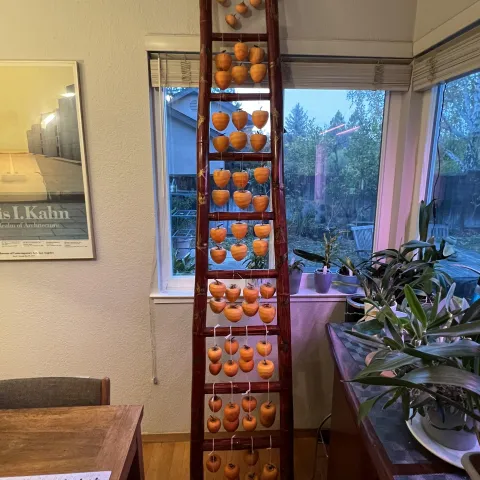
The Master Food Preserve Online Delivery Program volunteers loved making preserved lemons this winter! Our Citrus 1: Citrus Without Canning class and Garden to Glass: Winter Mocktails classes featured two different methods for making preserved lemons, and many of us made preserved lemons for our own use. If you missed either class, the recordings for all Online Delivery Programs classes are available on the UC Master Food Preserver website. 

If you made a jar of preserved lemons this winter, you may be wondering how to use them. Traditionally, salt-preserved lemons are used in Moroccan cuisine and other food traditions across the Mediterranean, perhaps most famously as an essential part of taginesMoroccan stews served with couscous. But preserved lemons are powerhouse ingredients that are useful far beyond traditional tagines. In the Citrus I class, we suggested using them in grain salads and pilafs, soups and stews, and dips. The Garden to Glass: Winter Mocktails class featured a delicious “dirty mocktini” that uses preserved lemon brine. 

two slices of lemon cake on a dish alongside a cup of coffee

Preserved lemon cake slices (photo K. Hansen, used with permission)

One of my favorite ways to use preserved lemons is in a simple Preserved Lemon Tea Cake. As sunny in looks as it is in taste, it was originally published by recipe developer Zaynab Issa in the March 2022 issue of Bon Appétit magazine. Here, the preserved lemon packs lots of citrus flavor in a small package and helps create a not-too-sweet anytime treat. As a bonus, this recipe uses the whole lemon, whereas many other recipes use just the skin and discard the flesh - zero waste! I’ve made a few adjustments to the original recipe, swapping an equal amount yogurt for the original sour cream because I always have yogurt in the refrigerator but only sometimes have sour cream. I decreased the number of dishes I have to wash by chopping the lemon into a paste by hand rather than using a food processor and mixing the batter in a bowl rather than a stand mixer. But really, the original recipe is basically perfect as written.

Preserved Lemon Tea Cake Recipe

Yield: Makes one 8½ x 4½" loaf

Ingredients

Cake Batter

  • ½ cup extra-virgin olive oil, plus more for parchment
  • 1 preserved lemon (about 55 g)
  • 1½ cups (188 g) all-purpose flour
  • 2 tsp. baking powder
  • ½ tsp. ground turmeric
  • 3 large eggs
  • 1 cup plus 2 Tbsp. (225 g) granulated sugar
  • ½ cup yogurt OR sour cream
  • 1 Tbsp. finely grated lemon zest
  • 3 Tbsp. fresh lemon juice

Glaze

  • ¾ cup (83 g) powdered sugar
  • 1 Tbsp. whole milk
  • Flaky sea salt

Instructions

  1. Place a rack in middle of oven; preheat to 350°F. Line an 8½ x 4½" loaf pan, preferably metal, with parchment paper, leaving generous overhang on the long sides, and brush with oil. Cut preserved lemon into quarters; remove any seeds. Chop and smash the lemon with your knife until it forms a rough paste.
  2. Whisk flour, baking powder, and turmeric in a medium bowl to combine. Beat eggs, granulated sugar, and remaining ½ cup oil in the bowl of a stand mixer fitted with the paddle attachment on medium speed until smooth and incorporated, about 1 minute. Add yogurt or sour cream and mix to combine. Add preserved-lemon paste, lemon zest, and lemon juice and mix to combine. Reduce speed to low, add dry ingredients, and mix until just combined, about 15 seconds. (Batter can also be mixed in a large bowl with an electric hand mixer or whisk.) Scrape batter into prepared pan and smooth the top.
  3. Bake cake until top is golden brown and a tester inserted into the center comes out clean, 50–60 minutes. Transfer pan to a wire rack and let cake cool for 15 minutes. Run a knife around sides of pan to loosen and, using parchment paper overhang, lift cake out of pan and onto rack. Peel away parchment paper and discard. Let cake cool completely.
  4. While cake is cooling, whisk powdered sugar and milk in a medium bowl until smooth.
  5. Transfer cake to a platter or large plate. Using a rubber spatula to help guide glaze, spoon glaze over cake, letting it drip down the sides (you should have a fairly thick coating). Sprinkle sea salt over glaze and let cake sit until glaze is set, about 30 minutes.

Do ahead: Cake can be made 3 days ahead. Store in an airtight container at room temperature.

UC Master Food Preserver
UC Master Food Preserver: Article

A Brief History of the Canning Jar (March 2026)

March 9, 2026
By Robin E Martin
Monica Gross, UC Master Food Preserver Online Program Volunteer  For most of human history, feeding a family involved navigating times when food was plentiful, such as at harvest time, and periods when it was scarce. Before methods of food preservation were developed, food insecurity was a…
View Article

Spotlight: Earl Weak, Class of 2024 MFP Volunteer (March 2026)

Body

Earl Weak, UC Master Food Preserver Online Delivery Program Volunteer
County of residence: Alameda

Earl Weak sits on a bench next to oranges from his home tree.

Earl Weak relaxes at his home after an orange harvest (used with permission)

My name is Earl Weak. I became UC Master Food Preserver (MFP) in 2024 as a member of the first class of the Online Delivery Program. My boyhood home was in Abilene, Kansas. I went to the same high school that Dwight Eisenhower graduated from about 60 years before my graduation in 1963. President Eisenhower returned to Abilene a few times while I was in grade school. I still remember my kindergarten teacher talking about the beautiful tulip garden at the Eisenhower home. I think the tulip bulbs for the garden were a gift from the Netherlands after World War II.

While in high school, I started working in the chemistry lab at the local flour mill. This started my interest in flour milling and food technology. After completing high school, I continued my education at Kansas State University in the grain-science program. I graduated from Kansas State University with a degree in food science. After my Army service and more schooling, I started working in the baking industry. My first job was with a national bakery in Kansas City, MO. I worked with bread, fried pies, and cakes. I moved to California for my next job with a cookie-baking company. Large baking ovens were used for baking low-moisture, crisp cookies. I also worked with chocolate to coat some of the cookies and gained additional experience working with fig bars and other fruit-filled cookies.

After retiring, my interest in food preservation directed me to the University of California’s MFP Program. However, I live in Alameda County, which doesn’t have a county-based Program. In 2024, UC started an online MFP Program. I applied and was accepted.  The MFP training has given me new insights into food preservation. I quickly gained appreciation for steam canning. The steam canner is much lighter and comes to a boil much faster than a water-bath canner. Steam canning works for high-acid foods such as apples. I also gained appreciation for dehydrating vegetables. Zucchini dehydration has given me new uses for my summer zucchini surplus!

Now for my last few words. This year, I started my 81st trip around the sun. I am an old guy (geezer) but I can always learn new things. The MFP Program presents that opportunity. My grandmother was born in 1875. I don’t remember her talking about canning, but she did have many stories to tell about living in a sod house in Nebraska. I still remember her story about making cottage cheese and how she determined the heat level (no thermometers) in the oven of her wood-burning stove. She liked to read and in my young days she would read to me, even my books on dinosaurs.

UC Master Food Preserver

Botulism Is Rare Because We Do It Right (February 2026)

Body

Paige Weisskirch, UC Master Food Preserver Online Program Volunteer

Image
Newspaper illustration from 1919 showing botulism

“How Death Came, Unbidden, to Mrs. Sales Dinner Party”, an illustration accompanying an article reporting on a botulism outbreak due to improperly processed olives in The Philadelphia Inquirer, Nov. 30, 1919. 


Botulism Is Rare Because We Do It Right

UC Master Food Preservers get asked all the time whether botulism is really a risk. The internet is overflowing with posts championing unsafe practices, often relying on survivor bias and tradition. "My grandmother did it this way for fifty years and nobody died" and "I've been doing this for years and I'm still here" are common refrains.

The numbers can feel reassuring. U.S. surveillance summaries show that foodborne botulism is uncommon, with a median of 19 laboratory-confirmed cases per year from 2001–2017 (Lúquez et al., 2021). The key detail is why the totals are low. They are low because safe, science-based methods work. The threat is not imaginary or overstated. It is controlled by good practice.

Botulism remains a high-stakes hazard. In that same period, deaths were reported in 17 cases, a case fatality ratio of about 5 percent even with modern medical care (Lúquez et al., 2021). Public health guidance emphasizes that you cannot reliably detect the toxin by sight, smell, or taste, which is why prevention matters (Centers for Disease Control and Prevention [CDC], 2024).


What botulism is and what happens during infection

Clostridium botulinum is a bacterium that exists naturally in soil and aquatic environments worldwide (U.S. Department of Agriculture, Food Safety and Inspection Service [USDA FSIS], n.d.). Like many bacteria, it forms spores, which are dormant, protective structures that can survive harsh conditions for long periods. The spores themselves are not harmful, but when they encounter the right environment (low oxygen, low acid, adequate moisture, and suitable temperature in the case of C. botulinum), they germinate and the active bacteria produce botulinum toxin.

Botulinum toxin, also called botulinum neurotoxin, is one of the most potent poisons known (USDA FSIS, n.d.). It is the toxin, not the bacterium itself, that causes illness. Botulism is the name of the disease that results when a person ingests food containing this toxin or is exposed to the toxin via other routes.

What happens during infection

Symptoms typically appear within 12 to 36 hours after consuming contaminated food and begin with fatigue, weakness, blurred vision, dry mouth, and difficulty swallowing or speaking (Rao et al., 2021; World Health Organization [WHO], 2023). The toxin attacks the nervous system and causes descending paralysis that progresses from cranial nerve problems, such as drooping eyelids and slurred speech, to weakness in the neck and arms, and eventually to paralysis of the respiratory muscles (WHO, 2023).

The most life-threatening complication is respiratory failure. Botulinum toxin blocks the release of the neurotransmitter acetylcholine at nerve endings, preventing muscles from contracting (Rao et al., 2021). When this affects breathing muscles, mechanical ventilation becomes necessary, sometimes for weeks or months while the body slowly forms new neuromuscular connections (CDC, 2024; WHO, 2023). Intensive medical care during this time is essential to prevent complications such as pneumonia, blood clots, and infections.

Treatment of the disease centers on botulism antitoxin, which binds to toxin molecules in the bloodstream before they attach to nerve endings (Rao et al., 2021). The antitoxin can stop the progression of paralysis but cannot reverse damage already done. The most effective window for treatment is within the first 24 hours of symptom onset (Rao et al., 2021). Even with antitoxin and intensive care, some people still die from respiratory failure or secondary complications such as pneumonia or sepsis (CDC, 2024; WHO, 2023). The case fatality rate has improved from 40–50 percent historically to about 5 percent today, but that still represents real lives lost to a preventable illness (Lúquez et al., 2021; WHO, 2023). What makes botulism uniquely dangerous is that contaminated food may look, smell, and taste normal (CDC, 2024).

Why the numbers are low

Low case counts mean prevention works. Safe canning is an entire system: selecting quality food, preparing it according to tested recipes, choosing the correct jar size, using the right processing method for the food's acidity, applying the right pressure or temperature for altitude, processing for the correct time, cooling properly, checking seals, and storing jars appropriately (Missouri Extension, 2015; National Center for Home Food Preservation [NCHFP], n.d.-a; U.S. Department of Agriculture [USDA], 2015). The process heats food to destroy microorganisms, drives out air, and creates a vacuum seal that prevents recontamination (Missouri Extension, 2015; NCHFP, n.d.-a). When followed as a complete system, botulism remains rare.

The success of these safeguards can create a dangerous illusion that shortcuts are harmless, especially when personal experience is offered as "proof" a method is safe. The cases we do not hear about, jars quietly discarded because they looked or smelled off, or illnesses never connected back to a specific jar, do not make it into those reassuring anecdotes.


Why boiling water is not enough for low-acid foods

A persistent misconception is that boiling low-acid foods, such as meat or vegetables, long enough will destroy C. botulinum spores without pressure canning. The limitation is temperature. Water boils at 212°F at sea level, and at lower temperatures at higher elevations. That temperature is not high enough to destroy spores in low-acid foods within a reasonable processing time (USDA, 2015; NCHFP, n.d.-a). The NCHFP notes that the time needed to inactivate C. botulinum spores at 212°F would range from 7 to 11 hours, an impractical amount of time that would result in mushy, unpalatable food (NCHFP, n.d.-a). "Just boil it longer" is not a safety plan.

Pressure canning solves the temperature problem by raising the processing temperature. under by increasing the pressure and thereby increasing the temperature at which water boils. For low-acid foods, validated processing procedures rely on the use of pressure canning (USDA, 2015; NCHFP, n.d.-a).

Boiling does have an important role after opening the jar. The CDC recommends boiling low-acid, home-canned foods for 10 minutes at altitudes below 1,000 feet, adding 1 minute for each additional 1,000 feet (CDC, 2024), before consuming them. This destroys toxin but not the spores and does not "rescue" an improperly canned jar. If you suspect improper canning or see signs of spoilage, discard the jar without tasting (CDC, 2024).

Dry canning is not canning

"Dry canning," whether heating jars of dry goods in an oven or "pressure canning" vegetables without adding the recommended amount of liquid, does not create the conditions needed to reliably control C. botulinum spores. The entire interior of each canning jar must reach the target processing temperature and stay at that temperature long enough to destroy the spores. Heat is transferred more slowly in jars that don’t contain liquid than it is in jars with liquid. In addition, bacteria and their spores are killed more quickly by “wet heat” than “dry heat.”. The liquid specified in tested canning methods is not optional; it supports predictable heat penetration and kill rates, which are what tested processing times are based on (Ingham, 2020; NCHFP, 2020; Penn State Extension, 2024).


Recent outbreaks in multiple countries

Botulism is rare but not unknown. Recent outbreaks show the same pattern: the risk follows behavior, not geography.

In the United States, a 2024 outbreak in Fresno County, California linked to home-prepared prickly pear cactus (nopales) sickened eight people. Six required ICU care and two needed mechanical ventilation (Vohra et al., 2025). In Italy, outbreaks from commercially prepared foods resulted in hospitalizations and deaths, including a Diamante, Calabria cluster where at least 18 people were exposed after eating sandwiches from a food truck; four of them died (Euronews, 2025). In France, six people developed severe symptoms after sharing a meal that included carrot cake. The 78-year-old woman who made the cake later died, and French media linked it to a jar of home-canned carrots (Food Safety News, 2025).

These examples matter because they negate a common argument: that using a group or place as "proof" that safety guidance can be ignored. "In Europe they do not pressure can" or "The Amish do it this way" are still anecdotal evidence. They do not validate methods or change the microbiology. French public health information explicitly notes that boiling is insufficient to sterilize foods because botulinum spores resist boiling water (Santé.fr, 2023). The same science applies everywhere. The only thing that changes risk is whether the method reliably controls conditions that allow toxin to form.


Bottom line

Botulism warnings are not hype. They help prevent a rare but severe hazard. The reason more people do not get sick is that safe practices work.

Clostridium botulinum does not respond to internet trends, personal anecdotes, or confidence. It responds to conditions: temperature, acidity, time, and oxygen availability. The science of what causes botulism and what prevents it is well established. When spores find an environment with low oxygen, low acid, adequate moisture, and the right temperature, they germinate and the resulting bacteria produce toxin. When one or more of those conditions is reliably controlled, such as using boiling water canning only for high-acid products, the risk is eliminated.

Many people who follow unsafe methods learned them from trusted sources and share their food with sincere care and good intentions. The disconnect happens when personal experience is offered as evidence of safety. One person's uneventful history with a method does not make that method safe. It means the person has been fortunate. Validation comes from controlled testing that shows whether a method reliably prevents toxin formation across different conditions, foods, jar sizes, and altitudes. That is what tested recipes and processes provide, and that is what personal experience cannot replace.

The highest confidence comes from understanding the process you are following and knowing it has been validated. Science-based canning guidelines are the pathway to food that is both safe and shelf-stable, designed so home canners can preserve food with certainty rather than luck. The UC Master Food Preserver Program and University Extension offices exist to help people do exactly that, to preserve food safely through education grounded in research and tested methods. Safe canning practices protect not just the food, but the people who will eat it.


References

Centers for Disease Control and Prevention. (2024, April 25). Home-canned foods: Botulism prevention. https://www.cdc.gov/botulism/prevention/home-canned-foods.html

Centers for Disease Control and Prevention. (2024, June 12). Treatment of botulism. https://www.cdc.gov/botulism/treatment/index.html

Euronews. (2025, August 20). Death toll rises to 4 in botulism outbreak in Italy. https://www.euronews.com/health/2025/08/20/death-toll-rises-to-4-in-botulism-outbreak-in-italy

Food Safety News. (2025, August 4). Woman dies in French botulism outbreak. https://www.foodsafetynews.com/2025/08/woman-dies-in-french-botulism-outbreak/

Ingham, B. H. (2020, June 18). Unsafe canning practice: "Dry canning" vegetables. University of Wisconsin–Madison Division of Extension. https://florence.extension.wisc.edu/2020/07/07/unsafe-canning-practice-dry-canning-vegetables/

Lúquez, C., Edwards, L., Griffin, C., & Sobel, J. (2021). Foodborne botulism outbreaks in the United States, 2001–2017. Frontiers in Microbiology, 12, 713101. https://doi.org/10.3389/fmicb.2021.713101

Missouri Extension. (2015). Safe home canning basics (Publication No. GH1451). University of Missouri. https://extension.missouri.edu/publications/gh1451

National Center for Home Food Preservation. (2020, June 25). Dry canning raw vegetables is an unsafe practice. https://preservingfoodathome.com/2020/06/25/dry-canning-raw-vegetables-is-an-unsafe-practice/

National Center for Home Food Preservation. (n.d.-a). Ensuring safe canned foods. https://nchfp.uga.edu/how/can/general-information/ensuring-safe-canned-foods/

Penn State Extension. (2024, September 17). "Dry canning" is not recommended. https://extension.psu.edu/dry-canning-is-not-recommended

Rao, A. K., Sobel, J., Chatham-Stephens, K., & Luquez, C. (2021). Clinical guidelines for diagnosis and treatment of botulism, 2021. MMWR Recommendations and Reports, 70(2), 1–30. https://doi.org/10.15585/mmwr.rr7002a1

Santé.fr. (2023, October 26). Le botulisme : de quoi s'agit-il et comment s'en prémunir ? https://www.sante.fr/le-botulisme-de-quoi-sagit-il-et-comment-sen-premunir

U.S. Department of Agriculture. (2015). Complete guide to home canning (Agriculture Information Bulletin No. 539, Rev. 2015). National Institute of Food and Agriculture. https://www.nal.usda.gov/exhibits/ipd/canning/items/show/101

U.S. Department of Agriculture, Food Safety and Inspection Service. (n.d.). Clostridium botulinum and botulism. https://www.fsis.usda.gov/food-safety/foodborne-illness-and-disease/illnesses-and-pathogens/botulism

Vohra, R., Barash, J. R., Karmarkar, E. N., Koch-Kumar, S., Sanchez, N., Gore, M., Michel, K., Rangel, M., Armstrong, E., Pimentel, L., Kraushaar, V., Kimura, A., Stainken, C., Nat, A., Nat, R. S., Cherukupalli, S., Schneider, D., Vugia, D. J., Solis, T., … Al Saghbini, S. (2025). Foodborne botulism outbreak after consumption of home-prepared cactus (nopales), Fresno County, California, June 2024. MMWR Morbidity and Mortality Weekly Report, 74(24), 408–413. https://www.cdc.gov/mmwr/volumes/74/wr/mm7424a1.htm

World Health Organization. (2023, September 25). Botulism. https://www.who.int/news-room/fact-sheets/detail/botulism

UC Master Food Preserver