UC ANR is committed to providing an accessible and inclusive web experience for all users. If you encounter an accessibility barrier or need content in an alternative or remediated accessible format, please contact anraccessibility@ucanr.edu.
It's Veterans' Day and what better day than today to salute noted medical entomologist Robert Washino, 88, a U.S. Army veteran? When you say "Thank you for your service," that not only means his service in the Korean War, but his entire career in medical entomology. Dr.
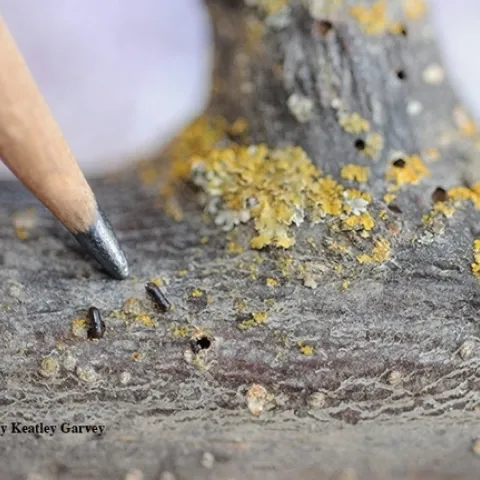
Two UC Davis forest entomologists who studied with the late chemical ecologist Steven Seybold, a faculty-research associate with the UC Davis Department of Entomology and Nematology, have published two complementary papers on the walnut twig beetle that shed more light on the invasive pest.
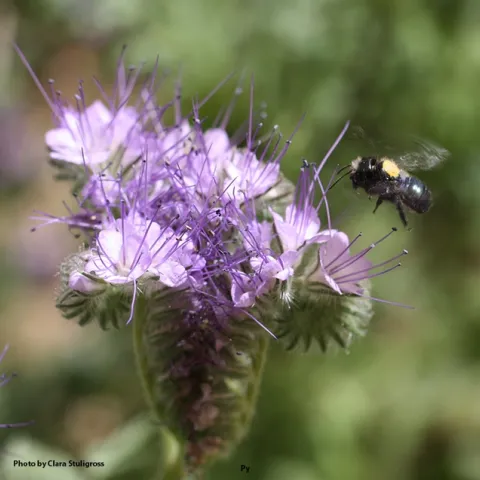
In a first-of-its-kind study, UC Davis research shows that the double punch of pesticide exposure and food scarcity drastically affects the reproduction of the blue orchard bee, Osmia lignaria, a wild bee known for pollinating early spring bloom, including almonds.
Newly published UC Davis research, the first of its kind, reveals that pesticide exposure and food scarcity pack a double punch to blue orchard bees, Osmia lignaria, a wild bee that pollinates early spring bloom, including almonds.
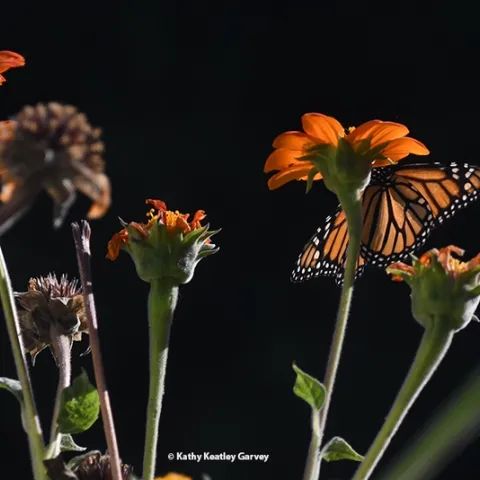
Is there anything more beautiful than a monarch butterfly, Danaus plexippus, nectaring on a Mexican sunflower (Tithonia rotundifolia) in the late afternoon sun?
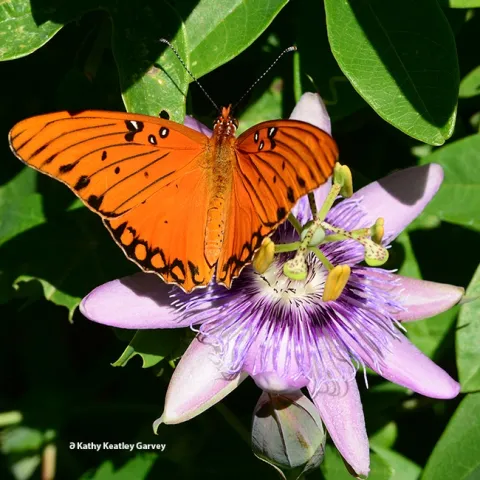
It's not often you see "passion on passion." That would be the "passion butterfly"--Gulf Fritillary, Agaulis vanillae--on the blossom of its host plant, the passionflower vine, Passiflora. You often see the males patrolling the vine and the females laying eggs on the leaves.
October 2020 Beef Production and Targeted Grazing Webinars Now Available on YouTube! Thank you to everyone who was able to join in one or more of our Beef Cattle and Targeted Grazing webinars during the month of October! We had great discussions on everything from managing parasites in cattle to bid...
We're glad to see the importance of museum collections mentioned in the newly published UC Davis research analyzing modern-day and museum collections of monarch butterflies over a 200-year period.
Newly published UC Davis research analyzing modern-day and museum collections of monarch butterflies over a 200-year period indicates that the loss of migration and range expansion leads to smaller and shorter wings.