UC ANR is committed to providing an accessible and inclusive web experience for all users. If you encounter an accessibility barrier or need content in an alternative or remediated accessible format, please contact anraccessibility@ucanr.edu.
By Cheryl A Wilen, Tunyalee Martin, Thomas J Getts
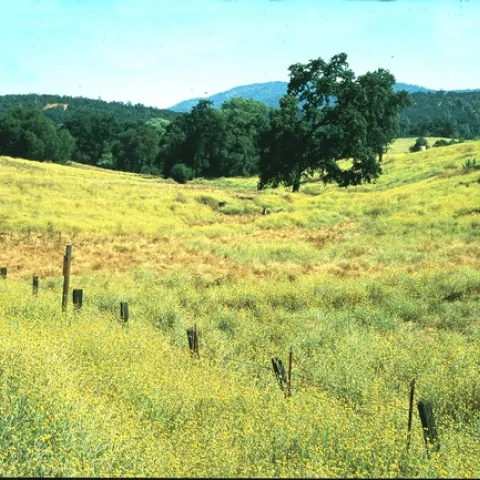
California has abundant wildlands forests, rangeland, open areas, wildlife refuges and national, state, and local parks that need protection from invasive plants.
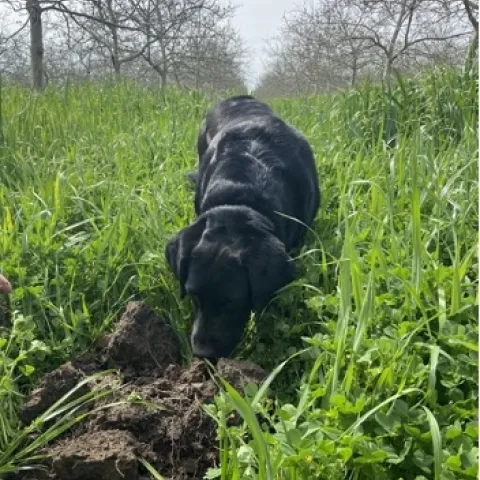
Daniel Unruh, and his family, farm just under 200 acres of walnuts alongside the Sacramento River, just outside of Princeton, CA. The walnut orchard is irrigated with solid set sprinklers and is only irrigated when needed, or if there is not enough rain during the season.
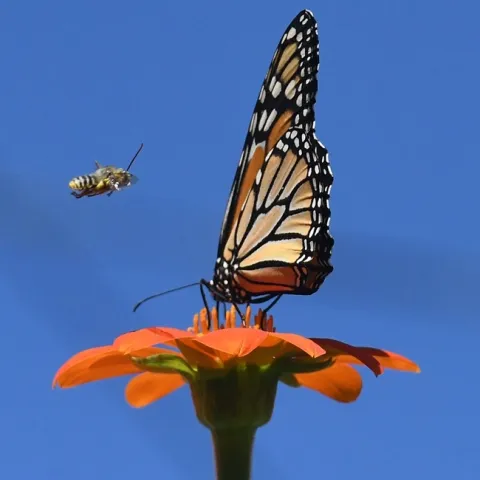
Those mighty monarchs haven't graced us with their presence this year (since late January) in our Vacaville, Calif. pollinator garden, but we're waiting for them. The habitat beckons and they will reign.
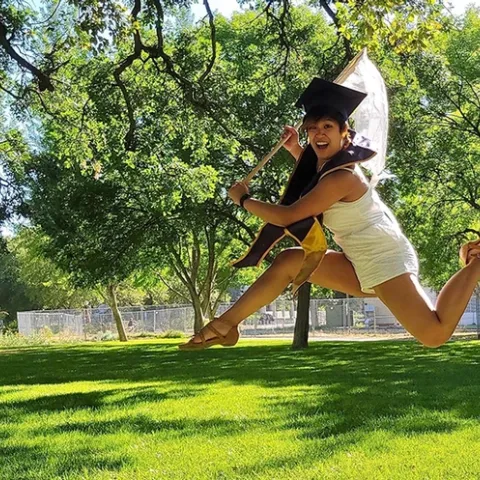
If a picture is worth a thousand words, then this image of a jumping-for-joy entomology graduate with an insect net is worth at least a thousand insects.
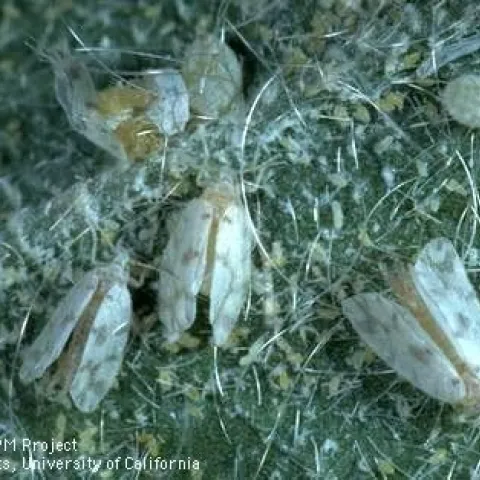
The giant whitefly is not a gargantuan monster out of an old sci-fi movie, although it is quite a bit larger compared to other whiteflies. Whiteflies are typically tiny insects that are hard to spot on plants unless they are flying, but the giant whitefly is more obvious.
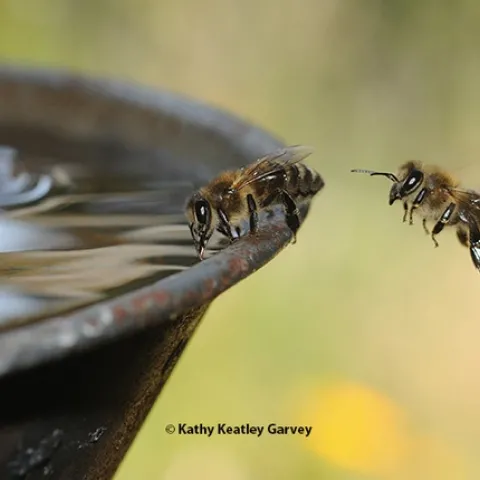
Earlier this week the National Weather Service warned us about an excessive heat spell--"dangerous and record-breaking heat conditions" here in California's Central Valley and the foothills that may reach 100 to 113 degrees today (Wednesday) through Sunday.
If you vacation at Bodega Bay--sometimes called "Blow-dega" due to whipping winds--you've probably driven to Bodega Head to watch for whales, see the waves crash against the cliffs, spot seabirds nesting in the rocks, or to observe such fauna as deer and red-tailed hawks on the horizon.
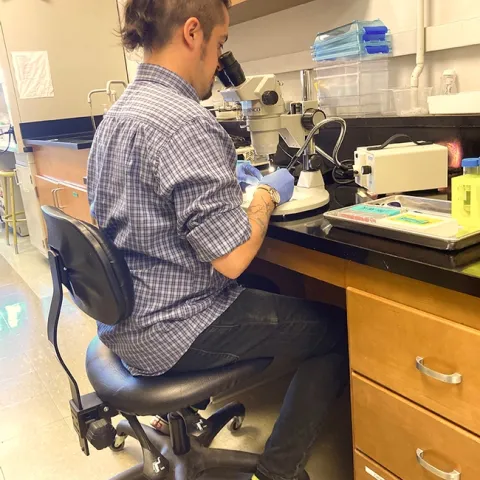
Sergio Hidalgo Sotelo, a postdoctoral fellow in the laboratory of molecular geneticist and physiologist Joanna Chiu, UC Davis Department of Entomology and Nematology, has been named a 2021 Pew Latin American Fellow in the Biomedical Sciences.
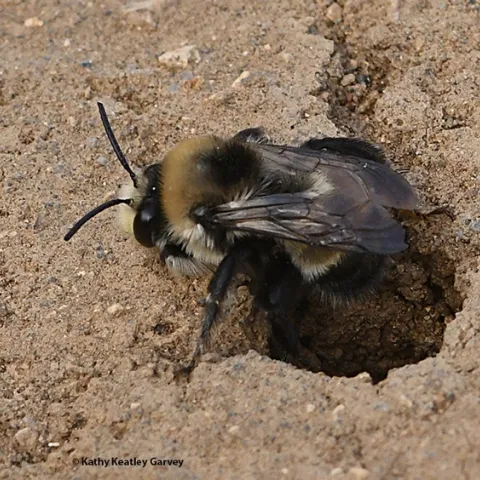
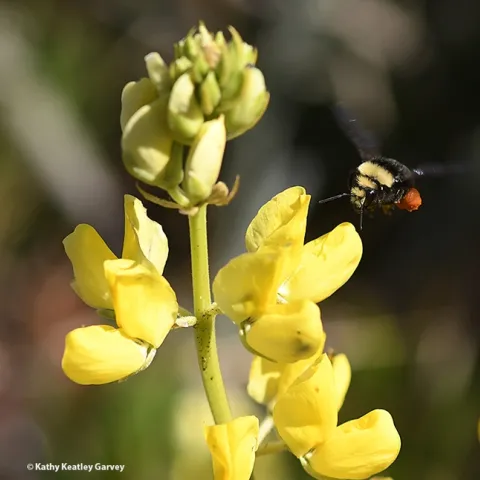
Early scientists figured it was aerodynamically impossible for bumble bees to fly due to their size, weight and shape of their bodies in relation to their total wingspan. And then there were those air resistance issues.