Rangelands

Primary Image
2021 Jul29 Pup1b
Ranching in the Sierra Foothills: Article

Bonding LGDs to Cattle - #1

August 2, 2021
By Daniel K Macon
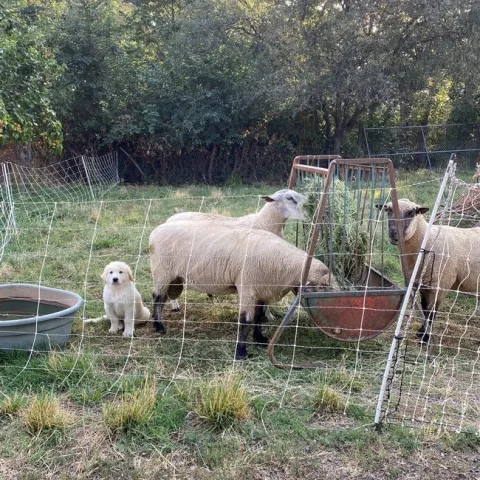
Livestock producers from Southern Europe to Central Asia have long used livestock guardian dogs (LGDs) to protect livestock - including cattle - from predators like wolves and European brown bears (the continental version of our grizzly).
View Article
Primary Image
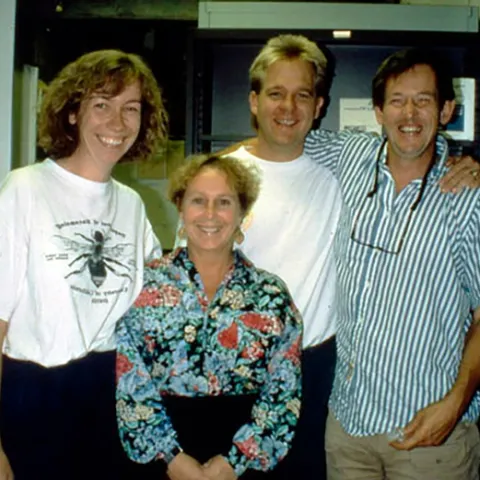
This image from 1993 at UC Davis shows Kelli Hoover (foreground), then a doctoral student. In back (from left) are doctoral students Bryony Bonning and Bill McCutcheon, and Professor Sean Duffey.
Entomology & Nematology News: Article

UC Davis Alumnus Kelli Hoover of Penn State Named ESA Fellow

August 2, 2021
By Kathy Keatley Garvey
UC Davis doctoral alumnus Kelli Hoover, a Pennsylvania State University (PSU) professor internationally known for her research on invasive species, including the Asian longhorned beetle, gypsy moth and spotted lanternfly, is a newly elected Fellow of the Entomological Society of America (ESA) for he...
View Article
Primary Image
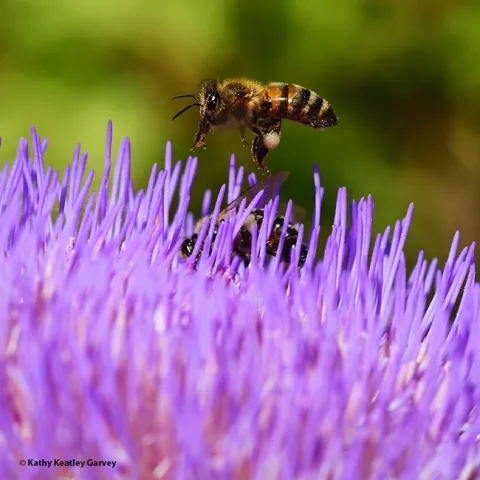
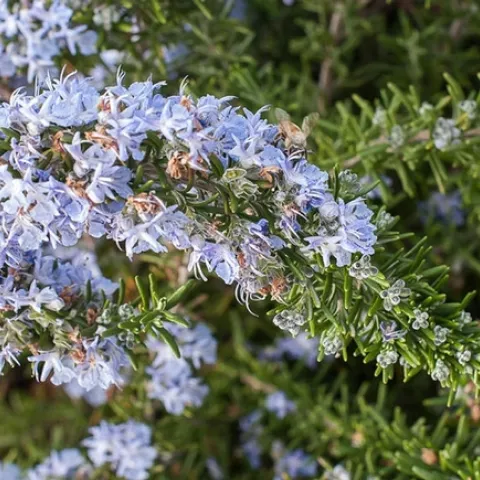
A honey bee begins cleaning her proboscis (tongue) before landing on a blossoming artichoke. (Photo by Kathy Keatley Garvey)
Bug Squad: Article

Retractable Landing Gear: Bee Approaches an Artichoke

July 30, 2021
By Kathy Keatley Garvey
When you're a honey bee and you're packing pollen and approaching your landing--an artichoke thistle--it's a good idea to clean your proboscis (tongue) first. Caught in flight: a honey bee doing a little grooming.
View Article
Primary Image
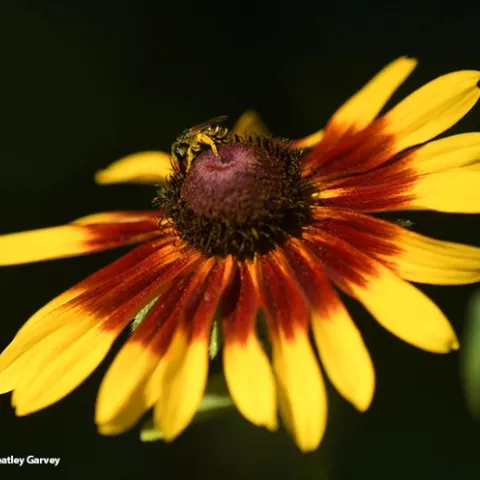
A sweat bee, Halictus ligatus, foraging on a Black-Eyed Susan in a Vacaville, Calif. pollinator garden. (Photo by Kathy Keatley Garvey)

Just a Sweat Bee Foraging on a Black-Eyed Susan

July 28, 2021
By Kathy Keatley Garvey
"Sweat bees have earned their common name from the tendency, especially of the smaller species,to alight on one's skin and lap up perspiration for both its moisture and salt content.
View Article
Primary Image
Microbiologist Shawn Christensen scoping out California golden poppies at the UC Davis Arboretum to take into his lab for experiments. Yes, Shawn says, the tattoo is of pollen grain. (Photo by Benjamin Van Domelen)
Entomology & Nematology News: Article

Some Floral Bacteria Can Enhance Pollen Germination, UC Davis Study Finds

July 28, 2021
By Kathy Keatley Garvey
Newly published, first-of-its-kind research indicates that certain species of floral bacteria can enhance pollen germination, announced a team of UC Davis scientists led by microbiologist Shawn Christensen of the Rachel Vannette laboratory, UC Davis Department of Entomology and Nematology.
View Article
Primary Image
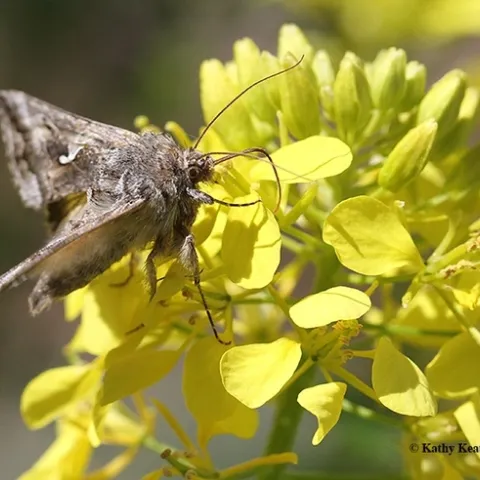
An alfalfa looper moth, Autographa californica, foraging on mustard. Moth identified by Art Shapiro of UC Davis. (Photo by Kathy Keatley Garvey)

Do Moths Usually Land with Their Wings Down?

July 27, 2021
By Kathy Keatley Garvey
National Moth Week ended last Sunday, July 25, but questions linger. A reader asked: "A friend was just telling me that butterflies and moths land differently. She couldn't remember if it was a moth that landed with its wings up or down. It looks like they land with their wings down.
View Article
Primary Image
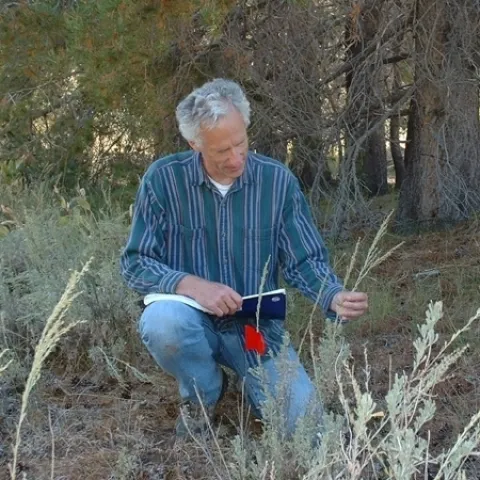
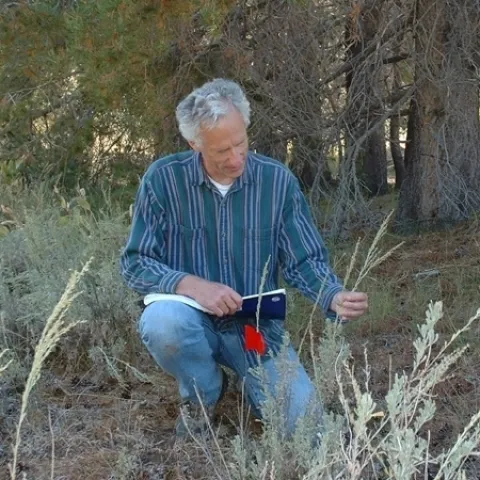
UC Davis distinguished professor Richard "Rick" Karban has researched plant communication in sagebrush (Artemisia tridentata) on the east side of the Sierra since 1995.
Entomology & Nematology News: Article

Rick Karban Selected UC Davis Distinguished Professor

July 21, 2021
By Kathy Keatley Garvey
Professor Richard Rick Karban, an international authority on plant communication and a 39-year member of the UC Davis entomology faculty, is now a distinguished professor, the highest campus-level faculty title.
View Article