Rangelands

Primary Image
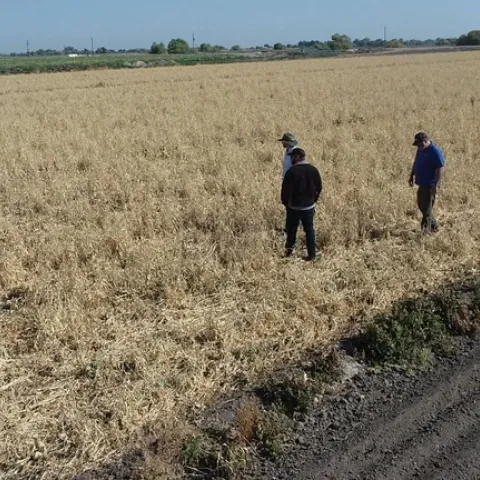
Three men walk in a field of dry crop residue.
Green Blog: Article

Soil health in California cotton fields explored in video series

March 10, 2022
By Pamela S Kan-Rice
Over a century of growing cotton in California, scientists and farmers have learned how to better manage soil health. To share their collective knowledge, they have produced a series of videos about cultivating better soil health in cotton fields.
View Article
Primary Image
pbesawinners3.13.16 PM
Bug Squad: Article

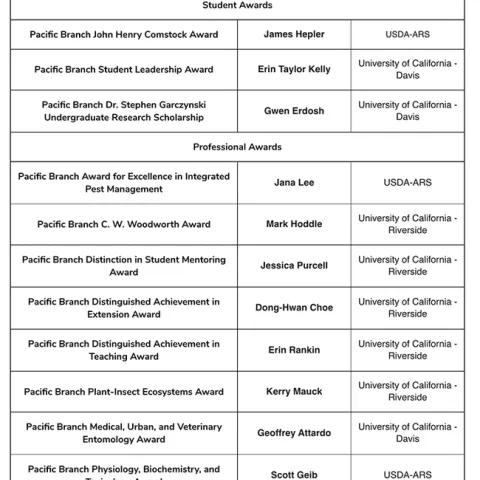
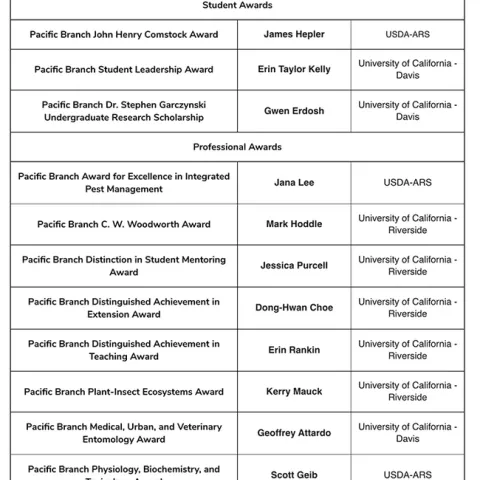
UC Davis Entomologists Honored in PBESA Award Competitions

March 9, 2022
By Kathy Keatley Garvey
Breaking news: UC Davis entomologists won three of the 12 student and professional awards given by the Pacific Branch, Entomological Society of America. The award-winning trio: Medical entomologist-geneticist Geoffrey Attardo received the Medical, Urban, and Veterinary Entomology Award.
View Article
Primary Image
The 2022 winners of the PBESA awards
Entomology & Nematology News: Article

PBESA Winners Announced

March 9, 2022
By Kathy Keatley Garvey
The Pacific Branch of Entomological Society of America (PBESA) has announced the 12 recipients of its 2022 student and professional awards. The winners will be recognized at PBESA's annual awards luncheon, set April 12 in Santa Rosa.
View Article
Primary Image
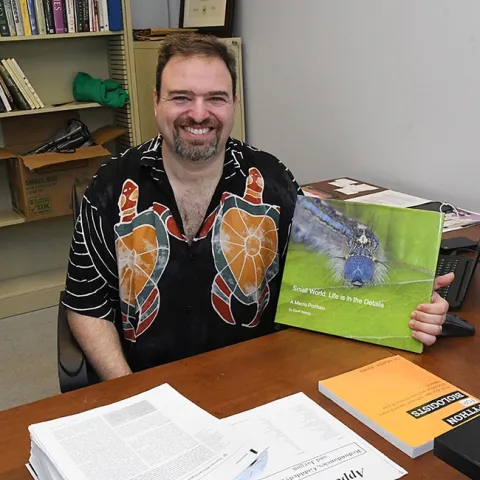
Medical entomologist-geneticist Geoffrey Attardo, shown with his book of macro images, is the winner of the Medical, Urban and Veterinary Entomology Award from the the Pacific Branch, Entomological Society of America.
Entomology & Nematology News: Article

Medical Entomologist-Geneticist Geoffrey Attardo: Recipient of Major PBESA Award

March 8, 2022
By Kathy Keatley Garvey
UC Davis medical entomologist-geneticist Geoffrey Attardo, a global expert on vectorborne diseases, and renowned for his groundbreaking work on tsetse flies, is the 2022 recipient of the Medical, Urban, and Veterinary Entomology Award from the Pacific Branch, Entomological Society of America.
View Article
Primary Image
Nematodes use tricks to modulate plant development, says Professor Melissa Mitchum of the University of Georgia's Department of Pathology. She will present a virtual seminar March 9 to the UC Davis Department of Entomology and Nematology. (Photo courtesy of Melissa Mitchum)
Bug Squad: Article

Melissa Mitchum: Those Tricky Nematodes

March 7, 2022
By Kathy Keatley Garvey
You can't teach an old dog new tricks? Well, how about nematodes? They can do "tricks," too. Professor and plant pathology researcher Melissa Mitchum of the Department of Pathology, University of Georgia, willpresent the next UC Davis Department of Entomology and Nematology seminar.
View Article
Primary Image
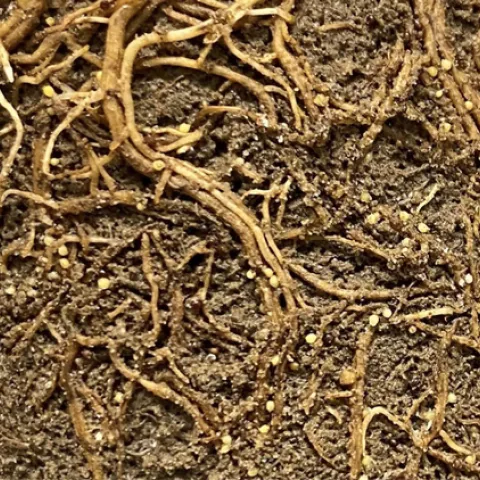
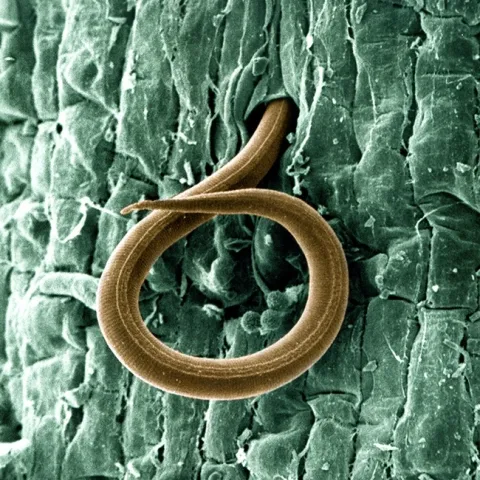
A juvenile root-knot nematode (Meloidogyne incognita) penetrates a tomato root. (USDA Photo)
Entomology & Nematology News: Article

What Nematodes You'll See at UC Davis Biodiversity Museum Day

March 4, 2022
By Kathy Keatley Garvey
The nematode collection displayed at the 11th annual UC Davis Biodiversity Museum Day on Sunday, March 6 in the UC Davis Conference Center will feature mostly root-knot nematodes and Ascaris (roundworm) nematodes, according to nematologist Shahid Siddique, assistant professor, and doctoral student A...
View Article
Primary Image
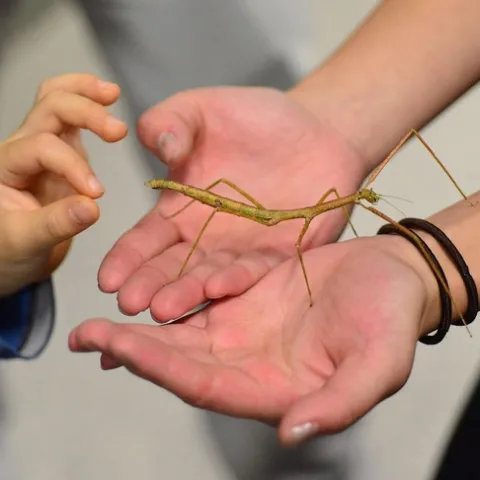
The wonder of a stick insect, aka walking stick, at the Bohart Museum of Entomology. (Photo by Kathy Keatley Garvey)
Bug Squad: Article

BioDivDay: Can't Wait to See You!

March 4, 2022
By Kathy Keatley Garvey
BioDivDay is Sunday. March 6 at the UC Davis Conference Center: Can't wait to see you! That's the message the organizers of the 11th annual UC Davis Biodiversity Museum Day are spreading throughout social media.
View Article
Primary Image
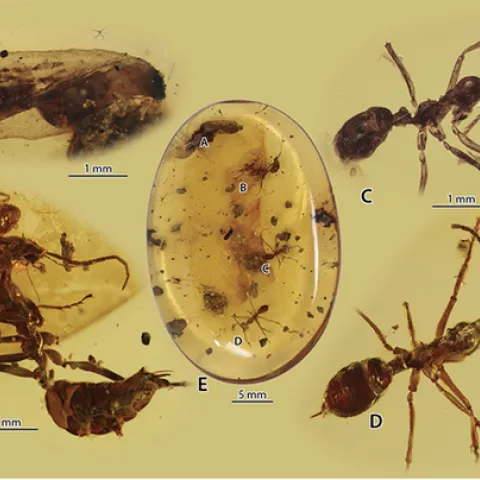
Overview of the Kachin amber piece and its syninclusions. (Figure from the research article in Zoological Journal of the Linnean Society.)
Entomology & Nematology News: Article

International Research Team Led by Brendon Boudinot: 'Missing Link' in Ant Evolution

March 4, 2022
By Kathy Keatley Garvey
An amber-preserved ant pupa discovered in southeast Asia, and estimated to be 99 million years old, provides new insights into the evolution of ants, representing a missing link, according to an eight-member international team of biologists from America, Germany, Japan and Brazil led by UC Davis alu...
View Article