UC ANR is committed to providing an accessible and inclusive web experience for all users. If you encounter an accessibility barrier on this or need content in an alternative or remediated accessible format, please contact anraccessibility@ucanr.edu.
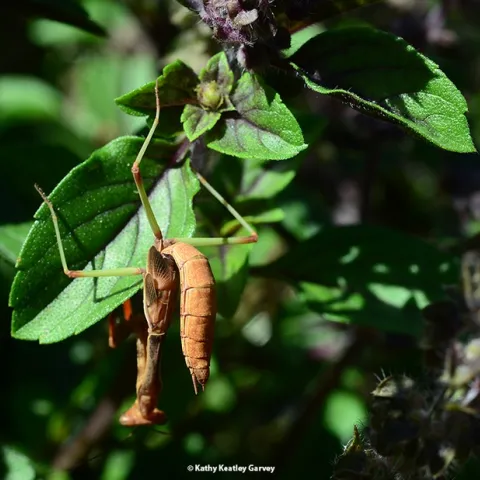
Have you ever seen a green-legged praying mantis on a green leaf? Praying mantis expert Lohitashwa "Lohit" Garikipati, identified this species as a subadult male, Stagmomantis limbata, perched in a patch of African blue basil in our family's pollinator garden.
by Maureen Jett Heat Island Effect is a man-made phenomenon in which air temperatures and surface temperatures are higher in urban areas than in the surrounding rural settings.
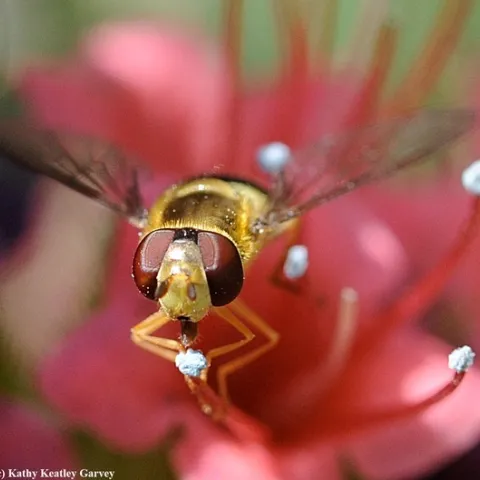
It's Friday Fly Day! And what better day than a Friday to post an image of a syrphid fly nectaring on a tower of jewels, Echium wildpretii? We all need "pretty" in our lives.
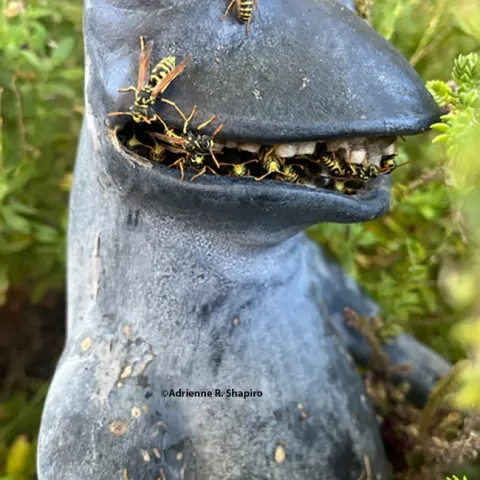
In real life, frogs eat flies, mosquitoes, bees, wasps and other insects. But have you ever seen a frog's mouth filled with an entire European wasp colony? No? Check this out! On Aug. 8, sharp-eyed Adrienne R.
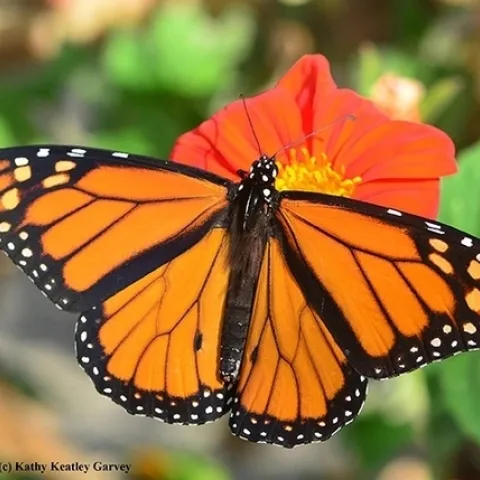
UC Davis community ecologist Louie Yang, professor of entomology, UC Davis Department of Entomology and Nematology, was one of 12 invited scientists nationwide who delivered a presentation during the two-day Monarch Butterfly Summit, held recently at the Capitol in Washington D.C.
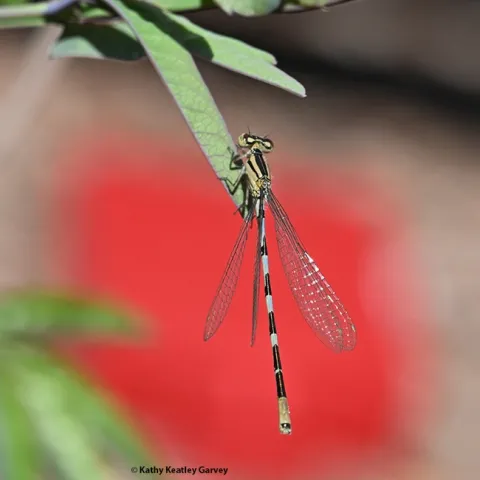
If you like your insects long, slender and delicate, and resembling a flying neon needle, the damselfly is for you. Who can resist watching them and photographing them? The common blue damselfly or Northern Bluet (Enallagma cyathigerum) is as thin as a needle, a jeweled blue needle.
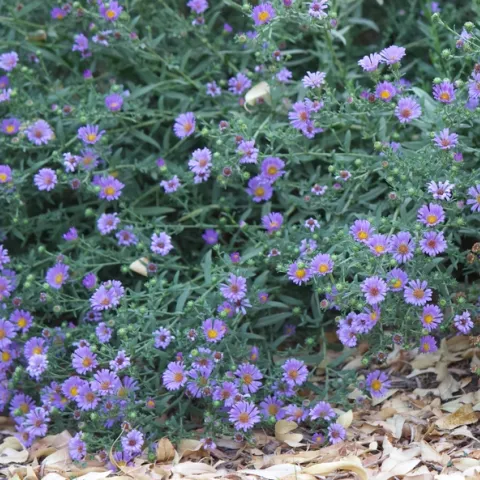
As we move into the hottest, driest part of the summer, many of our gardens are looking a bit worn out. It's certainly easier to stay inside where it's cool and put garden tasks off until the fall. But the bees are still out there doing their work to bring us food and create habitat for wildlife.
by Kathrine Parsons What is common among fruit trees, vegetables, flowers, living landscapes and grazing lands? They all grow in soil and require water. More importantly, they support all human and animal life either directly or indirectly.
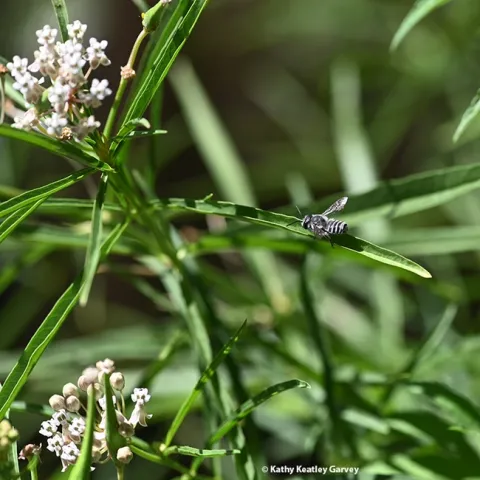
Well, that's something you don't see every day: a leafcutter bee sunning itself on a milkweed leaf. The narrowleafed milkweed, Asclepias fascicularis, beckons monarch butterflies (the host plant), aphids, praying mantids and assorted other insects, but once in a while, you'll see a leafcutter bee.