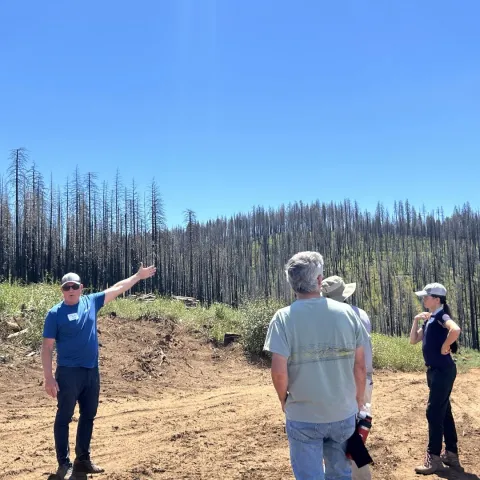
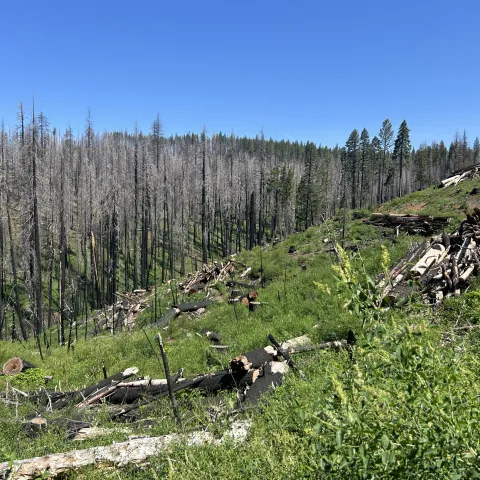
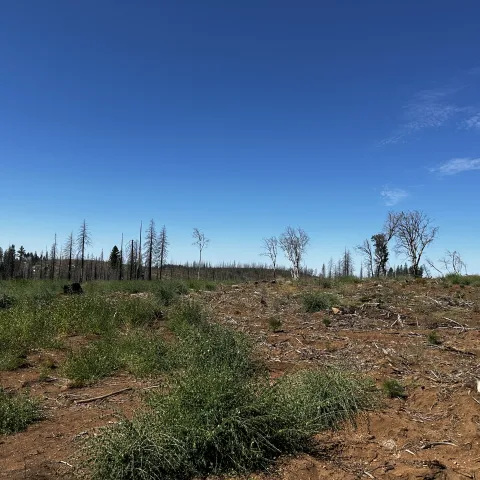
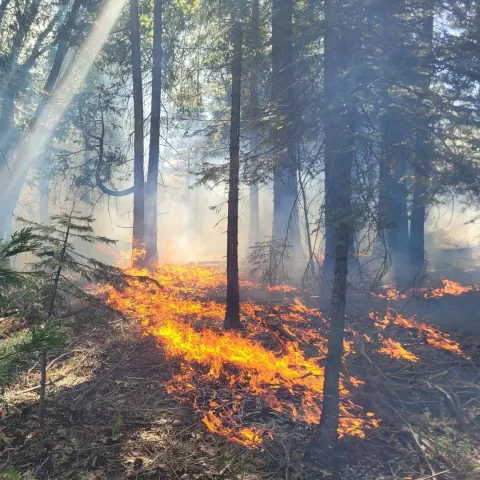
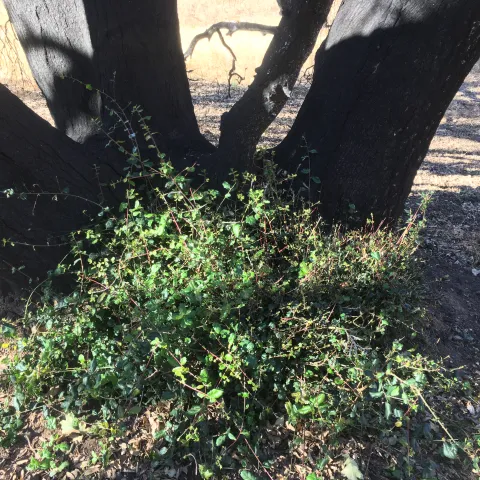
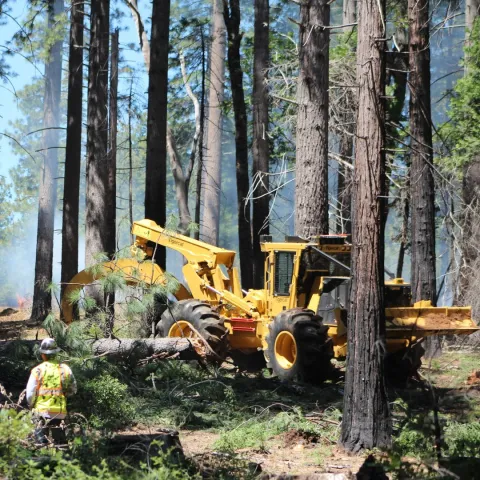
Burned conifer forest with green understory growth.
Forestry Research and Outreach

Fact Sheets for Post-Fire Forest Management

This series of fact sheets has been created to provide landowners and land managers with an overview of specific post-fire topics. All fact sheets have been produced and internally reviewed by UC ANR forestry and natural resource advisors. 

Resources have been organized in the following main topics:

  • Post-Fire Foundations

  • Managing Vegetation

  • Reforestation

  • Safety


Post-Fire Factsheets: Post-Fire Foundations

Primary Image
Shrubs in a post-fire mixed conifer forest, with burned trees in the background.
Forestry Research and Outreach: Document

Post-Fire Factsheet: A guide to photo monitoring to track change

Release date: March 2026. Effective land management depends on understanding how forest conditions are changing over time. Documenting environmental conditions can help managers track landscape responses over time, both to management interventions and to large disturbances like wildfire. Memory and written…
View Document
Primary Image
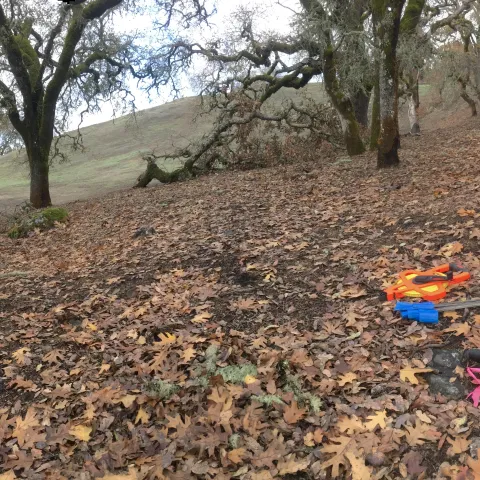
Oak woodland that has been burned at low severity.
Forestry Research and Outreach: Document

Post-Fire Factsheet: Post-fire forest management decision framework

Release date: March 2026. Short- and long-term forest management actions after wildfire may depend on many factors, including safety, economic considerations, objectives for future forest use, and the fire severity or proportion of trees killed by the fire. High severity fires kill most of the trees. This…
View Document
Primary Image
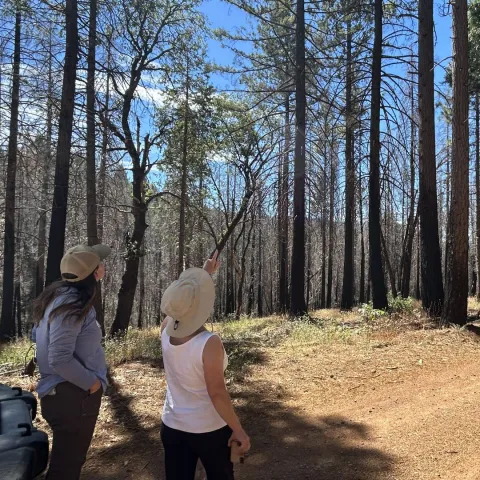
Two people stand in a post fire landscape and look at burned trees.
Forestry Research and Outreach: Document

Post-Fire Factsheet: Post-fire assistance for forest landowners

Release date: March 2026Reviewed by: UCCE Post Fire Forest Resilience program teamPrepared by: Daylin Wade The Need for Help Forest stewardship actions to take after wildfire are primarily determined by the severity of fire effects to forest vegetation (see Assessing Fire Severity in Sierra Nevada…
View Document

Post-Fire Factsheets: Managing Vegetation

Primary Image
Side by side comparison of a landscape with some herbicide treatment and no herbicide treatment.
Forestry Research and Outreach: Document

Post-Fire Factsheet: Managing Competing Vegetation with Herbicide

Reviewed by: UC Cooperative Extension Post-Fire Forest Resilience Stewardship TeamRelease Date: March 2026Extensive, high-severity wildfires in California’s conifer forests have impeded natural forest regeneration, leaving the future of these forests at risk (Welch et al. 2016). Post-fire reforestation…
View Document
Primary Image
Prescribed fire burns through a previously burned forest.
Forestry Research and Outreach: Document

Post-Fire Factsheet: Use of prescribed fire in young forest stands

Prepared and reviewed by: UC Cooperative Extension Post Fire Forest Resilience Stewardship teamPublish date: March 2026 Prescribed Fire’s Role in ReforestationWith an increase in high severity wildfire, planted young conifer trees are increasingly common across the landscape. Since these young stands…
View Document
Primary Image
oak resprouts at the base of a burned tree.
Forestry Research and Outreach: Document

Post-Fire Factsheet: Recommendations for managing oak and hardwood resprouts

Release date: March 2026Reviewed by: UCCE Post-Fire Forest Resilience program teamPrepared by: Michael JonesResprouting Hardwoods and Disturbance Disturbance (e.g., caused by wildfire, weather, insects/disease, etc.) is a temporary change in environmental conditions that causes a pronounced change in an…
View Document

Post-Fire Factsheets: Reforestation

Primary Image
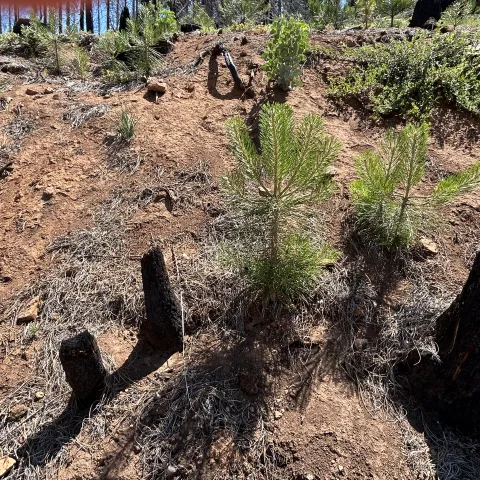
Douglas fir seedling poking up out of the ground.
Forestry Research and Outreach: Document

Post-Fire Reforestation: Planting for Resilience

Prepared by: Nic DutchReviewed by: UC Cooperative Extension Post-Fire Forest Resilience TeamRelease date: March 2026 Post-fire reforestation requires strategic decision-making because of the increase in high severity fire and changing climate. Fires now burn more area at higher severity than they did…
View Document
Primary Image
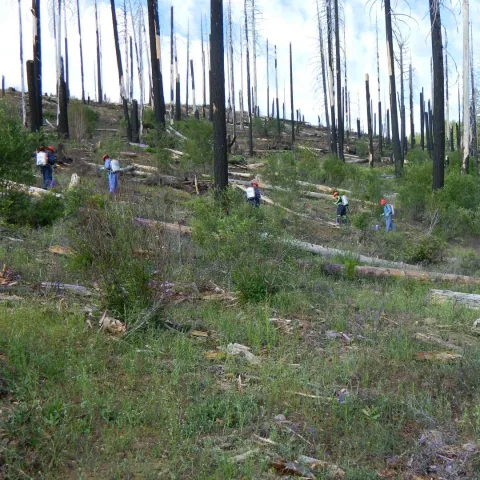
People walk among planted seedlings.
Forestry Research and Outreach: Document

Post-Fire Factsheet: Post-fire Reforestation Opportunity Mapping Tool

Prepared and reviewed by: UC Cooperative Extension Post-Fire Forest Resilience Stewardship teamRelease date: March 2026 California's forests are burning at unprecedented rates. In the Sierra Nevada and Cascades, forest area burned at high severity fire has increased from 7% historically to 36% in recent…
View Document
Primary Image
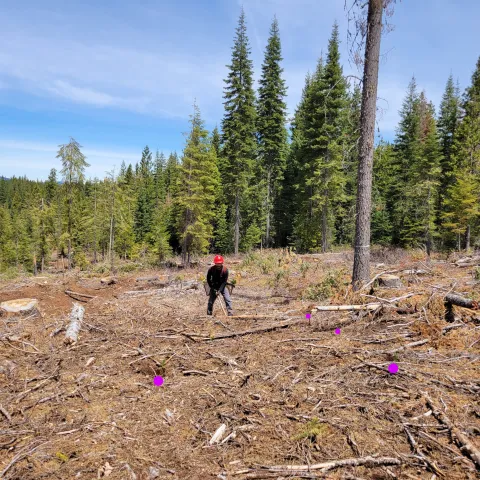
Seedlings, highlighted by purple dots, are being planted in a grid pattern by contractors.
Forestry Research and Outreach: Document

Post-Fire Factsheet: Seedling planting; density, species, arrangement

Release date: March 2026Reviewed by: UC Cooperative Extension Post-Fire Forest Resilience Stewardship teamPrepared by: Nic Dutch and Susie KocherResiliency in California ForestsIt’s often necessary to plant trees to restore forests after high severity wildfire. Deciding how many and what kind of trees to…
View Document

Post-Fire Factsheets: Safety

Primary Image
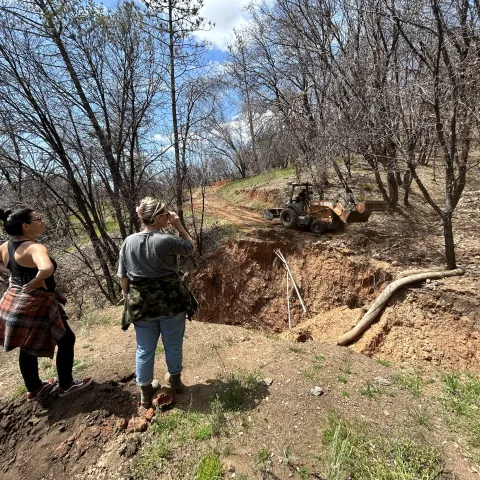
Two people examine erosion damage on a forest road.
Forestry Research and Outreach: Document

Post-Fire Factsheet: Mitigating hillslope erosion following a wildfire

Release date: October 2023. High-intensity rainfall events following a high-severity wildfire can trigger erosion, runoff, and sedimentation. As area burned by high-severity wildfires is increasing in area, post-fire erosion control treatments are becoming increasingly necessary to prevent soil erosion and…
View Document