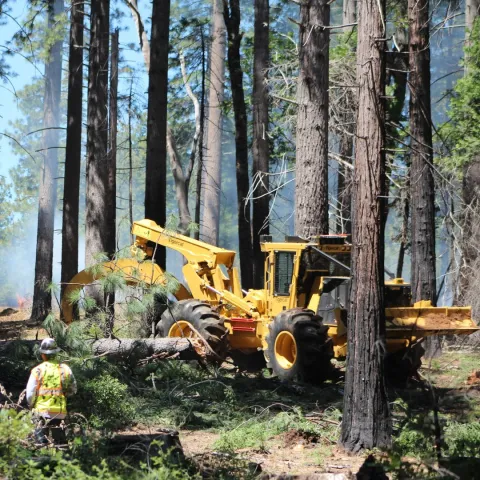
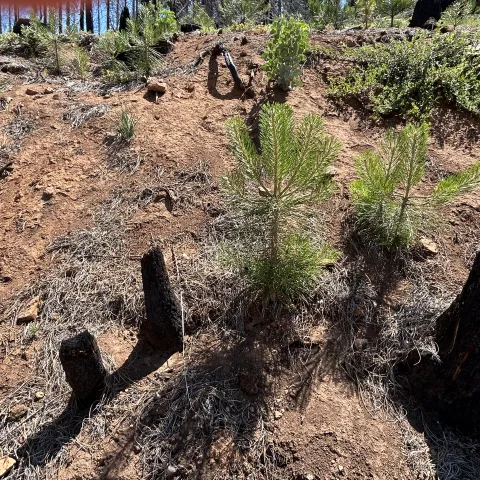
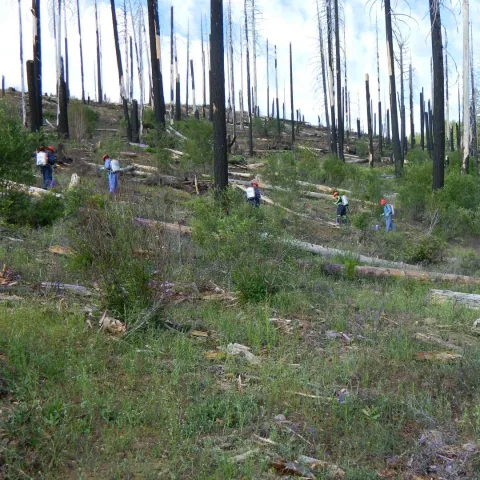
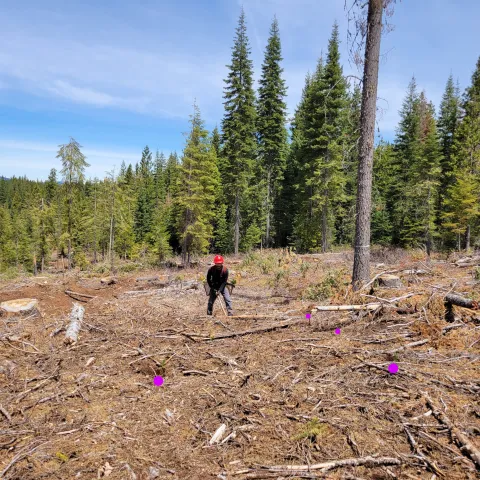
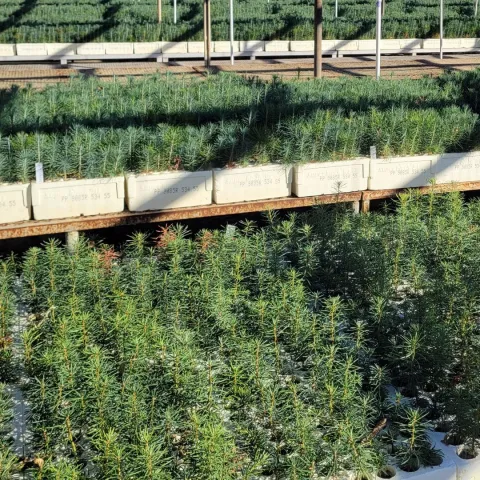
Release date: March 2026. Effective post-fire reforestation relies on investing in management practices that promote resilient forests capable of withstanding shifting climate patterns and future wildfires (Noble and York, 2024). Land managers must contend with hazardous fuel accumulations from dead trees…
Release date: March 2026. Post-fire reforestation requires strategic decision-making because of the increase in high severity fire and changing climate. Fires now burn more area at higher severity than they did historically, leaving extensive areas without living trees to produce seeds to grow the next…
Release date: March 2026. California's forests are burning at unprecedented rates. In the Sierra Nevada and Cascades, forest area burned at high severity fire has increased from 7% historically to 36% in recent years. Nearly a third of southern Sierra Nevada conifer forests have already transitioned to…
Release date: March 2026. It’s often necessary to plant trees to restore forests after high severity wildfire. Deciding how many and what kind of trees to plant and in what pattern is a key step in the reforestation process. These decisions can be informed by understanding the resiliency that California…
Release date: March 2026. Reforestation success depends on obtaining appropriate seedlings and maintaining their quality from nursery to planting site. However, California faces critical bottlenecks in seed collection, nursery capacity, and coordinated reforestation efforts. This has led to a backlog of 1.5…