
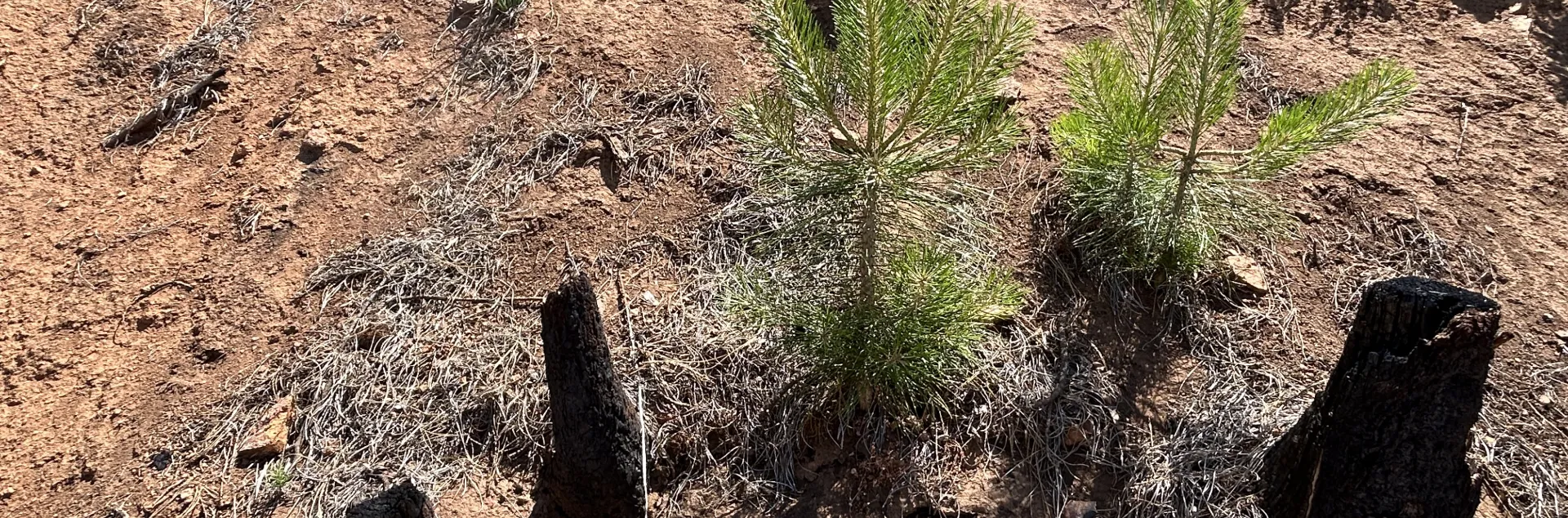
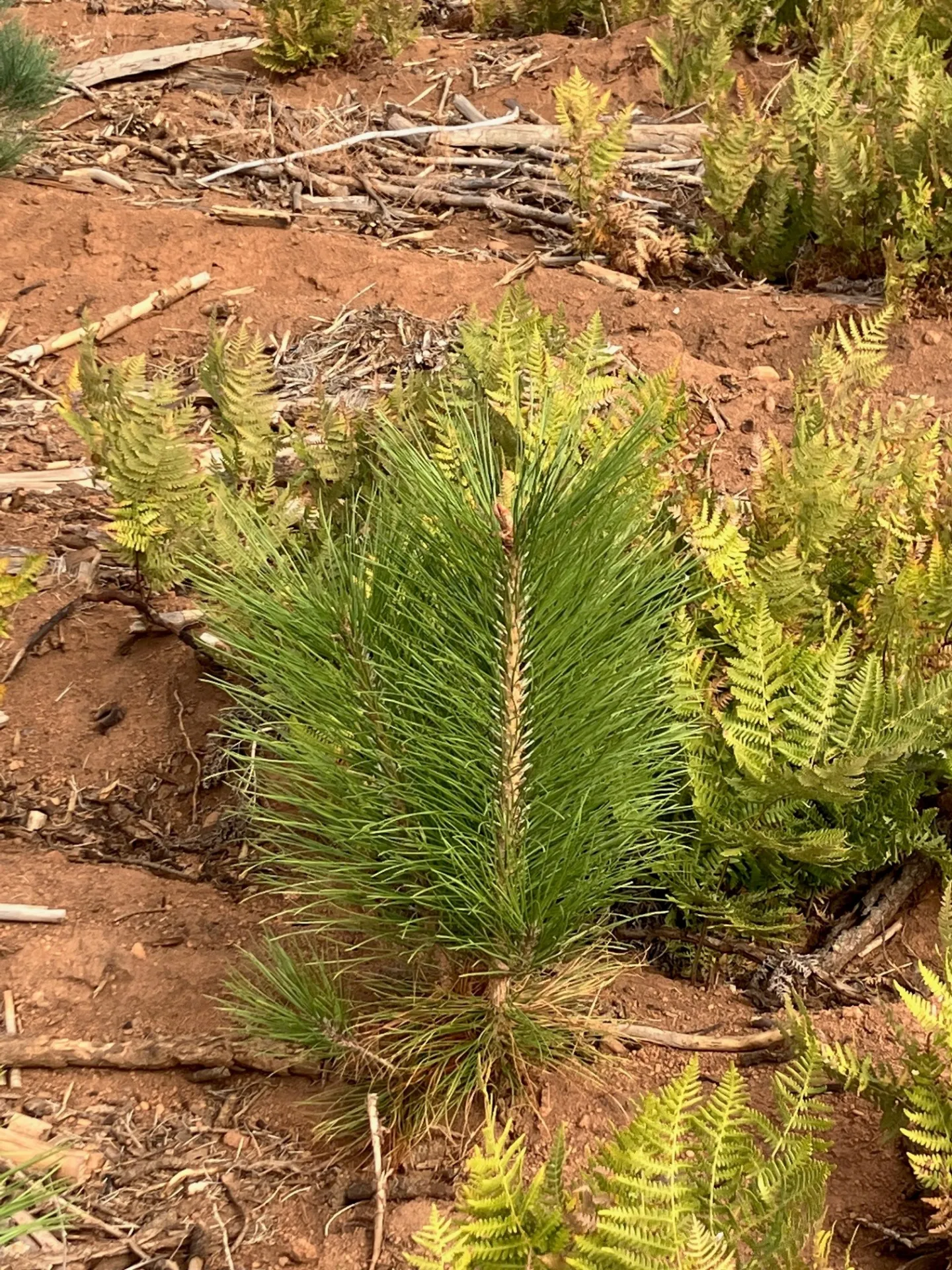
Post-fire reforestation requires strategic decision-making because of the increase in high severity fire and changing climate. Fires now burn more area at higher severity than they did historically, leaving extensive areas without living trees to produce seeds to grow the next forest. Warming temperatures and shifting precipitation patterns create challenging conditions for seedlings during their vulnerable early stages of establishment. Success in reforestation depends on tailoring approaches to specific sites, available resources, and realistic goals rather than applying a one-size-fits-all strategy.
Increasing fire severity and climate change
California’s forests have changed drastically over the last century due to fire suppression and large tree removal. In the Sierra Nevada, tree densities have increased six- to seven-fold compared to conditions recorded in 1911, while average tree size has declined by half (North et al. 2022). High fuel loads, combined with warming temperatures and extended drought, have led to fires that burn hotter and kill trees over areas 1,000 times larger than historical patterns (Williams et al. 2023).
These large patches of dead trees can inhibit natural regrowth of conifers. The production of new seedlings declines significantly more than 50 to 100 meters from surviving seed sources (Sorenson et al. 2025; Welch et al. 2016). Meanwhile, warmer conditions can increase drought stress beyond the tolerance of new seedlings. The first five years of seedling development are especially vulnerable. when even a single hot, dry year, can eliminate entire annual seedling cohorts (Davis et al. 2023).
By the mid-21st century, conditions suitable for current conifer forests may contract substantially (70% to 95%). Lower elevation forests face increasing stress as climate impacts move upslope (Davis et al. 2019). These shrinking windows for successful tree establishment demand strategic decision-making about where, when, and how to invest in reforestation.
The Resist – Accept – Direct Framework
Under a changing climate, reforestation efforts may need to adapt beyond traditional practices and adopt novel approaches that can prepare forests for a range of challenges (Schuurman et al., 2022). The Resist-Accept-Direct (RAD) framework assists forest managers to choose strategies based on goals, available resources and anticipated climate change. The RAD framework incorporates ongoing environmental changes, emphasizing that resilience should not solely focus on returning to prior forest conditions but on managing transitions to new forest types as well (Williams et al., 2023).
Resist strategies work to restore a forest with similar species and structure despite changing conditions. In reforestation, resisting change means replanting the same species that existed before the fire at similar densities. To increase seedling survival, climate-adapted seeds, from warmer, drier locations, can be used (See Seedling Acquisition and Care Factsheet).
Accept strategies acknowledge that some areas may not return to their previous forest type without intensive intervention and resources. On sites where reforestation is unlikely to succeed due to harsh conditions or remote access, managers may choose not to plant and instead allow vegetation to follow its own growth trajectory. This approach can be appropriate on steep or rocky terrain, very hot and dry exposures, or areas far from roads where planting costs would be prohibitive.
These areas may naturally shift toward shrublands or resprouting hardwoods on their own, causing a vegetation type conversion (Coop et al. 2020). By accepting these natural transitions, managers and landowners can focus their resources on areas where reforestation is more feasible and likely to succeed. However, unmanaged areas that burned at high-severity are often prone to repeated high-severity fires (Steel et al. 2021).
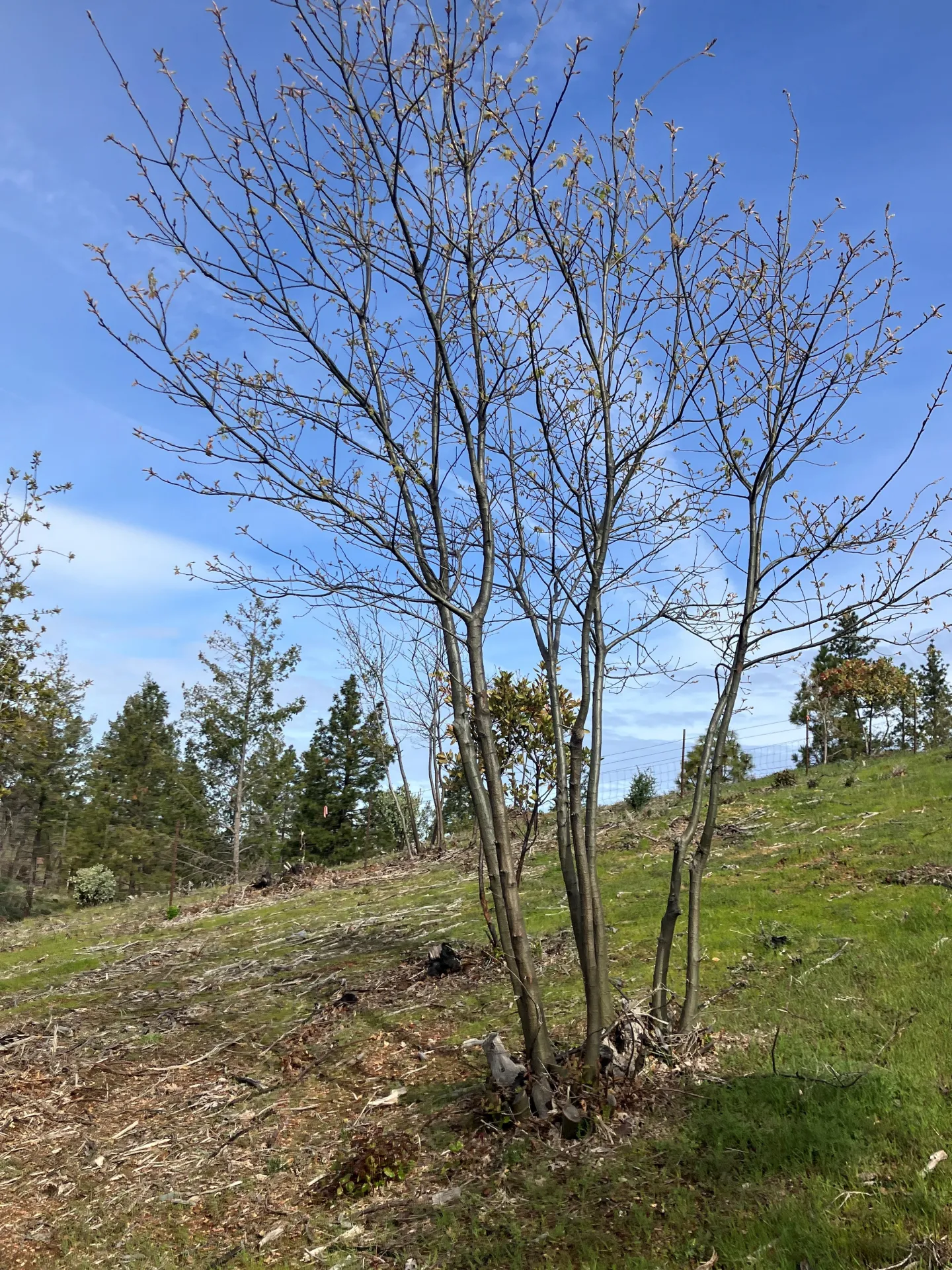
Direct strategies actively guide future forest type and structure to a new condition. This may desirable for small private landowners who want to re-establish a forest rather than accepting vegetation type conversion. Directing change may mean planting the same tree species as were present before the fire but using different planting designs and densities such as planting trees in clusters or spacing them more widely in grids. See Reforestation Design: Spatial Arrangement and Density). In areas where seedlings are growing naturally, planting at lower densities is appropriate (Sorenson et al. 2025). In areas unsuitable for conifer reforestation, landowners can direct transitions toward alternative forest types, such as oak woodlands, by encouraging resprouting hardwoods and managing understory competition (See Managing Resprouting Vegetation FS).
A balanced approach is likely most effective in creating a new forest that is both climate and wildfire resilient. One example would be planting low-density clumps of conifers on north facing slopes while encouraging growth of oak woodlands on south-facing slopes. Another would be in an area with a mix of forest types that had oak woodlands, mixed conifers and redwoods. Restoring one of these forest types rather than all may be more appropriate in future climates.
Timing Considerations
Careful planning and prompt action are essential for favorable reforestation outcomes.
Early Planting (Years 1-2): Critical in areas where shrubs grow quickly following high severity-fire. Plant seedlings to help them establish before shrubs can dominate the space. Planted seedlings must compete with grasses, forbs, and shrubs for water and space, making early planting more reliable. Rapid shrub establishment, from seeds and resprouts, requires vegetation control to ensure conifer seedling survival.
Delayed Planting (Years 3-5): May be advantageous in sites with harsh conditions and low productivity that benefit from facilitative interaction with shrubs (Sorenson et al, 2025). It is only effective in areas with minimal shrub competition and is less effective as shrubs establish.
Relying on Natural Regeneration (Years 1 – 5): In areas where naturally growing tree seedlings or tree resprouts are abundant and of the species desired, planting may be unnecessary. Monitoring in the first few years after the fire can identify areas where natural seedlings are establishing well, allowing resources to be directed to plant areas with greater need.
No Management (Years 5+): If there is no natural regeneration or planting done within the first five years after the fire, reforestation efforts will be more challenging and costly. This is because shrubs and grasses as well as invasive species can fully occupy the site leaving little growing space (moisture and sunlight) for tree seedlings. Reforestation at this time would require a large effort to remove vegetation and fuel to free up growing space for trees. This is very likely to be cost prohibitive.
Management Considerations
Reforestation costs vary widely depending on access, terrain, planting density, and whether site preparation or vegetation management is needed. Prioritizing sites based on their likelihood of success, ecological value, and practical constraints can help allocate limited resources effectively.
Successful reforestation at all scales requires collaboration among diverse partners, particularly for private non-industrial forest landowners who may lack resources for intensive management. Key considerations include scaling cost-effective approaches, sharing technical expertise and funding resources, and coordinating treatments with neighbors. Landowner assistance programs can provide technical and financial help. (See Landowner Assistance Programs FS).
Find the printable version of this fact sheet below. Note that the pdf is for print purposes ONLY.
