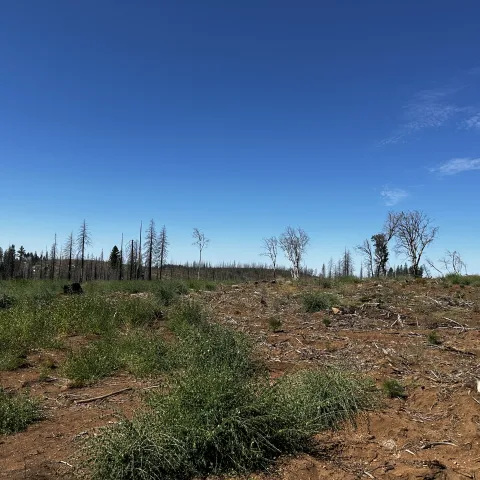
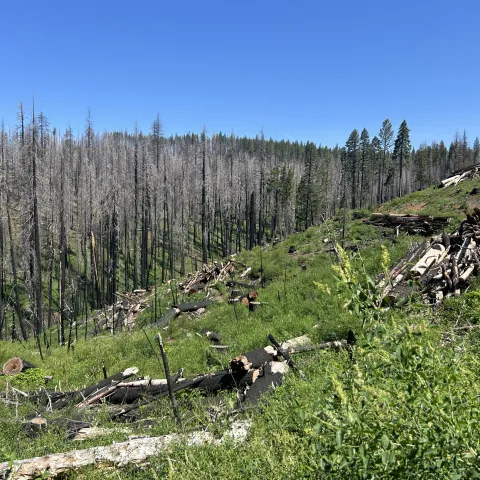
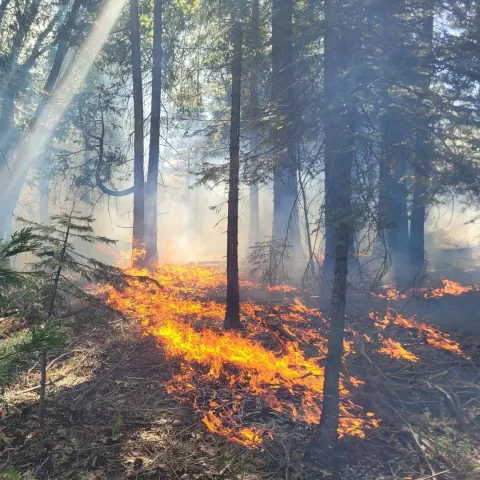
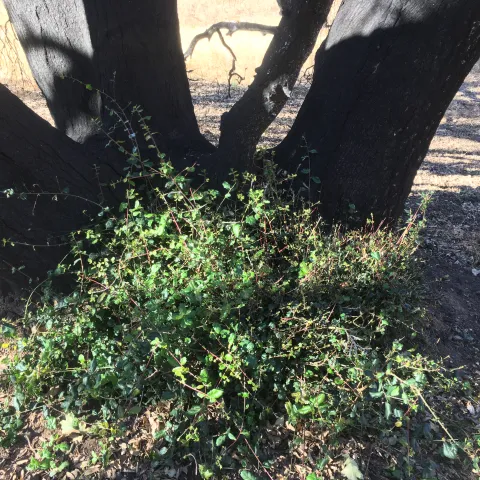
Release date: March 2026. Extensive, high-severity wildfires in California’s conifer forests have impeded natural forest regeneration, leaving the future of these forests at risk (Welch et al. 2016). Post-fire reforestation efforts extend far beyond seed collection and planting. Though often overlooked, site…
Release date: March 2026. As the magnitude and prevalence of large, high-severity fires in California’s forests increases, so does the urgency to promote the re-establishment of forests on burned lands. Prior to European colonization, most California conifer forests burned frequently with low to moderate…
Release date: March 2026. With an increase in high severity wildfire, planted young conifer trees are increasingly common across the landscape. Since these young stands are vulnerable to additional high severity fire, managers need to develop innovative strategies to help them thrive and mature (York et al…
Release date: March 2026. Disturbance (e.g., caused by wildfire, weather, insects/disease, etc.) is a temporary change in environmental conditions that causes a pronounced change in an ecosystem. It is an important part of healthy and diverse forests. However, disturbance events can sometimes result in…