
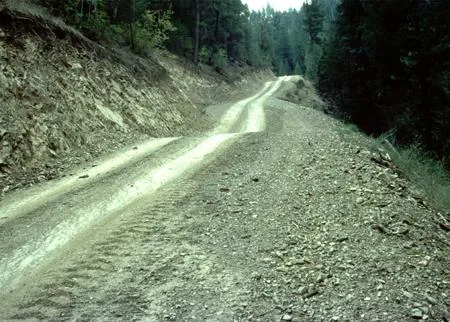
Roads are an essential improvement on your forest property. They provide access for recreation and for management activities. Roads are also the major environmental impact we have on the forest and watershed, being the principal source of erosion and stream sedimentation. Properly sited and constructed roads will produce minimal environmental impact and minimize maintenance effort and costs such as potholes that need repeated filling, and washboarding and rutting which requires annual blading.
In addition to the physical and biological aspects of roads, there are many social/legal aspects to consider: easements, maintenance agreements, access and trespass. For an overview of road maintenance and design issues, please see Forest Stewardship Series 17- Forest Roads
Rural Roads - Construction and Maintenance Guide for California Landowners - Publication 8262
View the UCCE hosted 14-part video playlist on forest roads covering topics such as geologic constraints, drainage, slope stabilization, erosion, and road materials.
Other Resources:
Roads Handbook - Pacific Watershed Associates and Mendocino County Resource Conservation District publication on Forest, Ranch, and Rural Roads: A Guide for Planning, Designing, Constructing, Reconstructing, Upgrading, Maintaining and Closing Wildland Roads.
Handbook was funded by the California State Water Resources Control Board and the California Department of Forestry and Fire Prevention. The purpose of this extensive handbook is to inform forestland, rural and ranch landowners who are concerned about natural resources, on how to construct efficient, low cost and low maintenance roads designed to have a low impact on water quality and aquatic habitat.