

What is Soil Erosion?
Erosion is a natural process through which soil moves. The rate and scale of erosion is typically driven by local geology, topography, vegetation, climate and weather. In post-wildfire environments, the most damaging long-term impact to ecosystems is soil erosion. In post-fire environments, the loss of soil stabilizing roots and vegetative cover often accelerate the rate of erosion, which can sometimes lead to debris flows and flooding. Not only can erosion happen immediately after fire, it can continue over several years as root systems of burnt vegetation decay. As a landowner, dealing with erosion is critical and a timely and proactive response post-wildfire can reduce the negative ecological and safety-related impacts of erosion.
What Areas Are Most Prone to Erosion?
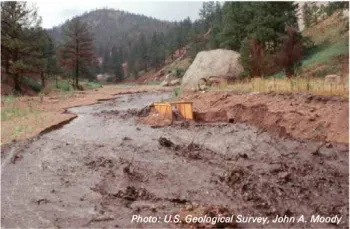
In general, all drainages in steep, hilly areas are especially vulnerable after a wildfire. Areas burned at moderate to high severity are of greatest concern due to lack of cover and the development of water repellent layers. Even areas with low erosion hazard ratings can experience rill and gully erosion if there is a lack of vegetation or if exposed to a high intensity storm.
What Are Different Types of Erosion?
Debris flows and avalanches are dramatic forms of erosion that can deliver huge amounts of sediment and debris downslope. Surface erosion can also occur and result in gradual loss of soil as well as declines in water quality. If you live on or near a slope, in a draw or ravine, or along a stream or river, you need to be aware of the extent of wildfire damage upslope or upstream. If most or all of the vegetation has been burned off of these areas, the chance for erosion is significantly greater and can result in mass movements of soil and water downhill or downstream from the damaged areas.
How Can You Mitigate Erosion?

If addressed quickly, you can minimize the negative impacts of erosion. There are several common methods of controlling erosion:
- Mulching: mulch covers the soil, reducing rain drop impact, overland flow, and soil particle movement and offsets the effects of water-repellent soils. Mulching is the only treatment that consistently and significantly reduces erosion rates by immediately increasing the percentage of ground cover. Types of mulch include certified weed-free straw, slash, and geotextile fabrics.
- Barriers: barriers are installed on hill slopes and in streams to slow water flow, increase infiltration, and trap sediment. Types of barriers include log barriers, straw wattles, sandbags, silt fences, and straw bale check dams.
- Seeding and Revegetation Grass: seeding is the most commonly used erosion control treatment after a burn. Grass is seeded to burned sites from the ground or by air to increase vegetative cover during the first few critical years after a fire.
There are several methods of erosion control you can implement on your property following a wildfire. Click on the links below to learn more about each method:
Additional Resources
Check out these post-fire erosion-related resources from the UC ANR Fire Network and our colleagues!
- After the Burn: Assessing and Managing Your Forestland After a Wildfire guide from University of Idaho Extension (2015).
- After the Fire factsheet series from the Natural Resources Conservation Service (2020).
- Post-Fire Erosion Control: Mitigating Hillslope Erosion Following Wildfire factsheet from UC Cooperative Extension Forest Stewardship (2023).