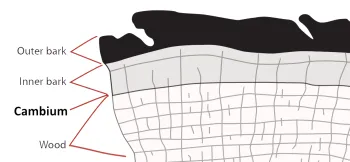
Falling hazards from burned trees are only a few of the issues to consider following fire. Trees weakened by fire are particularly susceptible to bark beetles and can be the catalyst for an outbreak. Fire can burn underground fuels such as stumps and root systems, creating tunnels that can trip and even burn the unsuspecting hiker. Fire can also burn inside the bole of a tree, leaving little evidence of damage outside while structurally weakening the tree.
In many cases, hazard trees should be removed as soon as possible. This not only removes the hazard, but creates a safe area for restoration efforts such as erosion control or revegetation. Dead trees may be salvaged to product timber, posts, poles and firewood if removed within 1 year of the fire. If not salvaged quickly, wood borers, drying, and fungal infection may degrade a tree’s structural qualities.
Tree survival and death is largely dependent on fire severity, which is influenced by tree density, fuel load, terrain, and weather. Even in cases of severe fire behavior, most trees are not completely consumed, and the main trunk will remain standing although the leaves, needles and branches may be gone.
Knowing which trees to remove and which to keep is not always straightforward. While conifers are highly susceptible to foliar damage, hardwoods have better potential to resprout foliage after fire. Judging tree survival is usually easier the next growing season after a fire.