

How Food Becomes Contaminated
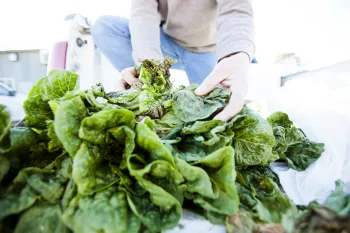
During wildfires, plants accumulate chemicals and metals in numerous ways, including through deposits of ash on leaf surfaces or soil-root uptake. Plant characteristics also affect the ways these potential contaminants become stored on and within the plant. For example, root vegetables directly contact soil contaminants, while large leaves collect airborne PM (like smoke and ash) and soil splash. Woody plants, such as fruit trees or cane berries, are less likely to pass soil contaminants touching roots into edible plant parts, but all plants can absorb airborne surface deposits through leaves.
Rinsing vegetables works to reduce overall contaminants, and can effectively remove certain contaminants (e.g. lead and cadmium) from leaf surfaces, although adequately removing trace contaminants depends on the crop species, soil type, and PM size. Remembering to be mindful while gardening and harvesting helps to limit your exposure to potential contaminant hazards.
Minimize Risks While Gardening During and After Wildfires
People are most exposed to wildfire contaminants directly from their environments, particularly from inhaling smoke, contacting contaminants with bare skin, and ingesting contaminants from hand to mouth. Eating produce from smoky gardens carries minimal risk. Limiting time outside and contact with contaminants reduces one’s overall risk, especially for people with additional health concerns.
Learn your site history to uncover underlying sources of contaminants and potential exposures. To learn more about soil testing, please visit our Home Garden Soil Safety webpage.
Limit Your Exposure in the Garden
The best way to limit exposure to wildfire smoke and ash is by restricting outdoor activity. If you are gardening or harvesting in smoky air:

- Protect yourself by wearing N95/KN95 (or better) masks with ventilators, gloves, long sleeves and pants, and close-toed shoes or boots.
- Use goggles to help protect sensitive eyes.
- Avoid leaf blowers or vacuums to remove ash from produce or gardens, as these lift contaminated dust into the air.
- Reduce tracking contaminants indoors by removing shoes and outer clothing layers before going inside.
- Clothes should be bagged or washed immediately to not contaminate indoor air.
- Hand washing before and after working in the garden or with produce helps keep you and others safe from exposure.
There are also simple actions you can take to reduce the risk of contaminants in your garden like:
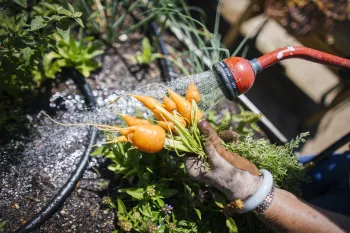
- Practice low-impact irrigation methods, like drip irrigation and soft sprayers, to prevent soil particles splashing onto vegetables.
- Mulches and soil covers also reduce soil splash and dust, and additionally save on water use.
- Amend marginally contaminated soils with composts or other appropriate amendments to support the breakdown of chemicals and the immobilization and reduced short-term plant uptake of heavy metals.
- Consider replacing contaminated soils with clean soils and installing raised bed gardens.
Rinse Your Produce
- Discard produce that is burnt or coated in soot, ash, or fire suppression chemicals.
- Discard the outer leaves of leafy greens which have the most ash and soil particles attached.
- Pre-rinse produce outside with a gentle spray or dip in potable water to remove soil, grit, ash, and other particulate matter.
- Rinse produce inside in cool, running water. Use a produce brush on hard, bumpy surfaces, and hands and fingers on smooth or delicate surfaces. Peel fruits and vegetables to remove outer layers.
Additional Resources
Check out these post-fire home garden produce-related resources from the UC ANR Fire Network and our colleagues!
- After the Fire: Home Garden and Fruit Tree Safety factsheet from the UC ANR Fire Network (2025) - English
- After the Fire: Home Garden and Fruit Tree Safety factsheet from the UC ANR Fire Network (2025) - Spanish
- Watch our After the Fire: Soil Contamination and Remediation webinar to learn about some of the latest research in soil contamination and remediation post-wildfire. This webinar was recorded in February 2026.
- Watch our Post-Fire Produce Safety webinar to learn about the effects of smoke and ash on produce. This webinar was recorded in November 2020.