

Are Eggs From Your Backyard Safe to Eat Post-Fire?
After a wildfire, harmful contaminants are left behind in the soil and water. These contaminants can be ingested by backyard chickens and later be found in the edible portions of their eggs. Out of an abundance of caution, do not eat the eggs from chickens that have foraged in burnt areas.
How Do Contaminants Transfer Into My Chickens and Eggs?
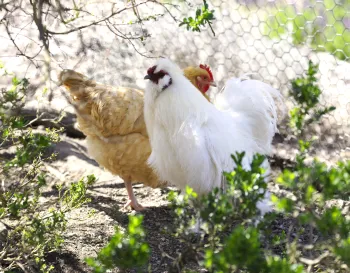
Urban wildfire debris often contains concentrated levels of heavy metals (e.g., cadmium, lead, and mercury), household chemicals, and ash which are byproducts of burned structures, vehicles, and other urban materials. Chickens are especially prone to ingesting these contaminants through directly inhaling or ingesting toxic particles, ingesting contaminated soil with their feed, or drinking contaminated water sources. Overtime, the repeated ingestion of contaminated material can lead to the buildup of toxins in their bodies.
As chickens ingest toxins from contaminated soil, these substances will eventually appear in the edible portions of their eggs in levels that exceed the recommended thresholds of consumption per day. Note that it is also normal for chickens to stop laying eggs after a traumatic event like a wildfire, with no set recovery time. Additionally, shorter days in the winter can trigger a 8-to-12-week molt, which naturally haults egg production. As for the safety of their meat, healthy birds should be safe to consume, however organs that filter toxins (e.g., liver, kidneys) should be avoided.
Due to risks of contamination post-wildfire, it is recommended that you test your eggs to assess contaminant levels at least once post-wildfire. Additionally, testing the soil and water where your chickens forage and their eggs will inform you of the toxicity levels present and the safety of the eggs the chickens produce. Soil quality can be professionally assessed using the California Environmental Laboratory Accreditation Program (ELAP). UC ANR’s Healthy Soils for a Healthy California website also includes several resources about soil health and soil testing.
How to Mitigate Risks and Protect Your Flock
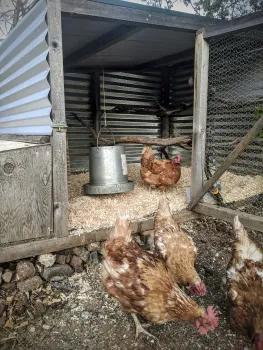
To reduce the likelihood of your flock ingesting toxins and debris post-wildfire:
- Keep chickens from foraging near household hazardous waste, building materials, pesticides, fire suppression chemicals and other toxic materials. Presumably, until the source of contamination is removed, your chickens will continue to be exposed and your eggs will show levels of contamination.
- Place chickens on raised beds or a specific area in your yard with clean soil, mulch or other materials that can help reduce contact with toxic materials.
- Place chicken feed in a confined feeder that keeps the feed off the ground
- Avoid feeding unwashed garden scraps to your chickens from areas heavily affected by ash.
- Do not compost using shells of chicken eggs that were exposed or potentially exposed to toxins.
- Make calcium available to your chickens (e.g., free choice oyster shells) to prevent the absorption of lead,2 however most chickens will not consume calcium supplements unless they have a deficiency.
Additional Resources
Check out these post-fire backyard poultry-related resources from the UC ANR Fire Network and our colleagues!
- After the Fire: Backyard Chicken and Egg Safety factsheet from the UC ANR Fire Network (2025) - English
- After the Fire: Backyard Chicken and Egg Safety factsheet from the UC ANR Fire Network (2025) - Spanish
- Watch our After the Fire: Backyard Chicken and Livestock Safety webinar to learn about some of the latest research and best practices for managing backyard chicken and livestock health post-wildfire. This webinar was recorded in February 2026.
- Watch our Safety of Backyard Chicken Eggs Post Urban Wildfire webinar to learn more about the safety of eating eggs from backyard poultry post-wildfire. This webinar was recorded in November 2020.