What is Virtual Fencing?
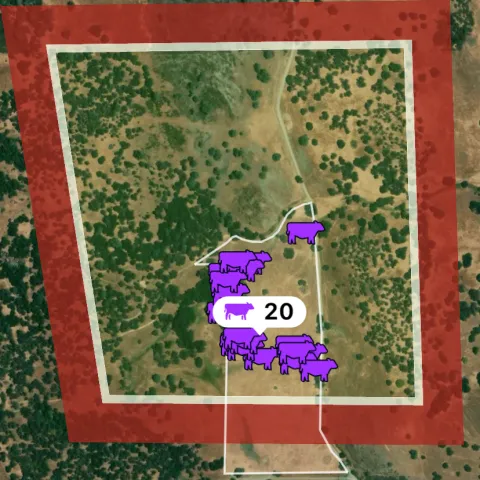
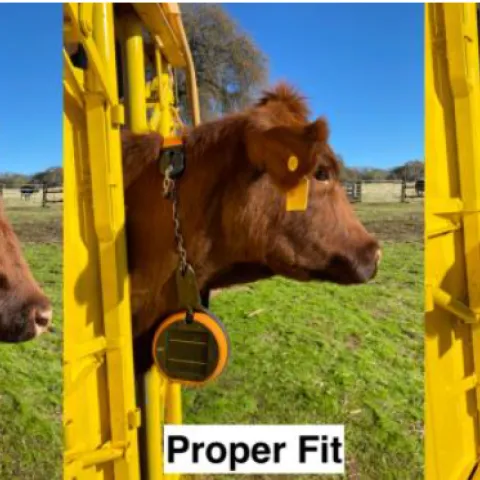
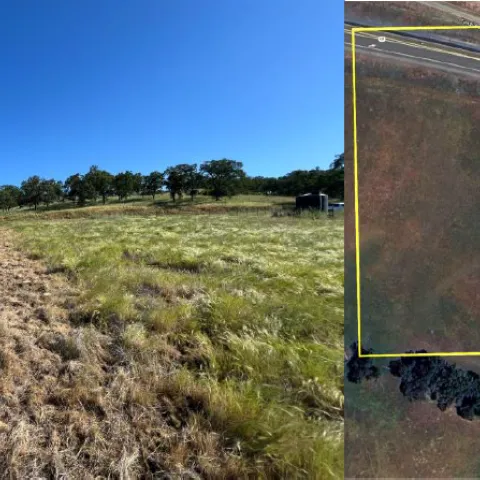
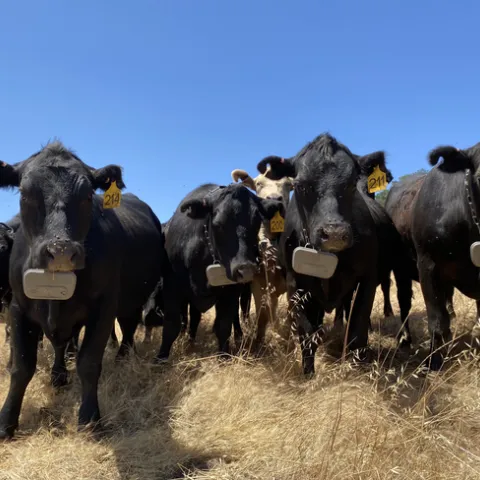
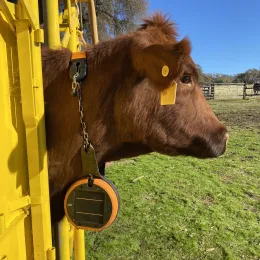
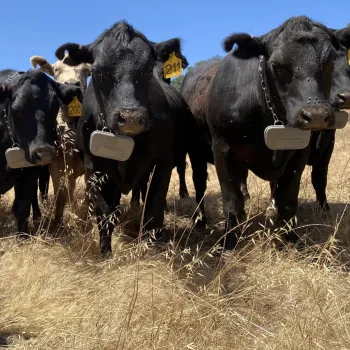
Virtual fencing (VF) is an emerging precision agriculture tool capable of improving grazing systems for both livestock producers and land managers that is growing in use across California’s diverse rangelands. It uses GPS collars to contain livestock without physical fences. Producers set virtual boundaries across their pasture from a computer, which are transmitted to the collars via cellular signal. When an animal approaches the boundary, the collar emits audio cues and, if needed, mild electric pulses to keep the animal within the boundary.
Virtual Fencing for Tracking Livestock
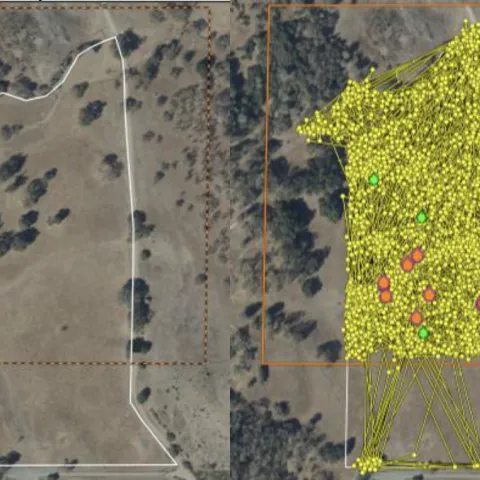
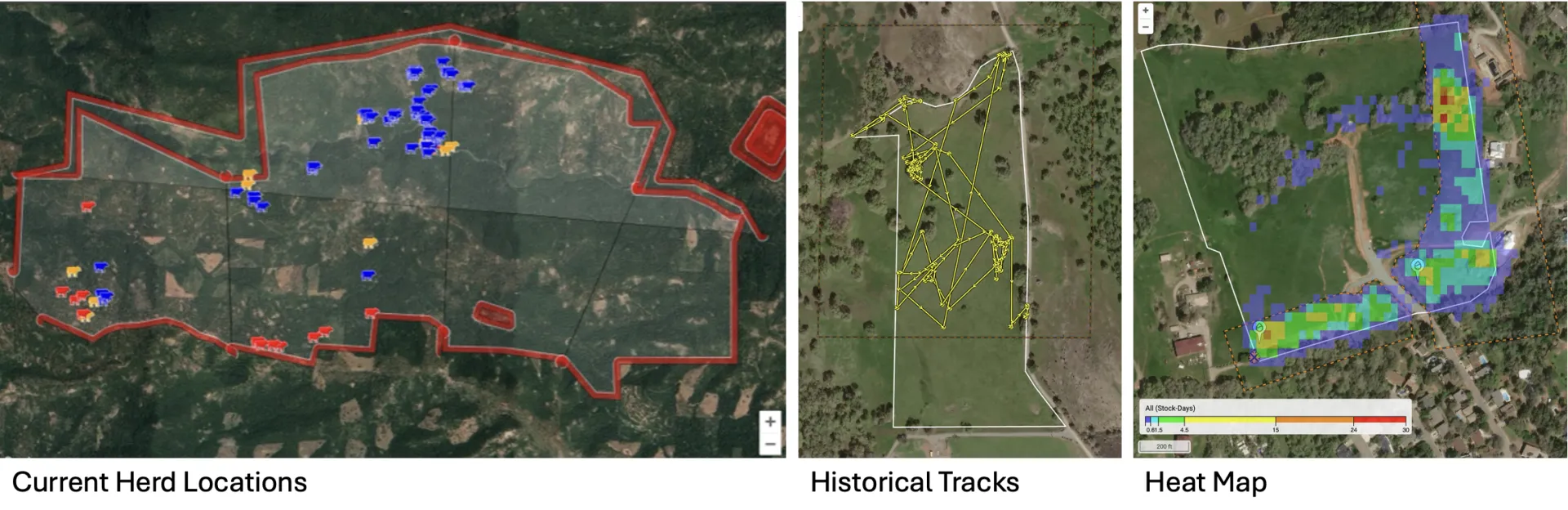
VF collars use satellites to determine their GPS location within a few yards and use cellular signal to send and receive data and updates to the user. Users can monitor each animal’s a) real-time location, b) historical tracks, and c) pasture utilization. This is especially helpful on large, remote, or forested ranges where animals are otherwise hard to locate. Reported benefits include faster roundups, alerts for stationary animals (who may be sick or have lost a collar), and faster response times for escaped animals.
Virtual Fencing for Containing Livestock
VF collars precisely contain or exclude livestock within user defined boundaries without the need for physical fence. Using a smart device, the user draws a VF boundary in minutes and sends it to collars via cell signal, typically within an hour. As an animal crosses a VF boundary, the collar emits an audio cue, followed by a mild electric pulse if needed. In UC ANR trials, livestock quickly and intuitively respond to these cues, eventually responding to audio cues alone more than 90% of the time. Immediately after first collaring, herds are consistently contained within VF boundaries over 95% of the time. VF boundaries also let animals enter freely but contain them if they try to leave. Altogether, this allows animals to be contained exactly where they are needed on the landscape with greater flexibility, deployment, and intention than traditional fencing allows. While not a replacement for secure perimeter fence where 100% containment is needed, VF is a versatile alternative to cross fencing.

Applications of VF
Some applications seeing active use and potential merit include:
- Tracking livestock remotely in real-time across large terrain to reduce trips, shorten round ups, and respond faster to downed or escaped livestock.
- Preventing escapes from open gates or damaged fences.
- Excluding livestock from recent burns, active logging areas, riparian zones/meadows, infrastructure, recreational areas, archaeological sites, etc.
- Offsetting the need for cross-fence construction.
- Minimizing public interaction by keeping herds away from roads, trails, and recreational areas.
- Easier rotational grazing.
- Targeted grazing to control palatable invasive weeds.
- Targeted grazing to reduce flashy and brushy fuels to reduce wildfire risk, including installing long and narrow fuel breaks.
- Rapid reentry to areas impacted by wildfire, allowing grazing to resume in unburned sections without (or while) rebuilding lost fences.
Costs of VF
VF costs include an initial investment in the hardware (typically between $10K to $40K) and annual recurring costs starting in year two (typically between $1K to $7K). Costs vary by:
- Livestock type (cattle, goats, or sheep) and number to collar.
- Cellular coverage across the pasture. Some VF systems use LoRaWAN base stations, while others rely solely on cell networks.
- LoRaWAN: Base stations are solar-powered cellular antennas placed on high points of the range. They are ideal if cell reception is spotty in the area and/or limited to ridgelines. Only the base station needs to be in cell range, it can then relay coverage to the rest of the range through line of sight connection with collars. These cost between $4.5K and $10k each.
- Cellular: Best for ranges with good, consistent coverage. The cost and setup for cellular systems are simpler.
- Whether you prefer to buy or lease collars.
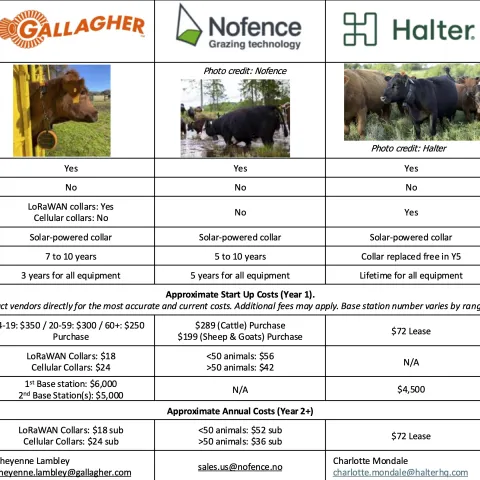
VF Vendor Comparison Guide
 |  |  |  | |
 |  |  |  | |
| Requires cell reception | Yes | Yes | No | Yes |
| Works with satellites only | No | No | Yes | No |
| Requires base station / tower | LoRaWAN collars: Yes | No | No | Yes |
| Battery type | Solar-powered | Solar-powered | Solar-powered | Single use |
| Battery life | 7 to 10 years | 5 to 10 years | Collar replaced for free in | 3 months to 1 year |
| Warranty | 3 years for all equipment | 5 years for all equipment | Lifetime for all equipment | None for collars. 90 days for BS |
| Company contacts | Cheyenne Lambley | Charlotte Mondale |
Approximate Start Up Costs (Year 1)
*Note: Contact vendors directly for the most accurate and current costs. Additional fees may apply. Base station number varies by range geography.
| | | Image  | ||
| Acquisition type | Purchase | Purchase | Purchase | Lease | Lease |
| Cost per collar* | 20-59 head: $300 | Cattle 5 - 24 head: $349 | Sheep & Goat 5 - 24 head: $269 | $96 | $40 + $10 replacement battery |
| Annual subscription cost per collar* | LoRaWAN Collars: $18 | Option 1: Monthly rate | N/A | N/A | |
| Base station* | 1st BS: $6,000 | N/A | $4,500 | $10,000 | |
Approximate Annual Costs (Year 2+)
| | | | |
| Leasing cost per collar* | N/A | N/A | $96 | $40 + $10 replacement battery |
| Subscription cost per collar* | LoRaWAN Collars: $18 sub | Option 1: Monthly rate | N/A | N/A |
University of California Virtual Fence Webinar Series
Episode 1: Basics of Virtual Fence.
An overview of how virtual fencing tracks and contains livestock, how to deploy a VF system, highlights the current vendors available on the U.S. market, and funding opportunities available for VF in California.
Episode 2: Virtual Fence for Livestock Production
Hear from a panel of California ranchers who have at least 2 years of experience integrating virtual fencing into their livestock operations. The discussion focuses on their real world experiences, challenges, and lessons learned.
Episode 3: UC ANR Virtual Fence Research Trials
UC ANR researchers share results and insights from field trials testing virtual fencing on California rangelands. Topics include livestock management on expansive range, targeted grazing of invasive Medusahead (Elymus caput-medusae) and barb goatgrass (Aegilops triuncialis), fuel reduction, and livestock behavior.
University of California Research on Virtual Fencing
The University of California Cooperative Extension Central Sierra is working to understand the applications of VF on California rangelands with grant funding through the United States Department of Agriculture Natural Resources Conservation Service Conservation Technical Assistance: Grazing Lands Conservation Initiative (GLCI) Cooperative Agreements. The UCCE does not endorse any single VF product.
Please click on the links below to learn more about our research trials and findings.
Questions?
Please contact Brian Allen (brallen@ucanr.edu)
Virtual Fencing in the News
The UCCE Central Sierra Virtual Fencing program was featured in Ag Alert, the Newspaper for California's Agriculture, a California Farm Bureau publication. Please click the California Dairy & Livestock header, or this link to read the special report.

The UCCE Central Sierra Virtual Fencing program was featured on the Voice of California Agriculture podcast, episode 5/1/25.
Central Sierra: Virtual Fencing Information
UC Central Sierra research on Virtual Fencing on California Rangelands
Virtual Fencing is a precision agriculture tool gaining traction across California's diverse rangelands that uses GPS collars to contain livestock without physical fences.
Research and trials are ongoing, and many of the findings are collected in the content found here.