
Emerging Precision Agriculture Tool Improves Grazing Systems
For the past four years, UC researchers have been examining the usefulness of virtual fence (VF) technology on a multitude of landscapes across the Sierra Nevada. Virtual fencing is an emerging precision agriculture tool capable of improving grazing systems for both livestock producers and land managers that is growing in use across California’s diverse rangelands. It uses GPS collars to contain livestock without physical fences. Producers set virtual boundaries across their pasture from a computer or smart phone, which are transmitted to the collars via cellular signal. When an animal approaches the boundary, the collar emits audio cues and, if needed, mild electric pulses to keep the animal within the boundary.
Research projects have included using VF to reduce flashy fuels in the wildland urban interface around the city of Sutter Creek using a strategy called high intensity, short duration grazing. Other research has examined the efficacy of VF to contain animals on large summer grazing forest allotments while also excluding animals from sensitive sites including recently burned areas, riparian areas, campgrounds, and sensitive plant habitat. Research has also shown how VF can be used to target several invasive weeds in the region.
Project aims to demonstrate tool's flexibility and adaptability
This year, UCCE Central Sierra has partnered with the Bureau of Land Management (BLM) and the Foundation for America’s Public Lands to bring virtual fence to BLM lands here in the Sierra Nevada. As part of the Lands to Love Catalyst Fund grants program, UCCE researchers received one of two grants awarded in California to kickstart this exciting new project.

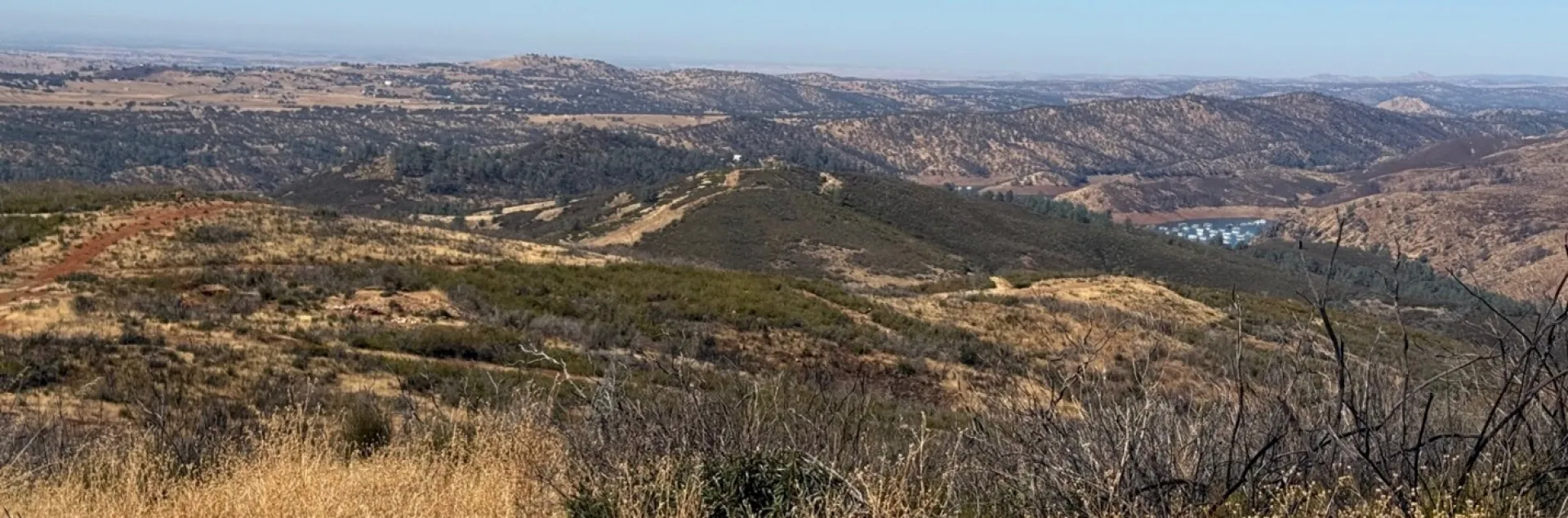
The project will take place on Hunter Valley Mountain, a BLM allotment near Lake McClure in Mariposa County. VF technology will allow livestock to be contained exactly where they are needed on the landscape with greater flexibility, deployment, and intention than traditional fencing allows. Precision grazing through virtual fencing will allow for more accurate livestock location monitoring, exclusion of livestock from sensitive habitats, targeted grazing to reduce fuels or invasive weeds, and minimizing conflict with recreation. One of the overarching goals of this project is to demonstrate how the flexible and adaptive qualities of virtual fencing can strengthen partnerships between livestock producers and federal land managers, and help make sustainable grazing and land stewardship goals on multi-use public landscapes more attainable.
For more information on virtual fencing, https://ucanr.edu/county/ucce-central-sierra/central-sierra-virtual-fencing-california-rangelands
Scott Oneto and Brian Allen are researchers with the University of California Cooperative Extension working throughout the Sierra Nevada region. sroneto@ucanr.edu brallen@ucanr.edu