UC ANR is committed to providing an accessible and inclusive web experience for all users. If you encounter an accessibility barrier or need content in an alternative or remediated accessible format, please contact anraccessibility@ucanr.edu.
Drone use in agriculture is rapidly expanding across the United States. While drones were initially adopted for imagery, vegetation indices, and hotspot detection for variable rate applications, their role is evolving. Increasingly, drones are being used for chemical applications in crop production, a trend…
The Mediterranean Oak Borer (MOB) is an invasive ambrosia beetle that infests several species of white oaks in California: valley oak, blue oak, and Oregon oak. The beetle is spreading rapidly in Northern California counties and there is considerable potential for the beetle's range to expand as they…
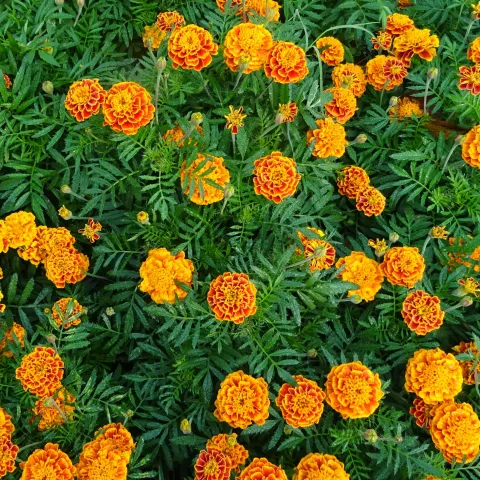
When trying to solve a pest or plant problem, it is likely that you will come across a wide variety of solutions online, passed down through the generations, or shared on social media. While there is plenty of reliable and science-based information out there, such as on the UC IPM website, there are also a…
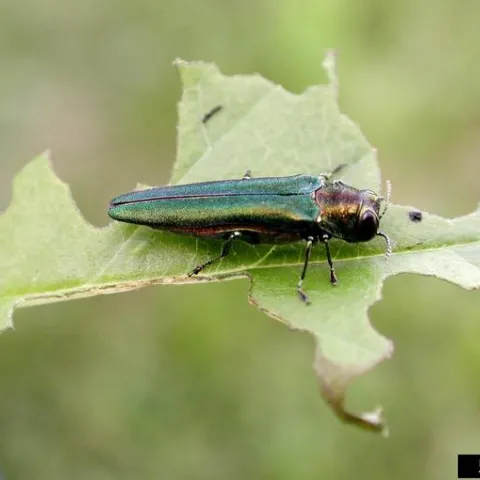
Tiny but destructive, the emerald ash borer (EAB) is an invasive beetle that has killed millions of ash trees across North America. In some cases, infested regions have lost nearly 100% of their ash trees to this pest. Though EAB has not yet been found in California, it was detected on the West Coast for the…
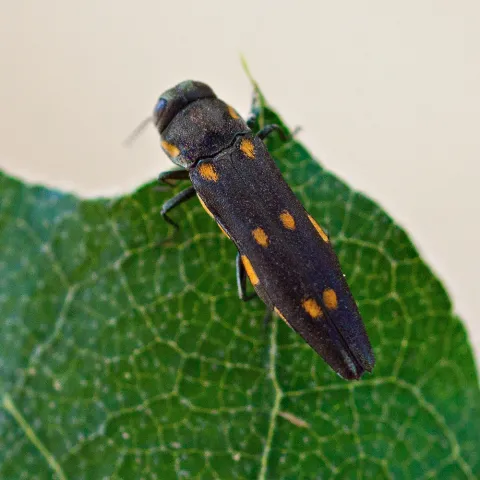
To save oak trees, UC Cooperative Extension is organizing a GSOB Blitz, a community-powered effort to detect and map goldspotted oak borer infestations, in June.
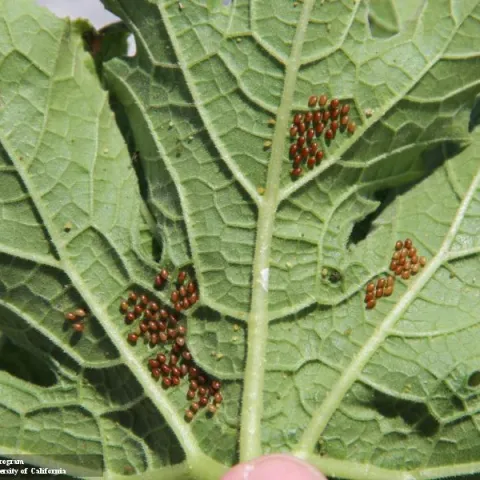
Squash bugs are a common pest in vegetable gardens, where they can be found on squash, pumpkin, and melon. They can cause leaves to become speckled and turn yellow. Heavy feeding can cause plants to wilt or die, and fruit to rot.These pests remain in the garden during the winter, hiding under dead leaves,…
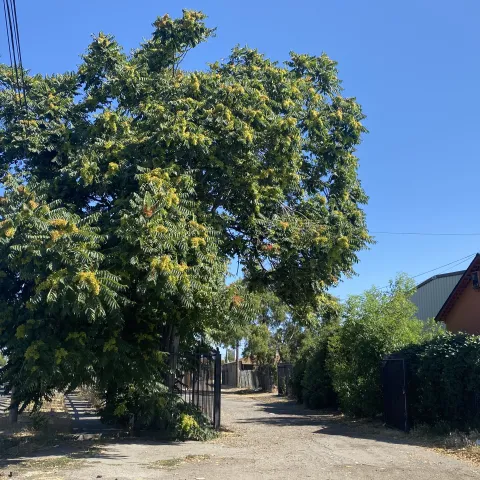
Tree-of-heaven, Ailanthus altissima, was originally from China and became a popular landscape shade tree in the 1800’s. However, its rapid growth, aggressive spread, and native habitat disruption have made it a global problem. Reproducing rapidly through dense root suckers and wind dispersal of its “winged”…