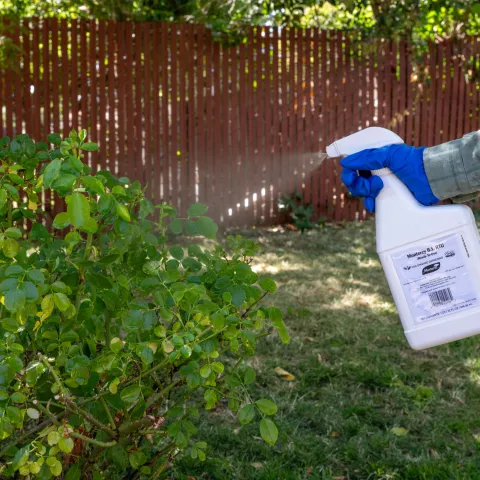
When using pesticides and other garden chemicals, you should always wear personal protective equipment (PPE) to keep yourself safe. Pesticides can enter the body via the eyes, skin, nose, or mouth. The skin is the most common way pesticides enter our bodies, usually by splashing, spillage, or spray drift…
UC ANR There are many different chemicals available for use in the garden. Unfortunately, these chemicals may contaminate soil, water, and air and may even harm plants, pets, and people.
The UCCE Entomology Research and Extension program is entrusted with developing and implementing targeted research and education programs on managing insect pests of vegetables, forage crops, field crops, and specialty crops in Imperial County.
At UC IPM we recognize pesticide safety education every month, but February in particular is National Pesticide Safety Education Month! Below are some simple tips for using pesticides safely to protect yourself, others, wildlife, and the environment.
As of January 1, 2025, popular lawn and garden pesticides belonging to the neonicotinoid class, can no longer be used by home gardeners on outdoor fruit trees, lawns, or ornamental plants in California.
While you may not notice symptoms of peach leaf curl until the spring, you should manage it in the fall and winter. Peach leaf curl is a fungal disease that primarily affects peach and nectarine trees.
By Niamh M Quinn, Roger A Baldwin, Carolyn Whitesell
With the passing of law AB 1322 in 2023 and the recent passing of AB 2552 in September 2024, the options for managing California ground squirrels using lethal methods in urban areas will be more limited.
The common insecticide imidacloprid, and the related active ingredients acetamiprid, clothianidin, dinotefuran, and thiamethoxam, belong to the pesticide group neonicotinoids. Neonicotinoids have been linked to the decline in honey bee and other pollinator populations.
You bought a pesticide product that needs to be mixed with water before applying. Did you accidentally mix up too much and now have leftover pesticide? What should you do with it? Before mixing or applying a pesticide, always read the pesticide label to see where the product can be used (i.e.
Acetic acid, also known as vinegar, is used in products for weed control. Many people choose it because it is natural. However, acetic acid can damage skin and eyes, especially at concentrations commonly found in weed killers.