Plant Care

Primary Image
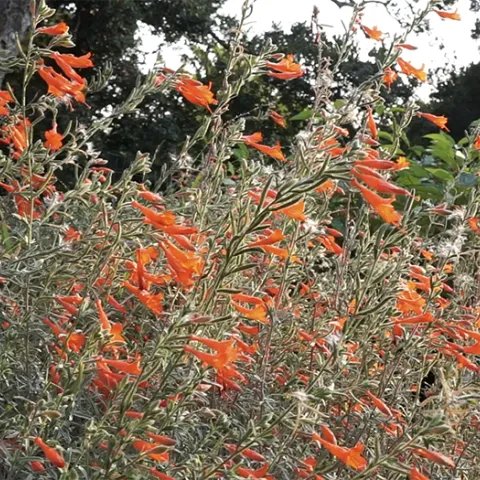
hummingbird
UC Marin Master Gardeners: Page

Plants for Pollinators

It's easy to invite bees, butterflies, hummingbirds, and other welcomed winged visitors into the garden. Just provide the food, water, and shelter they need to feel at home. This is called habitat gardening, and it's a satisfying way to choose plants.
View Page
Primary Image
Banner irrigation
UC Marin Master Gardeners: Page

Types of Irrigation Systems

The most effective irrigation systems are designed, installed, and maintained to distribute water as uniformly as possible and only when and where water is needed. That means applying water where roots can use it.
View Page
Primary Image
irrigation spray
UC Marin Master Gardeners: Page

September

Reduce irrigation times as day length shortens and plant growth slows. Photo: Courtesy UC Regents Maintenance and prevention Reduce irrigation times as day length shortens and plant growth slows.
View Page
Primary Image
gardening tools
UC Marin Master Gardeners: Page

Pruning Tools

Here are recommended tools and basic pruning techniques for maintaining the health of a plant and for accentuating key attributes, such as leaves, bark, branch structure, flowers, fruit, or other desirable characteristics. Bypass pruners or shears BYPASS SHEARS Bypass shears are like scissors.
View Page
Primary Image
fall leaves
UC Marin Master Gardeners: Page

What to do with fallen leaves

When fallen leaves are overly abundant, consider composting them or shredding them so that they decompose more quickly. Photo: Marie Narlock Theres nothing like the glowing presence of autumn colors, each brilliant red, orange, and yellow leaf backlit by the sun.
View Page
Primary Image
Orange, lemon and grapefruit slices, by Joanna Malinowska
UC Master Gardeners of Santa Clara County: Page

Growing Great Citrus

Citrus are attractive, long-lived evergreen plants that require sun and warmth to produce flavorful fruits. Choose the sunniest, warmest location available. A southwestern exposure or a location that receives reflective warmth (from a surface such as a driveway, patio, wall, or pool) would be excellent.
View Page
Primary Image
fig tree, Sharon McCray
UC Master Gardeners of Santa Clara County: Page

Fig

When to plant: Early spring, while still dormant Harvest window: Many will yield fruit during two windows: May–June, then again August–October, depending on variety. Here is a video on how to harvest figs. Fertilization: If needed, a light application of nitrogen in early spring, while tree is still…
View Page
Primary Image
california natives
UC Marin Master Gardeners: Page

California Natives

A male Annas hummingbird can't resist Saliva clevelandii Pozo Blue, an easy CA native. This plant looks best with fall pruning. Photo: Bob Mauceli Native plants are easy to grow so long as you don't overdo it with soil amendments or other unnecessary additions.
View Page
Primary Image
banner lawn replacement
UC Marin Master Gardeners: Page

Lawn & Alternatives

Today there are more choices than ever when it comes to lawn and lawn alternatives. If you like the look and feel of a conventional lawn, there are even some lower-water choices available.
View Page
Primary Image
lettuces
UC Marin Master Gardeners: Page

Planting & Spacing

Planting and harvesting are enjoyable edible garden tasks. Courtesy UC Regents Take care to plan out your edible garden before diving in.
View Page