Agriculture

Primary Image
past blogs
Topics in Subtropics: Article

Seasons Past Blogs

December 13, 2019
By Ben A Faber
I just discovered that there are 993 blog post on our Topics in Subtropics Blog Site posted as UC Ag & Natural Resources. And you can read them all, if you have some down time this season.
View Article
Primary Image
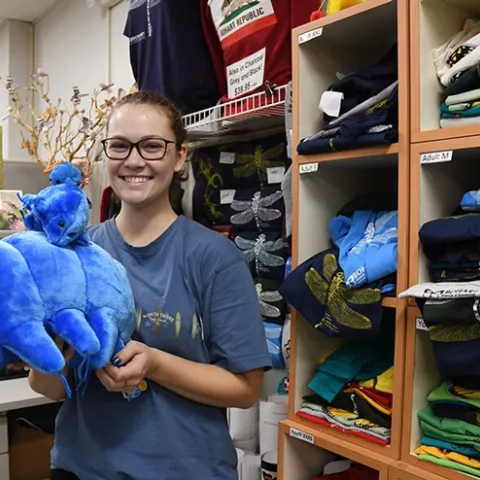
Entomologist Eliza Litsey, who received her bachelor's degree in entomology this year from UC Davis, shows some of the water bears (tardigrades) available in the Bohart Museum of Entomology gift shop. (Photo by Kathy Keatley Garvey)
Bug Squad: Article

Bohart Museum of Entomology Gift Shop: 'Tis the Season for Water Bears

December 12, 2019
By Kathy Keatley Garvey
Move over, teddy bears. There's a new bear in town to covet, cuddle and cherish--a water bear or tardigrade. The plush stuffed animals are hot items in the gift shop of the Bohart Museum of Entomology, located in Room 1124 of the Academic Surge Building on Crocker Lane, UC Davis campus.
View Article
Primary Image
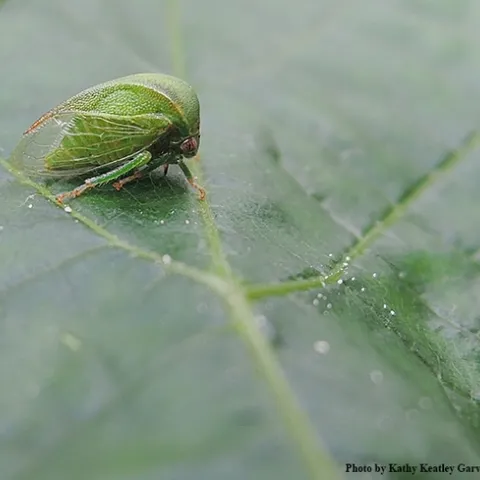
The three-cornered alfalfa leaf hopper, Spissistilus festinus, transmits the grapevine red blotch virus. (Photo by Kathy Keatley Garvey)
Bug Squad: Article

A Bug That's Not Wanted in the Vineyards

December 11, 2019
By Kathy Keatley Garvey
Back in July of 2016, a team of researchers affiliated with the University of California, Davis, wrote in the journal Phytopathology that the three-cornered alfalfa leaf hopper, Spissistilus festinus, transmits the virus that causes grapevine red blotch virus.
View Article
Primary Image
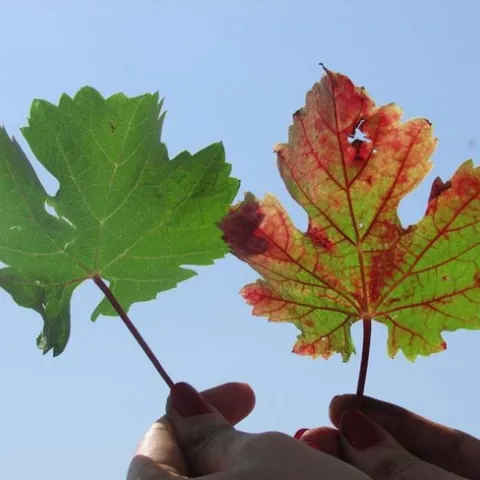
Grapevine red blotch disease, depicted on the right leaf, can have a significant impact on wine quality. (Raul Girardello/UC Davis)
Entomology & Nematology News: Article

UC Davis Scientists Targeting Grapevine Red Blotch Virus and Vectors

December 11, 2019
By Kathy Keatley Garvey
UC Davis scientists, in collaboration with UC Berkeley and Oregon State University researchers, are leading a $3 million federal grant targeting the grapevine red blotch virus and its vectors. The disease threatens the $162 billion grape industry and is described as an "urgent problem.
View Article
Primary Image
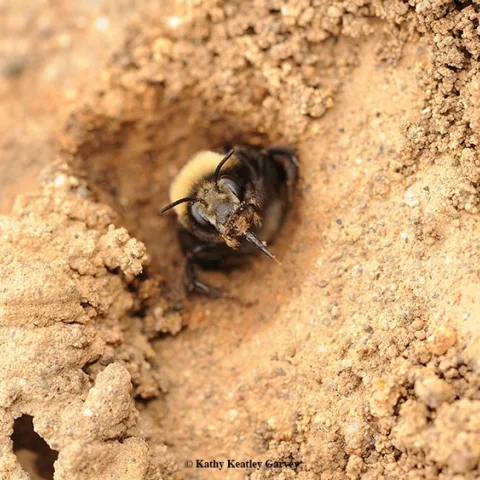
A digger bee, Anthophoroa bomboides, at Bodega Hay, Sonoma County. This is a solitary ground nesting bee, one of the species that collaborators Rachel Vannette, Bryan Danforth, Shawn Steffan, and Quinn McFrederick will study in their grant, "The Brood Cell Microbiome of Solitary Bees: Origin, Diversity, Function, and Vulnerability.” (Photo by Kathy Keatley Garvey)
Bug Squad: Article

Rachel Vannette: Two National Science Foundation Grants

December 10, 2019
By Kathy Keatley Garvey
Congratulations to community ecologist Rachel Vannette of the UC Davis Department of Entomology and Nematology, recipient of two National Science Foundation (NSF) grants involving flower microbes.
View Article
Primary Image
Alli Fish holding a radish.
Climate Smart Agriculture: Article

A Field Day for Cover Crops

December 10, 2019
As I have mentioned in my previous blogs, I have a certain affinity for cover crops. Mostly it is because I see enormous potential to increase the soil health and climate resiliency in Ventura County agriculture by incorporating cover crops.
View Article
Primary Image
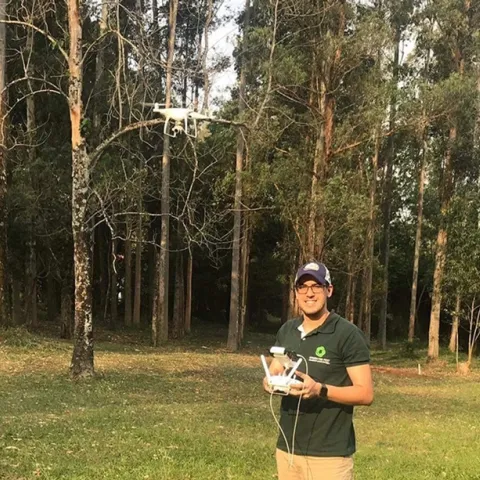
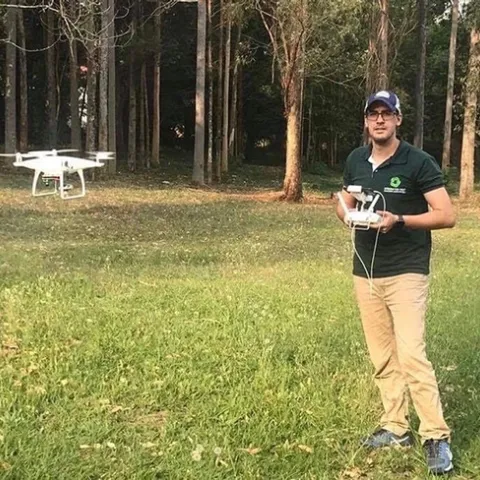
Lead author and entomologist Fernando Iost Filho of the Department of Entomology and Acarology, University of Sao Paulo, Brazil. He is a former UC Davis exchange student.
Bug Squad: Article

Why Drones Are Important in Sustainable Agriculture in the 21st Century

December 9, 2019
By Kathy Keatley Garvey
Drones... If you're thinking of apiculture, you might be thinking of drones (male bees). But if you're thinking of agriculture--more specifically sustainable agriculture practices in the 21st century--you ought to be thinking of the importance of unmanned aerial robots.
View Article
Primary Image
A tropical praying mantis, Choeradodis stalii: camouflaged. Lohit Garikipati displayed five of his female praying mantids. (Photo by Kathy Keatley Garvey)
Bug Squad: Article

They Met the Mantids--and Scores of Other Critters

December 6, 2019
By Kathy Keatley Garvey
They met the mantids, walking sticks, beetle-mimicking roaches, Madagascar hissing cockroaches, tarantulas, silkworm moths, a butterfly, a dozen caterpillars and a chrysalis. It was a great day to get acquainted with insects and arachnids and learn how to raise them.
View Article