

Laboratory soil tests analyze soil samples and derive a fertilizer recommendation. These recommendations come from the perspective of a commercial grower who, with acres of crop to fertilize, does not want to over- or under-apply nutrients.
In home gardens, over-application of fertilizer is common. There is not really a financial penalty involved when the garden plot is measured in square feet, not acres. So fertilizer is not usually in short supply.
As a rule gardeners either: don't fertilize nearly enough or grossly over-fertilize their garden. Few hit the Goldilocks zone. New gardens tend to be very low. Old gardens tend to be excessive.
That said, understanding what your soil needs is a good way to improve your garden. In California, there is no free soil test facility; soil tests are done by commercial laboratories.
Soil tests are seldom helpful in heavily amended garden beds. There are usually ample nutrients and all the lab does is confirm that. If there is a problem, a simple pH or salinity test will suffice. We can do those locally for free by appointment for residents of Inyo or Mono counties. Contact our helpline.
One situation that soil test can benefit is new garden beds. When there hasn't been much done to the soil, it can be helpful to find out what's needed.
Home orchards especially benefit from soil testing before planting.
How to Collect Soil Samples
Soil to be tested should consist of multiple samples taken from all over an area that will be managed the same way. While it's possible to analyze samples from each bed or small section, it is hard to tell whether the results are accurate, or due only to sampling error.
The quality of your results is related to the quality of the sample submitted. The samples should represent the average of your garden. If 20% of your garden is different from the rest, make 20% of the samples from that area. Unless the areas are large, comparisons between "good" and "bad" areas in your yard aren't often helpful since we can't tell if the issue is sample error or not, and it may not even be possible to treat that area differently — especially in home lawns.
Examples of what to get samples from:
- 10 to 15 random spots throughout the vegetable garden
- 10 to 15 spots in the home orchard
- 15+ samples around the lawn or pasture
- Sample blueberries separately (5 is probably enough)
- 10 to 15 samples from your home vineyard or cane fruits
Sampling Procedure
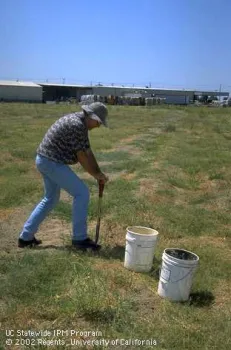
- Take many samples of the same size and to the same depth (6" in most situations, 12" in orchards) and add them to a bucket.
- Mix the samples together in the bucket.
- Remove rocks, plants, and other debris.
- Collect 1 pint of the mixed soil and allow it to air dry.
- Place the sample in 2 sealed plastic bags.
Using a Soil Lab
You may wish to use a soil laboratory to test your soil. This is the only accurate way to determine what nutrients are in your soil.
Although test kits exist, the cost of using a lab is competitive and far more accurate.
First Steps
Before getting a soil test done, find out more about your soil. In many cases, the answer you seek has already been figured out.
If you haven't done anything ill-advised like adding wood ash, we've found that NRCS's soil survey data will be close to your actual soil conditions here in the Eastern Sierra, especially for new gardens.
Access your soil information here.
How to Choose a Lab
There are numerous lists online of labs that do soil testing. It can be hard to keep those lists up-to-date so we recommend doing a search for California garden soil test labs. Soil testing is a standardized practice, and results should be similar no matter which you choose.
You should contact the lab before sending samples to make sure they can provide recommendations for home gardens. They will advise you how to send the sample in. Be sure to request a recommendation since some labs will happily send you test results that you likely won't know how to use.
Test before applying nutrients or fertilizer.
Here in the western US, we usually use Olsen phosphorus test, not Bray. If you have to decide, go with Olsen. This may come into play if you send your soil to a lab east of the Rockies.
If you are taking the time to send a test in, choose an option that is fairly comprehensive and includes micronutrients. In the Eastern Sierra, new gardens can skip tests for organic matter (it's very low) and soil texture (that's listed on the soil survey).
Your lab will appreciate you sending in a sample double-bagged and free of things like rocks and fertilizer bits.