
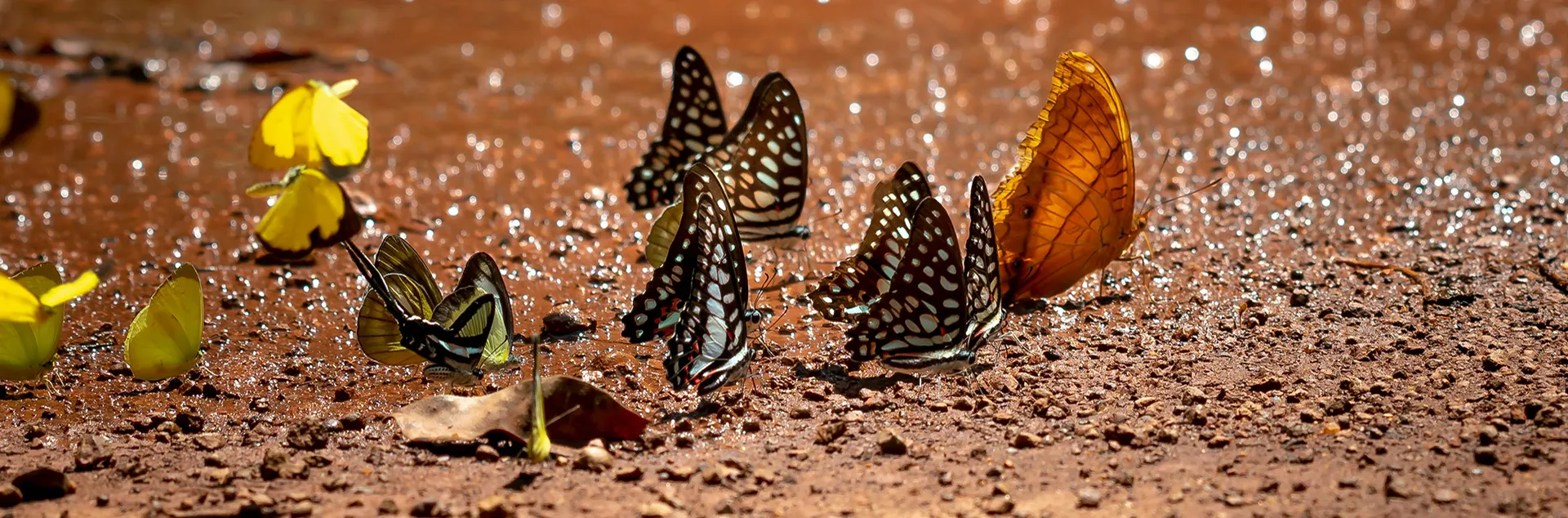

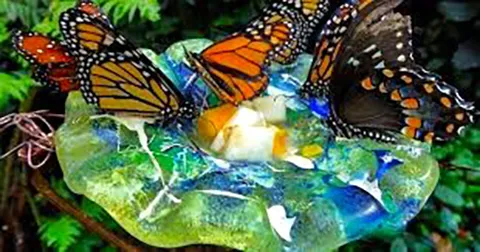
Even though you have limited space for gardening, you can do yourself and your neighbors a favor by providing a water source for honeybees, butterflies, and other threatened pollinators. Dry summer months are particularly difficult for bees, wasps, butterflies, and other pollinating insects to find fresh water. The more time spent searching for water is less time spent pollinating your container vegetables and visiting other pollen providers.
First, ensure that any water provided is refreshed regularly to avoid stagnation or mosquito breeding. You can do this either manually or with a slow automated drip system. Place the watering hole in a sunny and accessible location near your flowering plants. It can be placed at ground level or elevated to the level of your flower blossoms for better viewing. Here are some ideas for creating your own local “watering hole.”
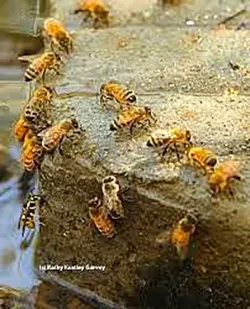
- Shallow dishes with pebbles
Use a shallow dish or plate filled with fresh water and add clean pebbles or flat stones. This allows pollinators to land safely without the risk of drowning. - Repurpose a small birdbath by filling it with water and adding floating cork pieces or small islands made from natural materials to give pollinators resting spots.
- Create a small pollinator watering pond using a container or bowl. Add aquatic plants or moss to the surface to help filter the water and provide pollinator-friendly landing areas.
- Mix a solution in a shallow dish comprised of water with a tiny amount of raw sugar or honey added. This offers both water and a source of nourishment for honeybees and butterflies during hot, dry weather.
- Use a spray bottle or misting system to create damp zones on leaves or stones where pollinators can drink without needing deeper water.
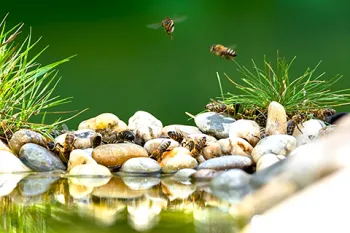
If you find that undesirable insects, such as yellow jacket wasps or bumble bees are also being attracted, don’t worry. Yellow jackets, bumblebees, native bees, and small wasps also pollinate plants and play an essential role in healthy ecosystems. They help to contain aphid populations and can keep nearby oak tree leaves free from insect damage. Just stay out of their way while they visit your watering hole!
By providing these simple water sources, you’ll attract a vibrant community of pollinators, including honey bees and butterflies, enhancing the health of your patio garden and your neighborhood’s ecosystem.