Kitty has a background in public health, ecology, sustainable food systems and faith-based health practices. She has worked on a variety of research projects investigating rural food access, sustainable diets, and healthy aging. As a Community Nutrition and Health Advisor in Northern California, she leads an applied research and extension program focused on nutrition security, science literacy, Indigenous food sovereignty, and the interaction of spiritual and emotional domains of health with nutrition.

Kitty is also a certified yoga instructor focusing on accessible movement practices for those with injuries and disabilities. She is a passionate gardener and forager, and most importantly a lifelong learner.

 
Current projects:
Principal Investigator, CalFresh Healthy Living, UCCE Central Sierra
Principal Investigator, CalFresh Healthy Living, UCCE Placer and Nevada Counties
Principal Investigator, Culturally Competent Curricula for Diverse Health and Food Systems
Principal Investigator, Assessing Barriers and Capacity in Charitable Food Distributions to Address Food Insecurity and Food Waste
Co-Investigator, Sacramento Farmer's Market Access Project
Co-Investigator, Needs Assessment of the Use of Generative AI in UC ANR

 

Good Gifts: Finding Joy in Giving

Primary Image
gift packages with dried lemon, greenery and twine
Body

The winter holidays are filled with traditions — cozy gatherings, comforting foods, and the joy of giving. But from a mental wellbeing perspective, the way we give gifts can either nurture connection or add unnecessary stress.

The Capitalist Crunch

Image
gift packages with dried lemon, greenery and twine

Every year, “Black Friday creep” starts earlier, pulling us into a frenzy of sales, flashing lights, and limited time deals. Advertisers tell us that the right purchase will prove our love or guarantee someone’s happiness. But this commercial pressure can take a real toll.

Crowded stores, loud music, and overstimulation can activate our body’s stress response — raising heart rate and cortisol levels, and triggering the familiar “fight or flight” feeling. This holiday stress adds to what can already be a difficult season as we face shorter days, less sunlight, and financial strain.

It’s not just mental health that’s affected. Research shows that rates of heart attacks and other cardiac emergencies peak around Christmas and New Year’s, partly due to stress and disrupted routines (Mohammad, 201; Olsson, 2021). In other words, the “season of giving” can easily become the “season of overdoing.”


Generosity and Gratitude

Fortunately, there’s good news: generosity and gratitude — when practiced with intention — are powerful protectors for our wellbeing. Studies consistently show that giving to others, expressing appreciation, and nurturing relationships boost happiness, lower blood pressure, and even improve immune function (Emmons & McCullough, 2003; Dunn, 2008).

So how can we embrace the joy of giving without the stress? Try focusing on gifts that are thoughtful, meaningful, and sustainable. Here are a few ideas:

  • Time and talent: Offer your time or skills instead of a store-bought gift. Shovel a neighbor’s driveway, plan an afternoon with your niece or nephew, or take your partner to that show they’ve been wanting to see. Shared experiences create memories — and connection is one of the strongest predictors of happiness.
  • Handmade and from-the-heart: Knitting, baking, painting, or crafting a personalized card not only produces a one-of-a-kind gift, but also engages the creative process, which is shown to reduce anxiety and improve mood (Kaimal, 2016). Some of my favorite handmade gifts may have little retail value, but they hold a special place in my heart and home because they cennect me to loved ones who live far away.  
  • Make a big impact: Donate to a nonprofit that reflects your loved one’s values — a cause they care about deeply. It’s a meaningful way to show alignment and amplify the spirit of generosity. Other perks are that these gifts take up no space, have no shipping costs, and take almost no time at all! A great option to decrease decision-making fatigue induced by finding the perfect gift- leaving you more brain space and hours to devote to what truly matters.
  • Support small and local: If you do decide to shop, consider supporting local makers and small businesses. These purchases keep your dollars in the community and often come with a more personal touch. Locally-owned stores also have a much more pleasant atmosphere which can further reduce your own stress levels. 
4 jars of winter marmelade and baked goods on a wooden tray

Wishing you Winter Wellness!

This holiday season, you don’t need to spend more to give more. By choosing gifts rooted in connection, creativity, and kindness, you’ll be giving something far more valuable than what comes in a box — a gift that supports wellbeing for both the giver and the receiver. The most important thing is to find what brings you joy and fosters good health for you and those around you.

Take care and be well!

Healthy Central Sierra

Celebrate Plant-based eating in November!

Primary Image
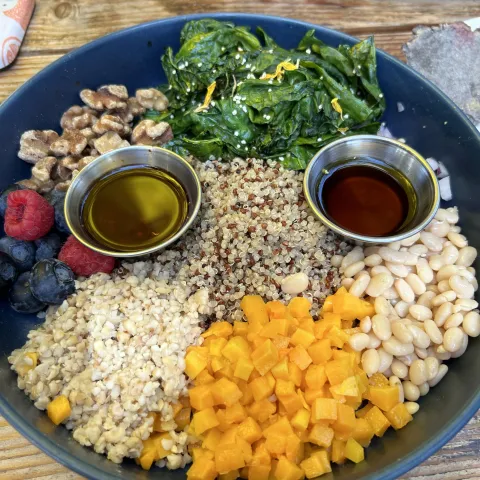
Plate filled with plant-sourced foods
Body

You may be thinking about Thanksgiving Turkey this month, but November is also World Vegan Month.

Plate filled with plant-sourced foods

More Plants, Less Meat

“Vegan” refers to a lifestyle that does not use any animal products, which includes following a plant-based diet. Plant-based diets have been associated with numerous benefits, both for personal health and environmental sustainability. Here are highlights from the latest research:

Plant-based diets reduce chronic disease risk

While social media influencers tout new products and miracle supplements as the secret to a long life, the truth is much less sensational: a well-balanced diet rich in whole grains, vegetables, fruits, nuts and legumes- with minimal animal foods- continues to gain evidence as an approach to avoiding chronic disease and death. A recent systematic review looked at 32 different studies and concluded that plant-based diets offer protection against heart disease, diabetes, cancer, and obesity. Moreover, a meta-analysis comparing 14 studies of plant-based diets indicates that choosing meatless meals can drastically reduce your risk of death from these diseases, and overall risk of death.

Replacing animal foods with a variety of plant foods can improve health by lowering inflammation and insulin resistance, changing the gut microbiome, and increasing your intake of beneficial nutrients such as fiber, antioxidants and minerals. This makes a plant-based diet key to extending your healthy years.

Choose less processed options

Simply eliminating meat and milk doesn’t cut it, though. Research is clear that plant-based foods in their unprocessed or minimally processed forms are the answer, whereas more processed options that you might find in bright packages and convenience meals could increase chronic health risk. A recent analysis of long-term data shows that avoiding “ultra-processed foods” (UPFs) is associated with healthy aging, including good cognitive function, physical function, mental health, living free of chronic diseases and reaching the age of 70 years. The good news is that California has an abundance of fruits, vegetables, nuts and grains grown right here. Connect with local farmers and producers to get the freshest products, and you will quickly find that meatless meals can be even more tasty than the traditional Thanksgiving turkey.

Good for you, good for the planet

In addition to contributing to longer life expectancy and metabolic health, plant-based diets are a great option a healthy planet. Plant-based eating can reduce greenhouse gas emissions, decrease water use and pollution, and leave more land available for recreation and conservation. The biggest impacts come from cutting back on red meat, processed meat, and dairy products.

To prioritize the health of both people and the planet, a team of researchers from Harvard University, the University of Copenhagen, and the University of Montreal created a food scoring system called the Alternative Healthy Eating Index (AHEI). It emphasizes whole grains, fruits, vegetables, nuts, legumes, and healthy fats, while minimizing red and processed meats, sugar-sweetened beverages, and trans fats- the building blocks of a colorful plant-based diet!

Image
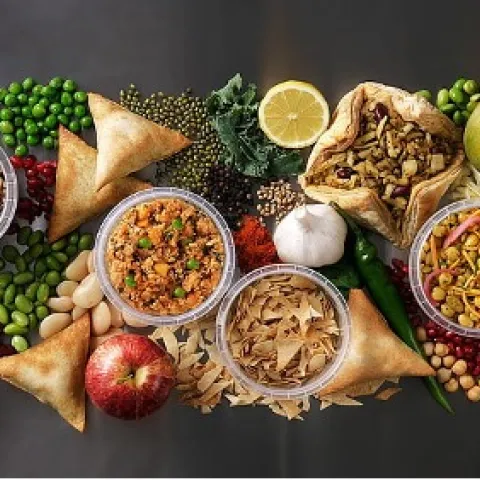
Variety of fruits, vegetables and grains displayed on a table

Take small steps today to increase the plants on your plate! Take a look at the plants you already have in your fridge and pantry. What new plant are you going to try next?

Read more here: 

Frontiers in Nutrition

Nature Medicine

Cureus Publishing


Healthy Central Sierra
Primary Image
a variety of scientific instruments surround the words "research and discovery"
Healthy Central Sierra: Article

What is Community Engaged Research?

August 28, 2025
By Kitty Oppliger
“The word itself ‘research’ is probably one of the dirtiest words… it stirs up silence, it conjures up bad memories, it raises a smile that is knowing and distrustful.”-Decolonizing Methodologies, Linda Tuhiwai SmithA problematic pastAs Dr. Linda Tuhiwai Smith, an Indigenous scholar and activist,…
View Article
Primary Image
yellow sky with blazing sun and thermometer in the foreground
Healthy Central Sierra: Article

Staying Healthy in the Heat

April 24, 2025
By Kitty Oppliger
Healthy in the Heat Summer is on the way and experts anticipate that we will continue to see rising temperatures and more extreme heat events. The National Oceanic and Atmospheric Administration (NOAA) reports that 2024 was the hottest year on record and that this year is likely to be even hotter. While…
View Article
Primary Image
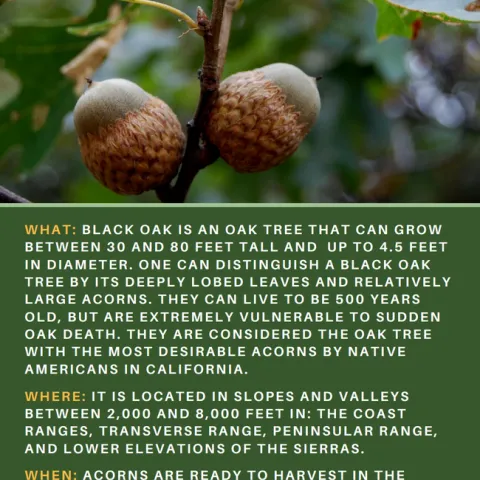
Image of Black Oak acorns with description and harvesting guidelines
Food Blog: Article

The Principles of Indigenous Food Sovereignty

February 5, 2025
By Kitty Oppliger
Indigenous Food Sovereignty: Opportunities and Importance in Extension work In 2007, the first global Forum on Food Sovereignty defined the concept as the right of peoples to healthy, culturally appropriate food produced through ecologically sound and sustainable methods, and their right to define t...
View Article
Primary Image
Variety of fruits, vegetables and grains displayed on a table
Healthy Central Sierra: Article

Nutrition in the News

June 18, 2025
By Kitty Oppliger
Measles and Vitamin ANews headlines have followed the alarming rise in cases of the highly contagious Measles virus across the US. Measles was nearly eradicated in the US in the early 1990s thanks to the childhood Measles-Mumps-Rubella (MMR) vaccine, but surges in 2014, 2019 and now 2025 indicate a…
View Article