
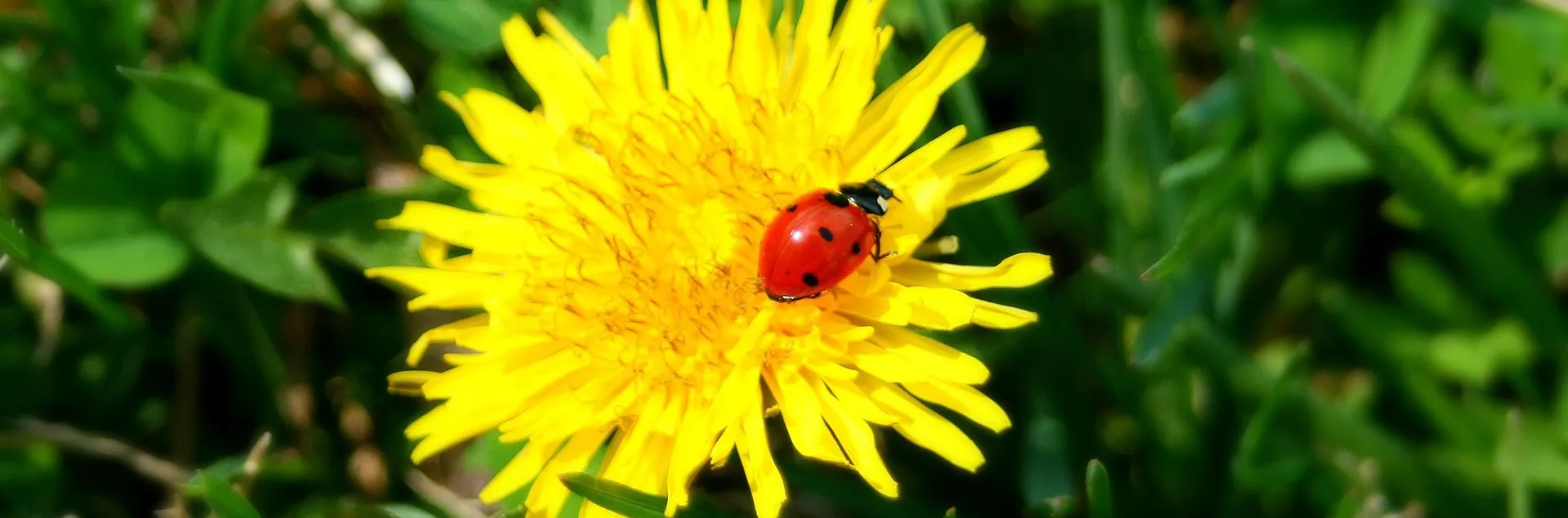
Ladybugs are not all the same.
There are about 200 species of lady beetles in California. It is important to remember that while all lady beetle species have a similar shape, the color and patterns may differ. Some have spots, others don’t, some are red, and some are grayish. Lady beetles and their offspring, called larvae, feast on aphids, mites, and other insect pests. More information can be found by searching for Lady Beetles / Home and Landscape / UC Statewide IPM Program (UC IPM)
Because lady beetle species vary so widely, their diets differ, too. For example, the Ashy Grey lady beetle, Olla v-nigrum, and the twenty-spotted lady beetle, Psyllobora vigintimaculata, do not eat aphids or mites. Instead, they are found on plants with powdery mildew, where they feed on mycelia, spores, and spore-producing structures. Another species, the twice-stabbed lady beetle, Chilocorus orbus, is black with two red spots. It eats mealybugs and aphids but prefers soft-bodied scales. The Mealybug Destroyer lady beetle, Cryptolaemus montrouzieri, feeds on mealybugs and other soft-bodied insects that produce waxy egg sacs.
Different looks at different stages
I don’t know about you, but when I see a scary looking bug, I immediately want to get rid of it! Then my Master Gardener training kicks in to determine if it is an insect pest or a beneficial predator of those darn pests. Learning the stages of an insect’s life prevents unintended harm. The lady beetle’s life cycle starts with an egg. A lady beetle’s eggs are football shaped, yellow or white, and laid on end either singularly or in rows on the leaves of a pest-infested plant. When the eggs hatch the ladybug goes through several larval stages. A lady beetle larva is alligator shaped with prominent legs. Depending on the species, the color of the larvae differs. In the next stage, it pupates and eventually becomes a beautiful and beneficial lady beetle.
Feed these beneficial insects
The lady beetle eats thousands of insect pests throughout its growth stages! The most common lady beetle in California is the convergent lady beetle, Hippodamia convergens. Its larvae are black with some reddish-orange coloring on the sides. Once the larva pupates, it begins to look more like a ladybug until it matures to adulthood.
Creating a garden with lady beetles involves providing food for them and their offspring. If food is available, ladybugs will come. Do not use broad-spectrum or systemic insecticides because it will kill the lady beetles and other beneficial insects along with the insect pests. If there is no food for the beneficial predators, they will find another garden. Attracting lady beetles and other beneficial predators is easy.
- Plant insectary plants to attract and provide food and shelter for adult beneficial insects throughout the year. Search for Insectary Plants / UC Statewide IPM Program (UC IPM)
- Reduce dustiness by rinsing off smaller plants. Too much dust can inhibit the activities of beneficial insects.
- Finally, control ants in your garden because they will protect aphids and other insects that produce honeydew. Search IPM UCANR ant-management.
This article written by UC Master Gardener of El Dorado County Virginia Tahmahkera originally appeared in the Mountain Democrat in July 2026.
If you have any pest identification questions, your UC Master Gardeners are here to help! Take a photo and upload it with your contact and garden information to out Ask a Master Gardener survey. A volunteer will contact you with information.