
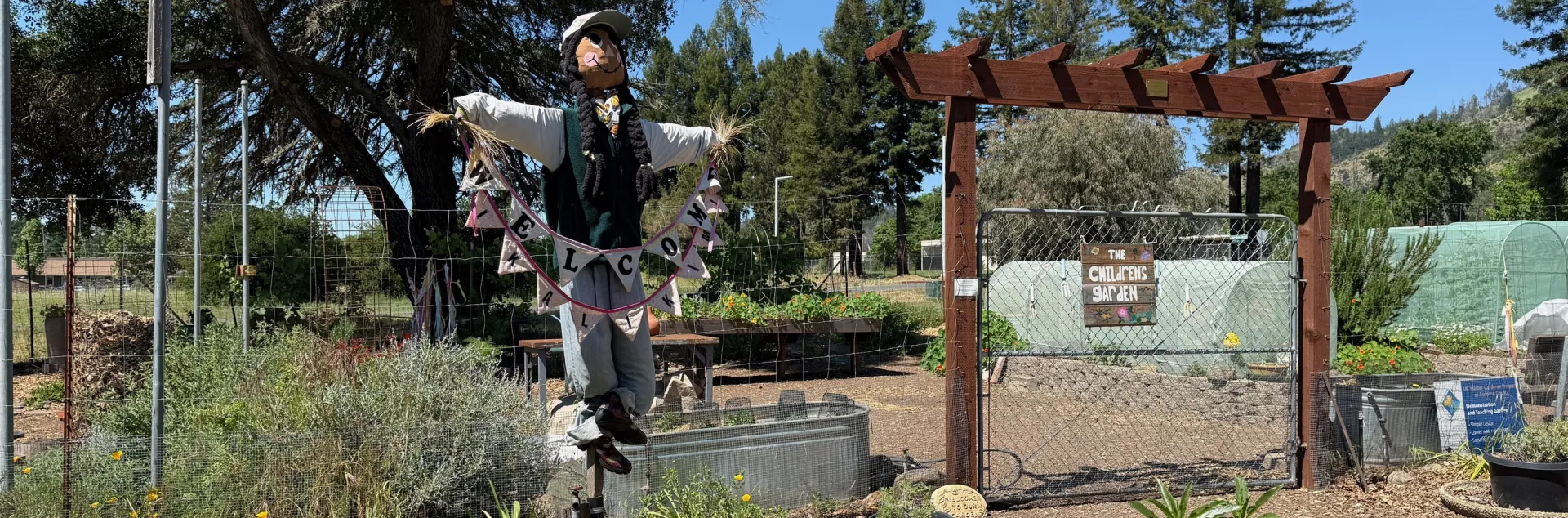
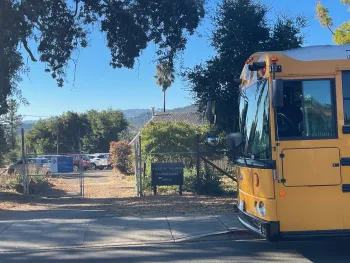
Picture this: it's 9 a.m. on a weekday morning, and a school bus arrives carrying students eager for a day outside the classroom. As they step off the bus, they are welcomed by fresh air, delightful smells and colorful plants. They are greeted by the smiles of UC Master Gardener volunteers ready to guide them through a hands-on learning experience in the Children's Garden at Los Guilicos in Santa Rosa, California.
What begins as a typical school field trip quickly becomes something more meaningful. For many students, this is an opportunity to connect nature and science in a beautiful garden bursting with excitement.
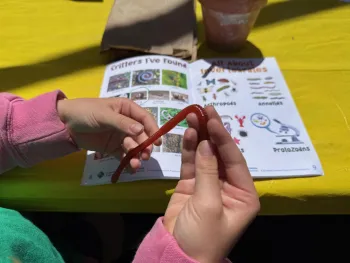
While visiting the Children's Garden at Los Guilicos, students, teachers and chaperones enjoy a half-day of hands-on activities, including worm composting, vegetable gardening, pollination, flower anatomy, sensory plants and Indigenous habitat stewardship practices. Throughout the morning, students are encouraged to get their hands dirty and engage with nature using all their senses.
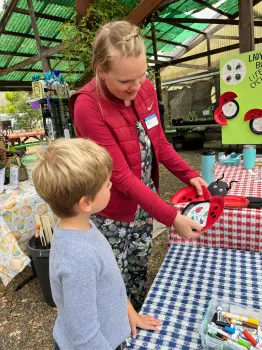
With a 3-to-1 student-teacher ratio, all children receive individualized attention and more space and time to explore the garden. Chaperones also enjoy spending time outdoors in a kid-friendly environment. "We love that the field trip is hands-on and engaging," one chaperone said. "The small-group rotations keep the kids paying attention."
Each lesson aligns with California's Next Generation Science Standards and core curriculum for K-12. Lessons are developed with the goal of advancing environmental science literacy and gardening education for youth across Sonoma County, through experiential learning that is engaging, activity-based and inclusive. Teachers feel supported when they see classroom curriculum reinforced with their students. "This was fantastic!" one teacher said. "We are starting our plant unit after this, so it was perfect timing."
As the day winds down, students make their way back to the bus, a little dirt still under their fingernails and new curiosity in their minds. The laughter and chatter continue as they climb aboard, sharing stories about worms, flowers and the vegetables they planted together.
"I learned worms have five hearts."
"I learned about bats and pollinators."
"The lavender made me feel calm."
For some children, the experience has a deeper meaning.
"Thank you for the bus ride and the field trip and meeting you."
"I love this garden SO MUCH. My mom would love it too. I hope that I come back soon."
For these students, this wasn't just a field trip. For some, it was their first time seeing a garden like this up close. And while the experience may feel effortless to the children stepping back onto the bus, the Children's Garden itself has undergone a remarkable transformation to become the welcoming learning space it is today.
Restoring Space for Healing and Learning
Before it became a thriving outdoor classroom for hundreds of students each year, the Children's Garden was used by the Valley of the Moon Children's Center as a place of relaxation and healing for youth awaiting placement in foster care.
When the 2020 Glass Fire swept through the region and destroyed the garden, the UC Master Gardeners of Sonoma County stepped up to help bring it back to life.
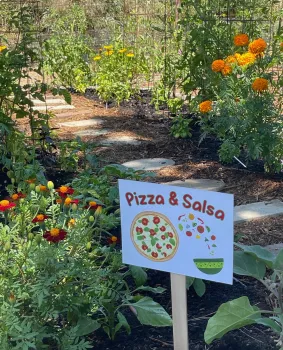
At the request of Sonoma County Supervisor Susan Gorin, UC Master Gardeners launched a full restoration effort with funding and assistance from a combination of public grants, private donations and donated materials and services.
The restoration included the removal of hazardous trees and the installation of ADA-compliant pathways and accessible gardening spaces. It was thoughtfully reimagined into four themed areas: the Four Sisters garden (corn, beans, squash and sunflowers), the Pizza and Salsa garden (tomatoes, peppers and herbs), Herbs and Edibles, and the Five Senses and the Four B's garden (birds, bees, butterflies and bugs). The Children's Garden now produces 350 pounds of fresh produce a year that is donated to the Valley of the Moon Children's Center for meals.
With the UC Master Gardener Program as its new primary stewards, the Children's Garden reopened in 2023 and continues to be a place of refuge and renewal for youth.
From Restoration to Access
With the Children's Garden restored, UC Master Gardeners turned their attention to expanding student access. They built a field trip program around the newly redesigned space so more children could benefit from hands-on learning in the garden. Because transportation is often one of the biggest barriers for schools, the program secured a $10,000 annual donation and reduced-rate busing contracts in partnership with local school districts.
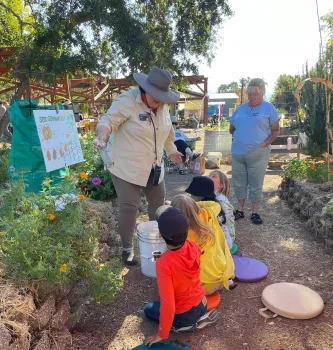
As a result, schools pay nothing for transportation, and Title I schools receive priority scheduling. This has expanded access for hundreds of low-income students who otherwise might not have the opportunity to visit. Field trips are available to students in public, private and charter schools, including students with disabilities. More than 50% of youth participants and 80% of adult participants are Hispanic/Latino, and Spanish-language instruction is provided as needed.
Education extends beyond the Children's Garden as well. For schools that cannot travel students to the garden, or have school gardens onsite, curriculum is delivered at schools and other youth organizations through portable "On-The-Go" lessons. The UC Master Gardeners developed the field trips to be scalable, replicable and cost-effective. It is an excellent example of how the UC Master Gardeners make an impact in the community.
Statewide Recognition
The Sonoma County Youth Education Field Trip Project recently earned third place in the UC Master Gardener Search for Excellence, a statewide recognition that highlights innovative projects with strong community impact, earning a $500 cash award.
In addition to the cash prize, the team will showcase their work through a digital poster display at the 2026 UC Master Gardener Conference and will be featured in a dedicated conference session. These opportunities provide a platform to share their approach, inspire other county programs and highlight the impact of innovative, volunteer-driven education across California.
The UC Master Gardener Program provides the public with University of California research-based information on home horticulture, sustainable landscaping and pest management through local UC Cooperative Extension offices. During National Volunteer Month, we celebrate the dedication and impact of our volunteers, whose outreach, education and service strengthen communities across California.
Through initiatives like Search for Excellence, we recognize outstanding programs that demonstrate innovation and measurable results. If you're interested in learning more about gardening in your community or getting involved, connect with your local UC Master Gardener Program.
AI tools were used in the preparation of this article to assist with organizing content and reviewing grammar, clarity and sentence structure in alignment with UC guidelines. All content was reviewed, verified and approved by the author prior to publication.