

Research Brief • November 2025 • Download PDF (331 KB)
Background
The California Nutrition Incentive Program (CNIP) provides Supplemental Nutrition Assistance Program (SNAP) shoppers with matching funds for the purchase of fruits and vegetables (FV) primarily at farmers’ markets. [i] In a 2022 study, shoppers reported that CNIP facilitated the purchase of greater quantities and varieties of FV, including less familiar and less common items. [ii] The study also found that participants felt CNIP funds enabled them to try new FV. Little is known about the relationship between CNIP and food waste; thus this study sought to explore the purchasing, consumption and food waste practices of CNIP participants.
What We Did
The Nutrition Policy Institute conducted a baseline inventory of all produce purchases, including fresh and dried items, among a convenience sample of 50 CNIP participants at a farmers' market in Oakland, CA in March 2025. This inventory included purchases made with CNIP tokens, SNAP, and cash funds as participants often used a combination of methods to purchase items and were thus often unable to identify which items were purchased specifically using only CNIP funds. Of these 50 participants, 45 completed a brief online follow-up survey two weeks later, which asked about consumption and waste of the items they had purchased. Of the 45 completing the survey, 36 also participated in individual, semi-structured interviews 1-3 weeks later, eliciting more detail about their consumption and waste of the products they purchased. This research brief presents key findings among the 36 CNIP participants who completed all three components of the study.
Study sample
The majority of participants identified as female (61%) and White (55%) (Table A1). On average, the participants were 47 years old and belonged to households with an average of 1.8 people.
What We Found
Fresh FV were the most popular items.
Interview participants purchased one to eight different kinds of fruits, vegetables, nuts and legumes. Fresh FV were the most popular purchases, with leafy greens and onions purchased most frequently (Table 1). Less common items included dried beans, dried fruit, fresh apple juice and nuts.

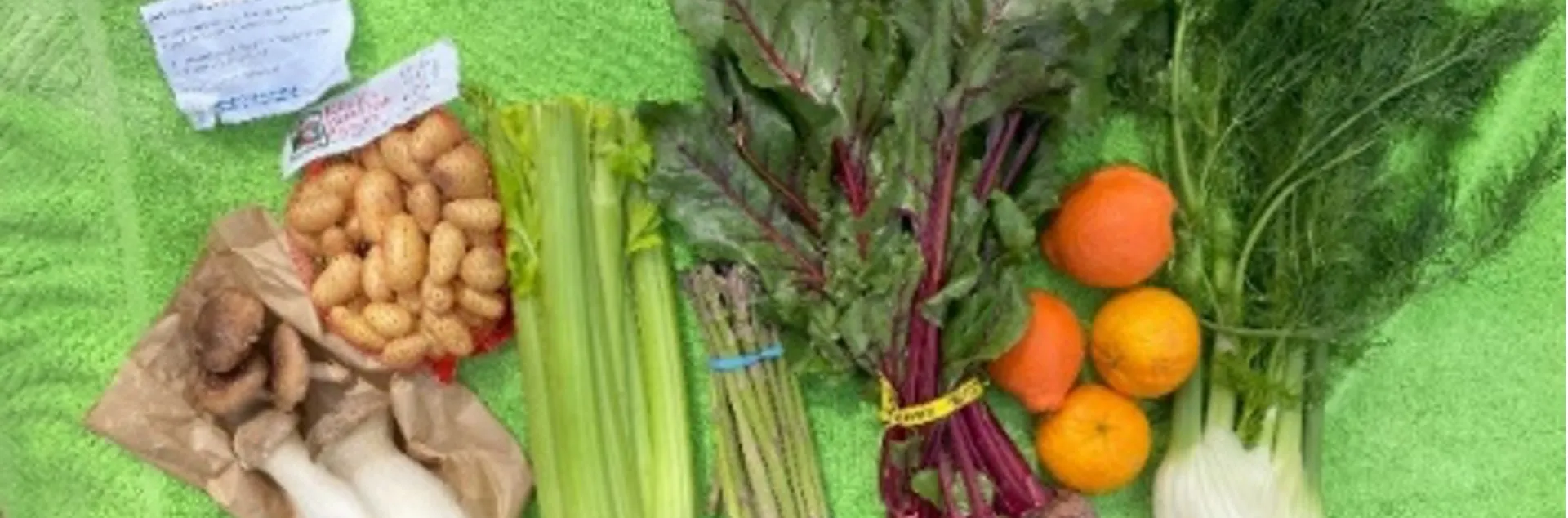
Image 1: Example of a participant’s baseline inventory of 7 unique produce items.
| Item Name | n (%) |
|---|---|
| Leafy greens1 | 20 (55.6%) |
| Onion(s)2 | 15 (41.7%) |
| Mushroom(s) | 11 (30.6%) |
| Orange(s) | 11 (30.6%) |
| Broccoli | 9 (25%) |
| Fresh herbs3 | 9 (25%) |
| Potato(es) | 7 (19.4%) |
| Strawberries | 7 (19.4%) |
| Carrot(s) | 6 (16.7%) |
| Beet(s) | 5 (13.9%) |
Table 1: Inventories identified the most frequently purchased FV by interview participants (n=36).
1 “Leafy greens” = arugula, spinach, kale, chard, dandelion greens, rainbow chard, lettuce, mixed greens, microgreens, and other greens; 2 “Onion(s) = onions, green onions, shallots, spring onions, and leeks; 3 “Fresh herbs” = cilantro, mint, parsley, dill, basil, oregano, and fennel.
Nearly all CNIP participants viewed food waste unfavorably.
“I don’t like to throw away any kind of food. Especially not ones that are going to be part of me being healthier ...” – Male, 20’s
“Food is food. I don’t care if I’m buying it, or I’m getting it for free. I still … value it the same. ... I’m particular about wasting food. I don’t like that.” – Female, 30’s
“I think it’s a sin that we throw away food. It’s like, man, there’s so many people that need food ...” – Female, 40’s
“I feel wrong about [food waste]. So that’s why I make the best effort to consume them. Because they do better in my body than in the compost bin. I see food as medicine.”
– Female, 40’s
Many participants were also conscious about reducing their own food waste and shared strategies for doing so.
“I do my best to buy what I need and want, and if I have to fill it in further in the week, I will. … I don’t like to see waste.” – Female, 50’s
“I do my best to eat whatever edible parts [of fruits and vegetables] that I can … I feel really bad [about food waste] and try not to do it.”
– Male, 30’s
“I work on a limited budget, and the best way to make use of that is to buy something I like in the first place and then just use it.” – Female, 60’s
“I’ll have a plan for [the produce], so it’s very deliberate, like what I use it for within the week. If by accident … I get busy at work and then I’m like, ‘Oh, wait, I forgot I had that stuff in the fridge’ then I’ll check on it. … I’ll try to save it first.” – Male, 30’s
Despite negative perceptions of food waste and efforts to reduce it, a small number of participants still experienced challenges that sometimes led to food waste, including the short freshness window of FV, limited storage space, and limited familiarity with certain items.
“… of course, sometimes I get neglectful and not eat it, and then it wilts. ... that just tends to be the more frustrating part.” – Female, 40’s
“... right now on my table I have celery and fennel. I have no place to put it. It won’t fit into the vegetable drawer … I had to throw the celery out after a while.” – Male, 60’s
“Because I’ve never cooked with [the white part of the green onion], I’m not sure if I’m supposed to fry it, or grill it. … I just don’t know what to pair it with, or if I can use it like a regular onion.” – Female, 30’s
Additional findings show that participants highly value CNIP. Participants also appreciate how the program expands their access to high quality, fresh, and healthy food.
“… I would say that the Market Match [CNIP] program, in my opinion, is very much like an enablement of healthy consumption and seasonal consumption in California. I was kind of shocked, like other places don’t have those kinds of programs because I think it works really well in helping people make good choices around seasonality and local produce and supporting local farmers.” – Female, 20’s
“… it really helps us out, the people that rely on it I know really get a lot of benefit from it. I've talked to other people that get the purple [CNIP] coins, too, and they're always like, this is a godsend basically.” – Male, 40’s
“… everything’s so expensive these days. It affords me the ability to eat healthy without having to worry about it too much …” – Male, 30’s’
Conclusions
This evaluation found that CNIP participants were conscious of food waste and made efforts to avoid it, both while shopping and at home, even when purchasing greater amounts and varieties of FV. Participants also voiced strong support for CNIP and how the program improved their access to healthy and affordable produce.
This evaluation used a convenience sample and was not able to distinguish produce items purchased solely with CNIP funds, creating limitations to its interpretations and generalizability. Still, the findings suggest that CNIP participants use the program to purchase greater amounts and varieties of FV, without any evidence that the program is associated with increased food waste.
Appendix
Table A1: Sociodemographic characteristics of interview participants (n=36).
| n (%) |
| Race/ethnicity1 (n=31)2 |
|
| Black/African American | 7 (22.6%) |
| Hispanic or Latino/a | 10 (32.3%) |
| White | 17 (54.8%) |
| Another race/ethnicity3 | 7 (22.6%) |
| Gender (n=36) |
|
| Female | 22 (61.1%) |
Mean (SD) | |
| Age (n=35) | 47.3 (17.7) |
| Household size (n=36) | 1.8 (1.2) |
1 Percentages may not add to 100% as participants were able to select more than 1 option.
2 Different total n due to missing responses.
3 “Another race/ethnicity” includes “Asian,” “Some other race,” “Other Pacific Islander,” and “American Indian/Alaskan Native.”
This work is supported by: The Gus Schumacher Nutrition Incentive Program project award no. 2022-70415-38572, from the U.S. Department of Agriculture’s (USDA) National Institute of Food and Agriculture. Any opinions, findings, conclusions, or recommendations expressed in this publication are those of the author(s) and do not necessarily reflect the views of the USDA or the California Department of Food and Agriculture.
Suggested citation: Shea M, Hewawitharana SC, Sam-Chen S, Strochlic R, Gosliner W. Food Purchase, Consumption, and Waste Practices Among GusNIP Participants in California: A Qualitative Exploration. Research Brief. University of California, Agriculture and Natural Resources, Nutrition Policy Institute. November 2025
University of California Agriculture and Natural Resources is an equal opportunity employer.
© 2025 UC Regents, Creative Commons 4.0 International License.
[i] Ecology Center, The. FAQ. Market Match. (n.d.). Accessed August 13, 2025. https://marketmatch.org/faq/
[ii] Gosliner W, Hewawitharana SC, Strochlic R, Felix C, Long C. The California Nutrition Incentive Program: Participants’ Perceptions and Associations with Produce Purchases, Consumption, and Food Security. Nutrients. 2022;14(13):2699. https://doi.org/10.3390/nu14132699
