

227 Southern California Urban Coyote Health and Ecology Study
Principal Investigator: Dr. Niamh Quinn, Vertebrate Pest Advisor, UC Cooperative Extension. For more project information, click here.
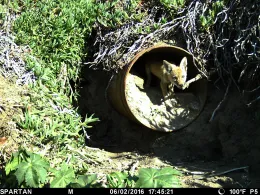
In many cities across the United States, incidences of coyote encounters (Canis latrans) and human-coyote conflicts are rising. This is especially true for cities in Southern California where conflicts including pet attacks have been recorded since the 1960s. The only coyote-related human fatality in the United States occurred in southern California in 1981 and, although no fatal attacks have occurred since, coyote bites on humans are still occurring. Coyote attacks on pets appear to be common in Southern California, however, data is lacking in this area of human-coyote conflicts. Another significant conflict surrounding coyotes is the prevalence of rodenticide residues. Secondary toxicity of urban carnivores is most commonly cited as the reason why second generation anticoagulant rodenticides (SGARs) should be completely removed from the marked, even for professional and public health uses. Given the recent introduction of AB2596, which proposed an outright ban on the use of all anticoagulant rodenticides, the mode of ingestion of these products by urban carnivores has becoming increasingly important. This projects aims to analyze the stomach contacts of Southern California urban coyotes. The contents of the stomach will enable us to answer several questions 1. Is the proportion of domestic pets in the diet of the coyote greater than previously reported in Southern California? 2. What proportion of anthropogenic food do Southern California urban coyotes consume? 3. What rodents are potential vehicles for secondary toxicity in urban carnivores? This project will also assess the prevalence of plague, typhus and heartworm in urban coyotes.
228 Southern California Urban Rodent Research
Principal Investigator: Dr. Niamh Quinn, Vertebrate Pest Advisor, UC Cooperative Extension - Orange County. For more project information, click here.
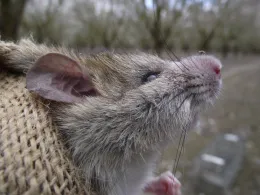
Rodent populations are prolific in urban areas in the US. Two species are commonly coexisting in the US: the Norway rat (Rattus Norvegicus) and the roof rat (Rattus rattus). The Norway rat was once present in many areas in Southern California but many pest management professionals and vector control agencies have not seen Norway rats for at least a decade in some areas. This research focuses on the examination of urban rodent fecundity to examine if there has been any type of competitive release in the absence of a once abundant competitor. This project aims to examine changes, if any, in the reproductive timing and output of the roof rat and to examine if this information can help us better manage rodent outbreaks in particular. The aim is to reduce the use of toxic baits. This research will also focus on disease surveillance. We will test a sample of rodents for salmonella, leptospirosis and plague to investigate the prevalence of these diseases in urban rodent populations in Southern California. Given the importance of second generation anticoagulant rodenticide as a tool for managing urban rodents, it is important to protect this tool for pest management professionals and for public health use. A sample of rodents will also be tested for rodenticide residues.
244 - Understanding how environmental filters, species traits and priority effects interact to influence community assembly in a California grassland community
Principal Investigator: Dr. Jennifer Funk, UC Davis Professor, Department of Plant Sciences
Project Collaborators: Elizabeth Becker, San Diego State University Graduate Student; Nick Barber, San Diego State University Associate Chair and Professor of Biology
Shifting climatic conditions and introductions of non-native species make the management of natural resources increasingly difficult. Ecosystem restoration has great potential to bolster environmental resistance and resiliency to these stressors, but the mechanisms by which restoration drives success are still poorly understood making restoration outcomes variable and difficult to predict. The majority of restoration initiatives utilize adaptive management approaches to inform management actions, but this can be time consuming and costly while outcomes remain variable. To combat these issues, there has been a growing advocacy for the use of ecological theories to advance and enhance restoration initiatives. A current theory being used in ecosystem restoration is the community filtering framework, which posits that species must pass through a series of ecological filters in order to establish at a given site. Historically, these filters were assumed to happen sequentially: a species would disperse to a site, survive the present abiotic conditions (e.g., low water availability), and then overcome the biotic interactions (e.g., competition) in order to establish into an area (Mittelbach and McGill 2019). However, there is increased recognition that these filters do not act sequentially (Mittelbach and McGill 2019) or independently (Cadotte and Tucker 2017), and thus there is a need to examine the interactions between species and filters (Funk 2021). Further, previously established species can facilitate or inhibit the establishment of newly dispersed species (Young et al 2016), but it is unclear how these priority effects influence the strength of environmental filters. Many of these community assembly theories have been tested independently (see Hulvey and Aigner 2014 for interacting filters and Young et al 2016 for priority effects), but there is little empirical data which shows how community filtering processes and priority effects interact to influence species traits, establishment, and interactions. The specific objectives addressed in this proposal will examine species traits and interactions under variable environmental filters and seeding priorities in a common garden experiment and the results can be extrapolated for improved restoration outcomes.
248 - The E. L. Nino Bee Lab research apiary at SCREC
Principal Investigator: Dr. Elina Nino, UC ANR Cooperative Extension Specialist at UC Davis
Project Collaborators: Wendy Mather, California Master Beekeeper Program Co-Manager
The proposed project will allow continued support of the newly established Orange County Master Beekeeper Team under the guidance of the California Master Beekeeper Program led by Elina L. Nino, CE Specialist located at UC Davis. Therefore, this site will serve as a southern hub for research, training, education and outreach performed by the Nino Lab Bee Program and to the benefit of all stakeholders, thereby, increasing the UC ANR's extension reach in communities throughout Orange County and southern California. The CA Master Beekeeper Program, or CAMBP, is designed to matriculate ambassadors for honey bees and beekeeping with the individuals required level of knowledge corresponding to the level in the program. These trained individuals will act as additional boots on the ground; to assist the Extension Specialist for Apiculture in California, increasing communication with stakeholders, which in addition to Master Gardeners and beekeepers also include growers, PCAs, school groups and the general public. Furthermore, this site will also serve as a southern California research location for the members of the Nino Lab. Research at the lab encompasses discovery and evaluation of honey bee nutrition, colony overwintering, Africanized honey bee genetics, novel biopesticides for efficacy against a pest varroa mites, and evaluating orchard management practices with the end goal of improving honey bee health. Considering the importance of California to agriculture in the United States, and the fact that almost 80% of commercial honey bee colonies in the US start their pollination and honey production routes in almonds, there is an urgent need to expand honey bee research, and further promote the accessibility of the science-based education that the California Master Beekeeper Program offers state-wide so the SCREC presents and ideal location for expanding these efforts.