
A New California Garden—A Garden for Today: Sustainable, Functional, Beautiful
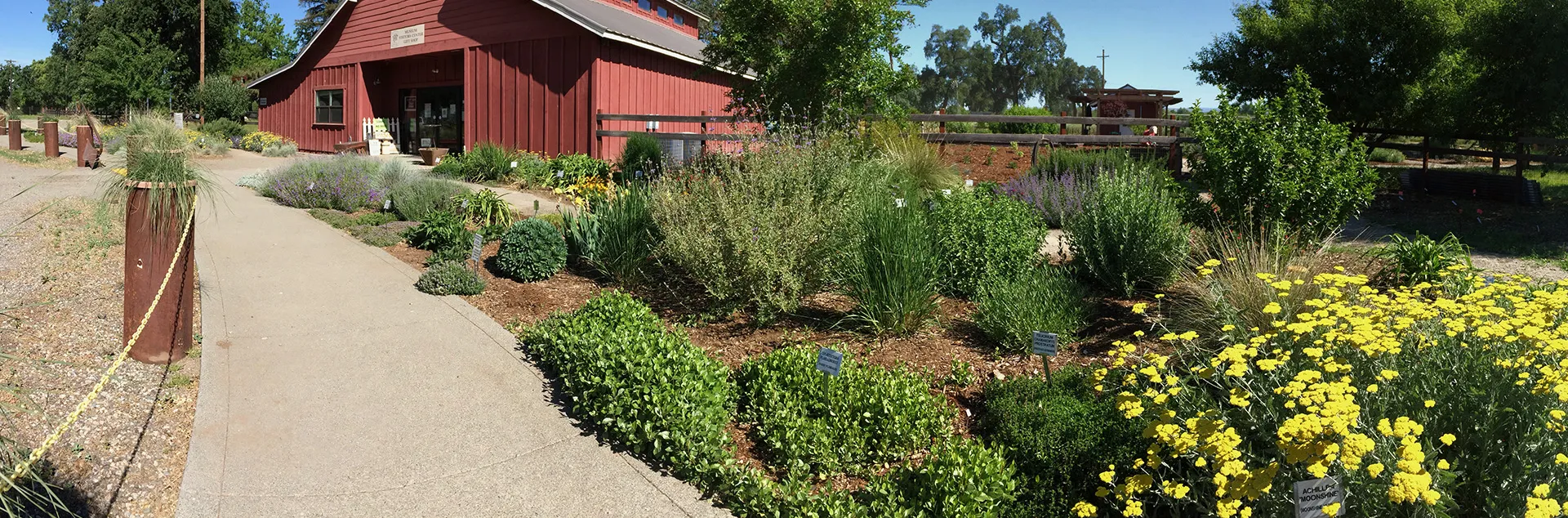
The UC Butte County Master Gardeners Demonstration Gardens are located on the grounds of the historic Patrick Ranch Museum property, 10381 Midway, just south of Chico, California. These gardens are used for public education, including classes and workshops emphasizing sustainable gardening practices, integrated pest management and backyard food production.
In 2013 the overall garden design was completed and the first gardens were planted by volunteer Master Gardeners. The plan was bold, converting a barren one-acre plot into a connected series of themed gardens highlighting the possibilities available to gardeners in Butte County. About half of the original plan is completed and the Master Gardeners continue to alter and improve the project as they go forward with a particular awareness of the changing extremes in California Central Valley weather.
Our Gardens
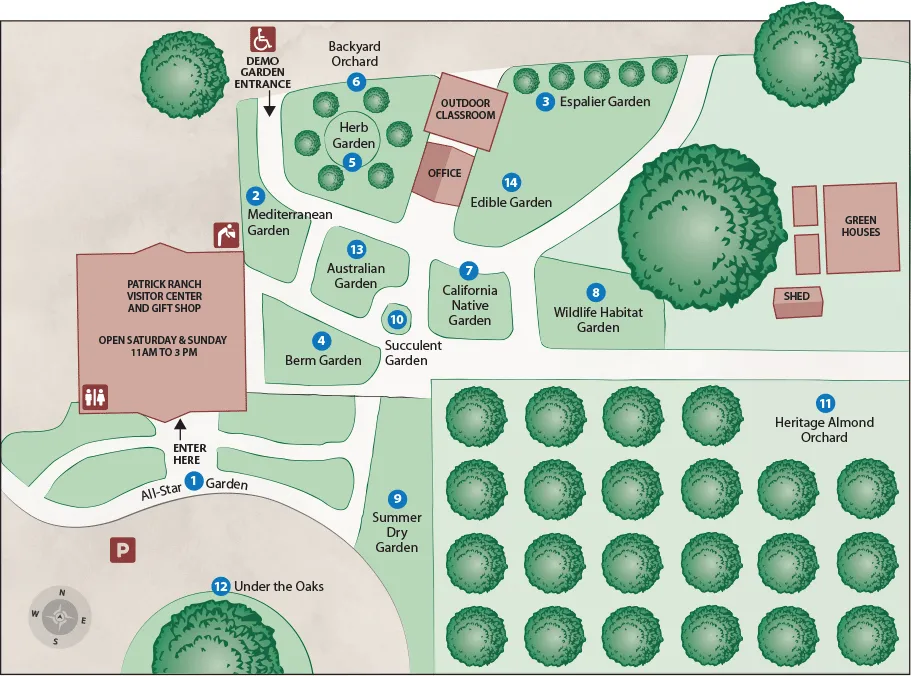
A walk around the demonstration gardens will lead you on a pathway through the following specialized gardens.
All-Stars Garden
This garden reflects the UC Davis Arboretum approach to introducing plants that perform well in areas like Butte County. New plants are added based on the experiences of Master Gardeners in our county. Learn more about the Butte County All-Stars.
Australian Garden
This garden displays Australian plants that are not from the Mediterranean climate area of Australia, but are nonetheless suitable for the climate and conditions in our demonstration garden. These plants are becoming popular and many can now be found in local nurseries.
Berm Garden
Hillside gardening and gardens built on berms demonstrate how to garden successfully in areas that may be challenging when it comes to irrigation and soil retention or soil that is not ideal.
Backyard Orchard
There are several varieties of trees in this garden; all are pruned to a height that allows easy harvesting of the fruit, while maintaining tree health.
California Native Garden
This garden consists solely of plants that are native to California. There are many different habitats across the state, resulting in a variety of species that may occur in coastal, inland valleys, or desert areas. Regardless of the habitat in which they are found, all plants in this garden are adapted to wet winters and hot dry summers. These plants play an important role in providing habitat and food for insects, pollinators, and wildlife that are also native to California.
Edible Garden
The Edible Garden showcases a wide variety of edible plants and demonstrates what an average homeowner could accomplish in a backyard setting. Over thirty types of plants are featured, and at least one part of each plant (fruits, flowers, leaves, roots, seeds, stems) is edible. The hardscape components and design strategies used here are either easy to make or available to purchase. Attractive curving paths also facilitate the maintenance and harvesting of edibles.
Espalier Garden
The ancient art of training fruit trees in a flat, two-dimensional pattern by pruning and tying limbs to frames in a systematic style is demonstrated in this garden. Espaliering can be an ideal form of growing fruit trees in a small area as well as controlling tree height (while still yielding a substantial crop output).
Herb Garden
Plants that have dual purposes (as seasonings to enhance foods and for aesthetics) are beneficial and can enrich the garden as a whole. The convenience of growing an herb garden near the home kitchen has made it a staple in many gardens throughout history.
Heritage Almond Orchard
In keeping with the Patrick Ranch Museum’s devotion to “our community’s rich agricultural heritage,” a half-acre orchard of heirloom almonds was planted in 2011. Varieties represent the California almond industry’s beginnings prior to 1900 and include those planted by early agricultural pioneers. Today, this California industry covers more than 1.5 million acres. Since its selection in 1879, Nonpareil remains the most important California almond variety.
Mediterranean Garden
This garden exhibits plants that do well in Mediterranean climates. These plant choices may shift over time as climate changes occur in our area. Although we have had cool, wet winters, our winters are becoming shorter and may be warmer in the future.
Summer Dry Garden
Plants chosen for this garden need little to no supplemental water once established and are often resistant to pests. Dry gardens require minimal preparation, as no soil amendments are added and there is little digging and raking needed. New plants start out on a regular watering schedule which is slowly reduced as the plants mature (approximately two growing seasons).
Succulent Garden
As garden plant choices transition with a changing climate, succulents have become popular. With their unusual leaves and structures, they can look exotic or cool and green along a garden path and are colorful in containers or a border. Succulents are very low maintenance plants: another plus.
Under the Oaks
Gardens under oaks require special considerations for the protection and longevity of the trees. Plants here were selected for their tolerance for shade in summer and sun in winter, and their ability to withstand the low water conditions in summer required by oaks. Oaks do not need additional mulch.
Wildlife Habitat Garden
Native plants growing around rocks, logs, and a fountain help make this garden attractive to fauna by providing food, shelter, and nesting areas. Animals can be beneficial as they add life to the garden and are fun to watch.
Take a self-guided tour of the Demonstration Garden
Open hours: Saturday and Sunday from 11am–3pm.
Maps are available in the Patrick Ranch Museum Gift Store or at the entrance of the demonstration garden.
Our Generous Community
The local community has been generous in their donations of merchandise, professional skills, money and volunteer time to help establish these beautiful and educational gardens. For example, in 2014 Butte College students in the Heavy Equipment Operator program built a storage shed; and in May 2017 CSU, Chico junior and senior students in the Associated General Contractors Student Chapter built an outdoor classroom and shade trellis. Engineering supervision was provided by volunteers from Slater & Sons. Master Gardeners have completed the other buildings in the gardens, including two recently constructed potting sheds and two arbors.
The Far West Heritage Association generously offered the Master Gardeners the use of this property for the purpose of providing gardening support and education to the public. When you visit the gardens also be sure to visit the beautiful historic Patrick Ranch and tour Glenwood, the museum’s grand 1877 farmhouse.
A Special Thank You to Our Donors

Thank you for your generosity and support. Your gift has played an important role in the development of the Master Gardener Demonstration Garden.
Financial
Butte County Farm and 4-H Support Group • Butte County Master Gardeners • California Water Company • OLLI Grant/Stipend
Labor/Expertise
Agri Electric • Associated General Contractors Student Chapter, Chico State • Bob’s Concrete Pumping • Butte College Construction Program • Butte Landscaping • Rackley Company, Inc. Steel Erectors • Slater and Sons Construction • Shane Brock, Arbor & Earth
Materials
Chico Sprinkler • Durham Worm Farm • Hodges Nursery • Knife River Construction • Miller Glass • North State Aggregate • Payless Building Supply • Sutherland Landscape Center
Discount Prices
Chico Sprinkler • Eve’s Garden Design • Hodges Nursery • Normac Irrigation Supply • Payless Building Supply • Sutherland Landscape Center
Thank you to Patrick Ranch for their ongoing gift of the use of land for the Demonstration Garden.