
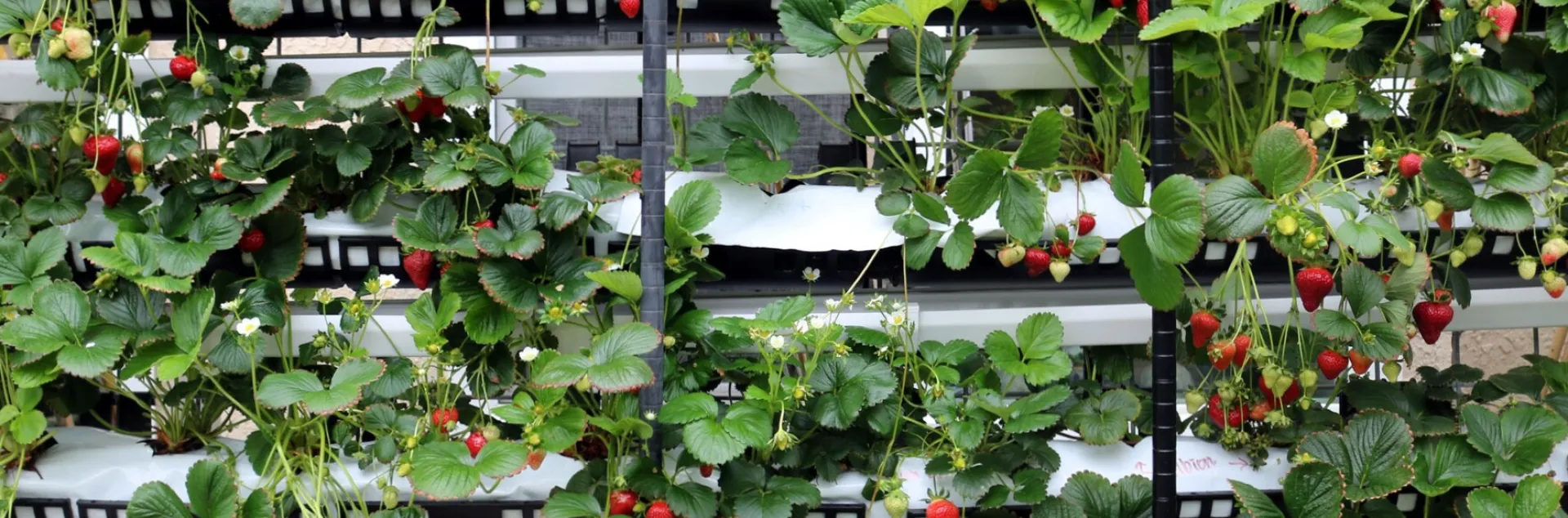
What if fresh vegetables could be grown without soil and in spaces as small as an apartment balcony? That question inspired the UC Master Gardener Program of Orange County's innovative hydroponics project, which earned first place in the 2026 Search for Excellence competition. UC Master Gardener volunteers introduced hydroponics — growing plants in nutrient-rich water instead of soil — in a fun and relatable way, demonstrating how this low-cost gardening technique can help improve food access for residents with limited growing space.
No Soil, No Problem!
In June 2024, UC Master Gardeners Sally Richards and Alvin Lam launched a hydroponic project, drawing on their experience and shared interest in soilless gardening. They began by recruiting 25 volunteers, and the team quickly grew to 45 members. The project aims to fill a gap in local gardening education by supporting people without access to traditional yard space. Hydroponics offers a practical alternative, enabling residents to grow food in apartments, on patios and in other small or unconventional spaces.
UC Master Gardener Flo Vallejo shared, "Hydroponics opens up a whole new world of gardening possibilities. It's fun to see people get excited and motivated to get growing! It's also fun for me to participate in helping people learn how to grow their own food […] no matter where they live, and without spending a lot of money."
Prior to this effort, hydroponics had not been a major focus in local programming, even as urbanization and water limitations continued to grow. With support from UCCE Urban Agriculture Technology advisor Grant Johnson, UC Master Gardeners developed training materials, handouts and a participant evaluation survey. Because there was limited research-based information on hydroponics within existing UC ANR resources, volunteers compiled research from other universities and extension programs.
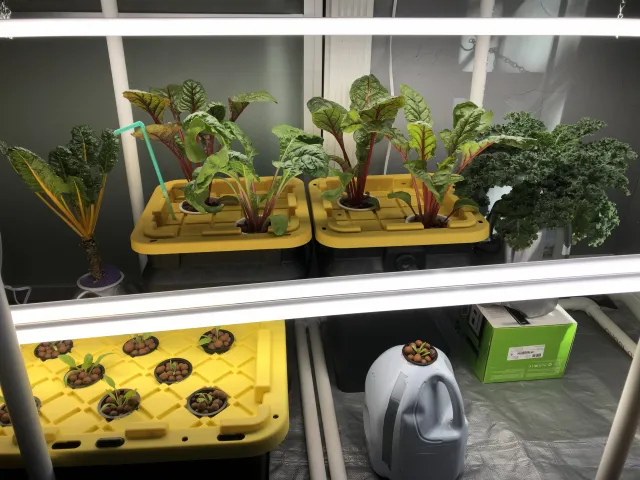
The group chose to focus on the Kratky method of hydroponics, developed by Dr. Bernard Kratky at the University of Hawaii. This simple approach allows plants to grow without pumps or electricity, making it accessible for beginners to try at home.
An additional focus of the project was conserving resources by repurposing materials such as nut jars, milk jugs and yogurt containers. This approach emphasized basic hydroponic principles rather than specific products. It also helped the team reach a broader audience by keeping costs low and making the project accessible to people across a range of socioeconomic backgrounds.
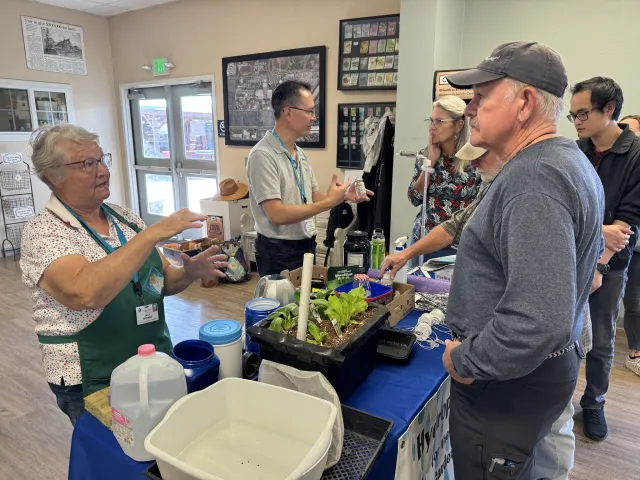
The impact of the hydroponic project quickly expanded to new audiences, including a hydroponic demonstration at a K-12 private school. Over 18 months, the team hosted 16 events, including classes and tabling events.
"Volunteering with the hydroponics team at pop-up events has been an eye-opening experience," said UC Master Gardener Dede Warren. "It's amazing to see how many people are interested in growing hydroponically at home. People of all experience levels are eager for information — from those with small balconies to urban backyard gardeners."
From Learning to Action
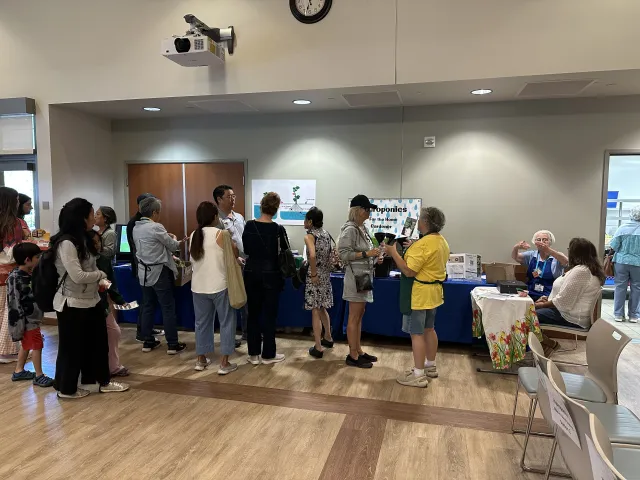
UC Master Gardener volunteers collectively spent more than 100 hours researching and learning about hydroponic growing methods, and 500 hours planning and delivering the course. Much of this time went toward developing educational materials, staffing outreach events, delivering presentations and assembling starter kits.
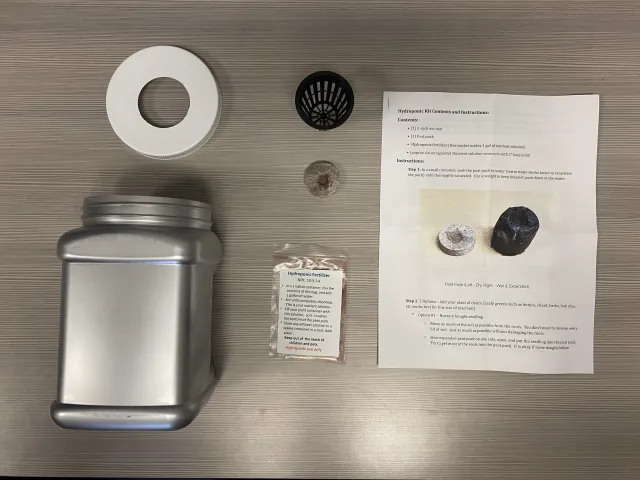
The starter kits helped bridge the gap between learning and doing by giving participants a simple way to try hydroponics at home. The kits were offered during classes and for $6 at outreach events. The do-it-yourself approach kept costs low and covered only the price of materials.
Feedback was overwhelmingly positive, with many participants asking for more advanced classes. One participant shared, "Excited about starting my first hydro plant!" Follow-up results showed that 75% of participants set up their starter kit right away, and 50% went on to build or purchase additional systems.
Another participant noted, "I'm enjoying the hydroponics experience, mostly with lettuce at this point, but looking forward to trying other vegetables in the future. Thank you for the class." These responses highlight the behavior change and confidence participants gained through the program. This project highlights how UC Master Gardener volunteers are redefining what's possible, bringing food production, education and opportunity into even the smallest spaces.
Recognition and Awards
As the first-place winner of the 2026 Search for Excellence competition, the UC Master Gardener Program of Orange County received a $1,500 cash award in recognition of its outstanding project and impact.
In addition to the cash prize, the team will showcase their work through a digital poster display at the 2026 UC Master Gardener Conference and will be featured in a dedicated conference session. These opportunities provide a platform to share their approach, inspire other county programs and highlight the impact of innovative, volunteer-driven education across California.
The UC Master Gardener Program provides the public with University of California research-based information on home horticulture, sustainable landscaping and pest management through local UC Cooperative Extension offices. During National Volunteer Month, we celebrate the dedication and impact of our volunteers, whose outreach, education and service strengthen communities across California. Through initiatives like Search for Excellence, we recognize outstanding programs that demonstrate innovation and measurable results. If you're interested in learning more about gardening in your community or getting involved, connect with your local UC Master Gardener Program.
AI tools were used in the preparation of this article to assist with organizing content and reviewing grammar, clarity and sentence structure in alignment with UC guidelines. All content was reviewed, verified and approved by the author prior to publication.