UC ANR is committed to providing an accessible and inclusive web experience for all users. If you encounter an accessibility barrier or need content in an alternative or remediated accessible format, please contact anraccessibility@ucanr.edu.
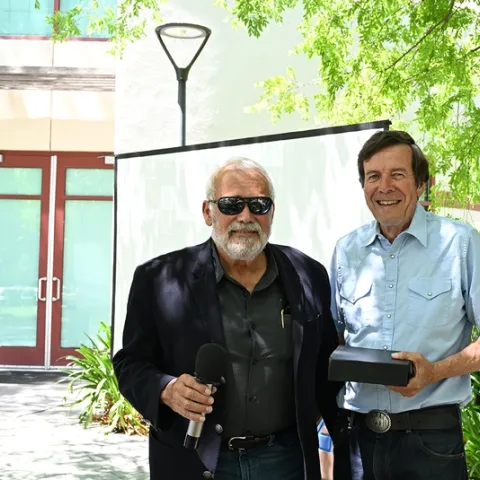
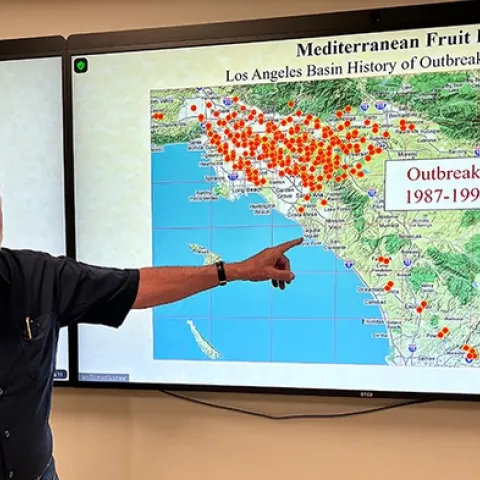
It's not often that an entomologist chalks up a 44-year career of teaching, research and public service. But such is the case with UC Davis distinguished professor James R. Carey.
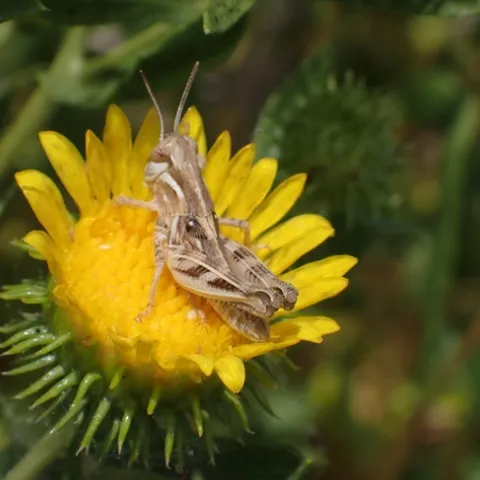
Are grasshoppers taking over your garden? Within the last week, we've received several reports of large populations of these pests covering people's plants, especially in Northern California. Grasshoppers are a sporadic garden pest.
Summer is here and so are the pests! Keep an eye out for the following pests and take these steps to prevent problems in the garden or landscape this June. To see more tips specific to your region, visit the Seasonal Landscape IPM Checklist on the UC IPM website.
It's not too late to plant pumpkins! If you plant them now, you'll have pumpkins ready in time for Halloween and Thanksgiving. It takes 95-110 days for a pumpkin to go from seed to fruit, depending on the variety. Although many gardeners plant pumpkin seeds in May, you can also plant them in June.
Pampasgrass (Cortaderia selloana) is a common ornamental landscape plant that readily naturalizes throughout California's coastal areas and some interior regions.
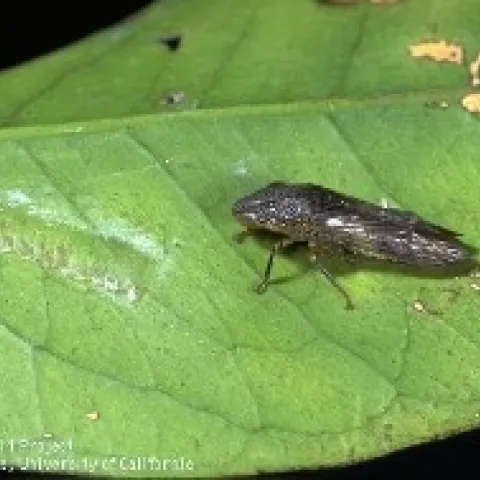
The glassy-winged sharpshooter is a large leafhopper that can transmit several important, often fatal, plant diseases in California. This includes Pierce's disease of grape, alfalfa dwarf, almond leaf scorch, and mulberry leaf scorch.
If you missed UC Davis distinguished professor James R. Carey's well-attended seminar on "California's Fruit Fly Invasion: A 70-Year Struggle Nears Critical Mass," it's now online on YouTube.
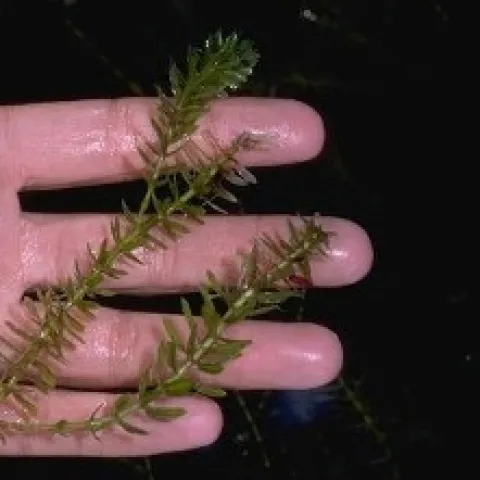
Hydrilla (Hydrilla verticillata) is an invasive, aquatic weed that can be found in many slow-moving fresh water bodies in California. The plant forms large mats that can crowd out native plants, restrict water flow, and interfere with boating and fishing.
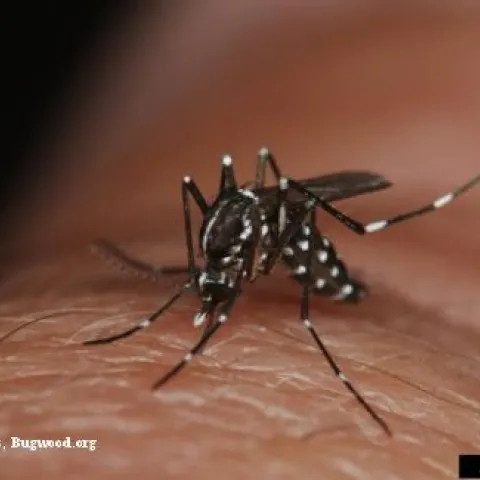
Aedes mosquitoes can transmit some of the most debilitating and deadly mosquito-borne pathogens to humans, such as Zika virus, dengue virus, chikungunya virus, and yellow fever virus. One Aedes species is also capable of transmitting heartworm to dogs.
The California Department of Pesticide Regulation (DPR) has approved the herbicide Rely 280 (glufosinate-ammonium) for use in avocado groves in California. Rely 280 is a post-emergence broad-spectrum herbicide for use against broadleaf and grassy weeds.