UC ANR is committed to providing an accessible and inclusive web experience for all users. If you encounter an accessibility barrier or need content in an alternative or remediated accessible format, please contact anraccessibility@ucanr.edu.
When: December 3rd, 2024 Where: UC Cooperative Extension Monterey County Agriculture Conference Room 1432 Abbott St, Salinas, CA 93901 Join us for our first-ever Workshop on Artificial Intelligence (AI) for Sustainable Agriculture.
The common insecticide imidacloprid, and the related active ingredients acetamiprid, clothianidin, dinotefuran, and thiamethoxam, belong to the pesticide group neonicotinoids. Neonicotinoids have been linked to the decline in honey bee and other pollinator populations.
Rainy, cool weather is fast approaching for many parts of California. To help you determine what to do in the landscape during this time of the year UC IPM offers a Seasonal Landscape IPM Checklist.
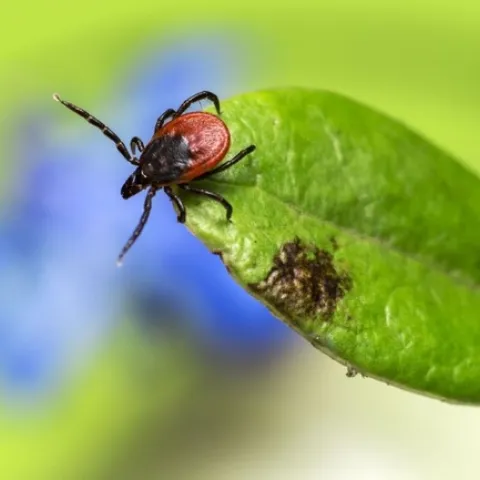
You might think ticks are found only on hiking trails or in wild, natural areas, but in some parts of California, ticks can also live in backyards and neighborhoods.
Vice President Glenda Humiston and the Strategic Visioning Committee are pleased to announce the release of the UC ANR Strategic Vision 2040, which will guide our work, structure and resource allocation to optimize and align our research, programs and partnerships over the next 15 years.
Have you attended a UC IPM Urban and Community Webinar this year? Then we'd love to hear from you! We are interested in learning what topics you're interested in for future webinars and how you have used or shared information from the webinar.
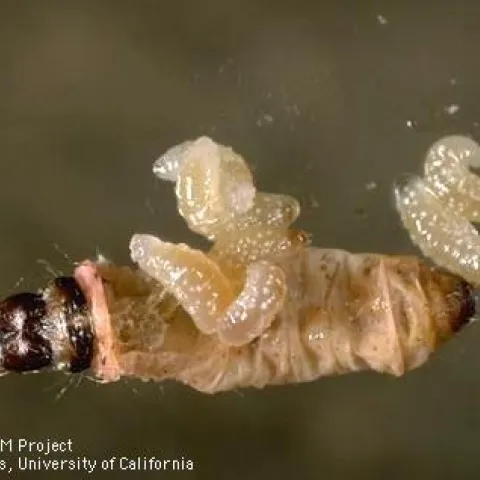
Forget the bats, spiders, and black cats. If you want to learn about some truly spooky creatures this Halloween, keep reading! Many people are familiar with insect predators, like lady beetles/ladybugs, that eat other insects.
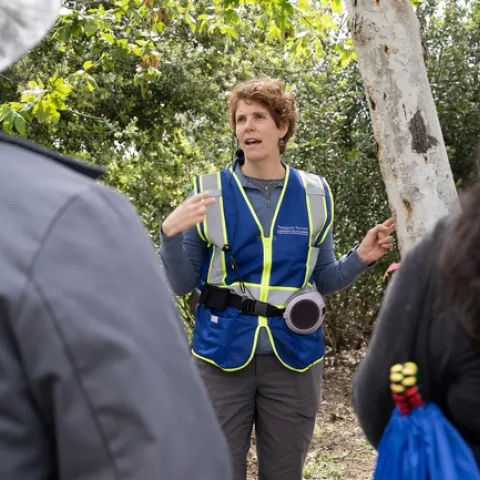
Late in 2023, a potentially devastating beetle was detected in the San Francisco Bay Area for the first time. But land managers, arborists and agency staff have one big advantage as they devise plans to control the invasive shothole borers (ISHB).
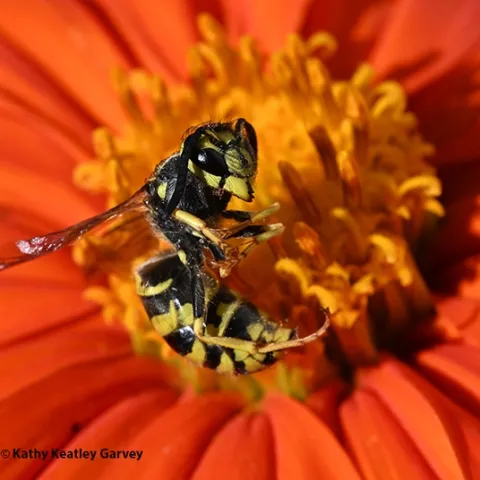
It's been several months since I've seen a Western yellowjacket, Vespula pensylvanica. But there it was, dead. It had drowned in an outdoor water bowl. Easy pickings, you say? Easy photography! It's a beautiful insect with its black and yellow coloration.