Pest Management & Plant Health

Primary Image
Always read the label before purchasing to ensure you choose the correct product for your needs. (Credit: E Lander)
Pests in the Urban Landscape: Article

Reading Pesticide Labels

July 29, 2019
By Karey Windbiel-Rojas
You've probably heard it's important to read the label on a pesticide bottle, but you might not know why or what to even look for on the label.
View Article
Primary Image
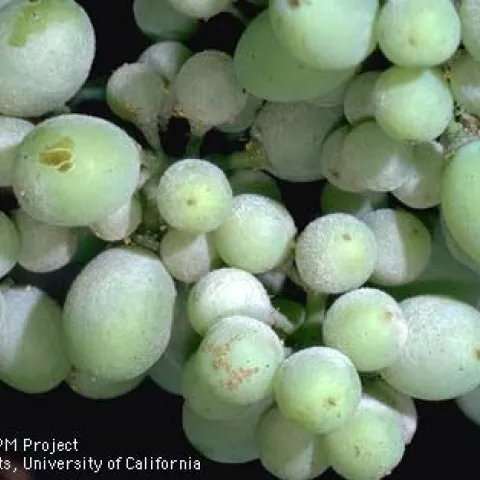
Powdery mildew on grapes. (Jack Kelly Clark, UC IPM)
The Stanislaus Sprout: Article

Powdery Mildew Can Ruin Grapes

July 29, 2019
By Anne E Schellman
Over the past few months, gardeners have asked the UCCE Master Gardeners for help with their grapes.
View Article
Primary Image
Emily Bick
Entomology & Nematology News: Article

Emily Bick to Present Exit Seminar on Aug. 5

July 29, 2019
By Kathy Keatley Garvey
Emily Bick, who joined the doctoral program in the UC Davis Department of Entomology and Nematology in September 2015, will present her exit seminar at 3 p.m., Monday, Aug. 5 in Room 158 of Briggs Hall.
View Article
Primary Image
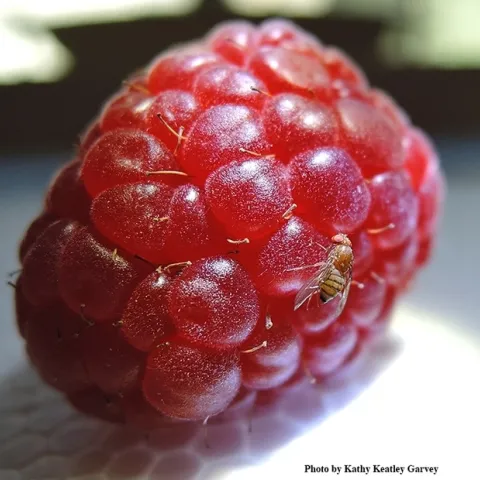
Spotted wing drosophila on raspberry. (Photo by Kathy Keatley Garvey)
Entomology & Nematology News: Article

Postdoc Position in Frank Zalom lab

July 29, 2019
By Kathy Keatley Garvey
(Please share widely) Post Doctoral Scholar Opportunity University of California, Davis Small Fruit Insect IPM Post-doctoral Position A post-doctoral position is currently available for two years focusing on spotted wing drosophila (SWD) population biology, insecticide resistance, and management in...
View Article
Primary Image
Sample of label instructions indicating where not to use a particular herbicide.
UC Weed Science (weed control, management, ecology, and minutia): Article

Herbicides for the Homeowner: Frequently Asked Questions

July 28, 2019
By Whitney B Brim-Deforest
Are you tired of hand-pulling weeds from your yard or garden, and want to use an herbicide? Seen your friend's post on social media for a quick and easy guide to make your own herbicide but aren't sure if it's really a good idea to use? So many questions, so little time.
View Article
Primary Image
Keynote speaker Lynn Dicks (far left) of the School of Biological Sciences, University of East Anglia, United Kingdom, with conference co-chair Neal Williams, pollination ecologist, UC Davis Department of Entomology and Nematology, and speaker Rachel Vannette of the UC Davis Department of Entomology and Nematology, who addressed the crowd on her hummingbird research. (Photo by Kathy Keatley Garvey)
Bug Squad: Article

Lynn Dicks: The Importance of People in Pollinator Conservation

July 23, 2019
By Kathy Keatley Garvey
The global decline of pollinators ought to concern everybody, and everybody ought to get involved, said bee conservation researcher Lynn Dicks of the School of Biological Sciences, University of East Anglia, United Kingdom, in her keynote address at the fourth International Pollinator Conference, he...
View Article
Primary Image
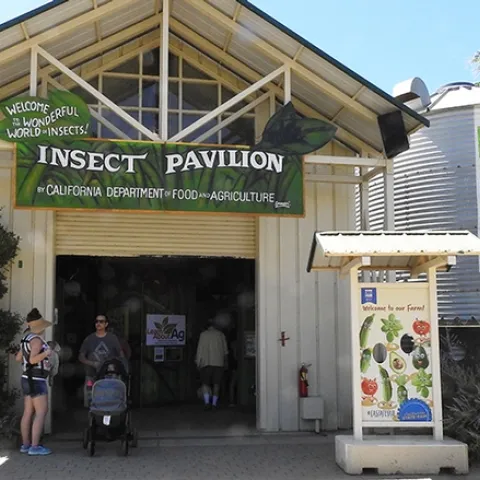
The California State Fair's Insect Pavilion is home to multiple displays borrowed from the Bohart Museum of Entomology, UC Davis. (Photo by Kathy Keatley Garvey)
Bug Squad: Article

If You Were a Bug, What Would You Be?

July 22, 2019
By Kathy Keatley Garvey
"If you were a bug, what would you be?" That sign greets visitors to the California State Fair's Insect Pavilion. It's a good conservation starter. The Insect Pavilion showcases insect specimens and insects from the Bohart Museum of Entomology at the University of California, Davis.
View Article
Primary Image
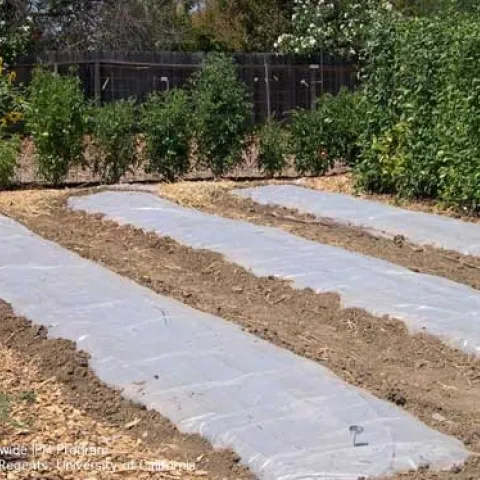
Solarizing planting beds in a garden. (Karey Windbiel-Rojas, UC IPM)
The Stanislaus Sprout: Article

Use the Sun's Heat to Clean up Garden Pests

July 22, 2019
By Anne E Schellman
Soil solarization is a simple technique that you can use in your home garden to reduce or eliminate many soil-inhabiting pests. Solarization works by heating up the soil in the presence of moisture to temperatures that are high enough to kill many fungi, nematodes, weeds and weed seeds.
View Article
Primary Image
Figure 1. On left: Kerb at 3.5 pints/A applied at planting; On right Kerb at 3.5 pints/A + Prefar at 1.0 gallon/A applied at planting. The main weed is common purslane which was not controlled by Kerb because it was pushed below the zone of germinating weed seeds by the germination water.
UC Weed Science (weed control, management, ecology, and minutia): Article

Weed control in lettuce

July 21, 2019
By Richard F Smith
Weed control in lettuce and other crops is a key issue this time of year. Purslane is particularly problematic and is adapted to warm conditions and can grow very rapidly especially during July and August. At times growers and PCAs are disappointed with the efficacy of Kerb on this weed.
View Article