UC ANR is committed to providing an accessible and inclusive web experience for all users. If you encounter an accessibility barrier or need content in an alternative or remediated accessible format, please contact anraccessibility@ucanr.edu.
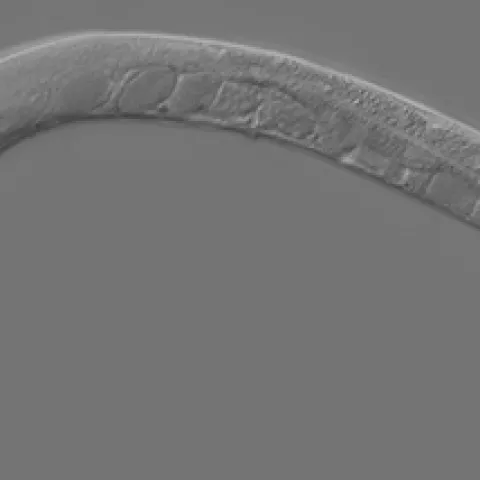
When you think about global food security, you may not immediately think of plant-parasitic nematodes. But you should. They are a major threat to global food security, says Sebastian Eves-van den Akker of the Department of Plant Sciences, University of Cambridge, UK.
Trapping is the safest and most effective method for controlling rats and mice in and around homes, garages, and other structures. Rodents that live in close association with humans are called commensal rodents. Rats and mice are the most frequently encountered commensal rodents in California.
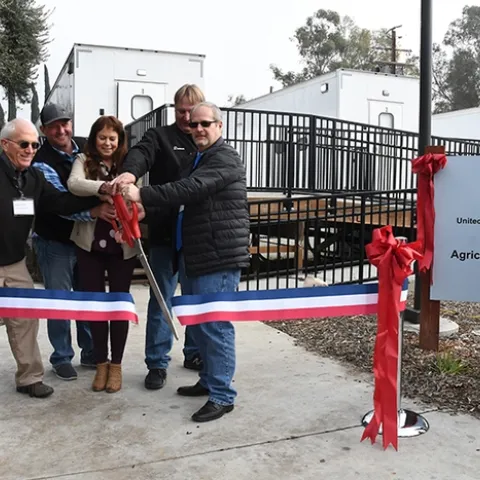
It was a grand opening of the USDA-ARS bee research facility at the University of California, Davis, but the bees were nowhere in sight. That's because bees don't fly until the temperature hits around 55, and the thermometer on that wintry day (Jan. 7) refused to budge over 47.
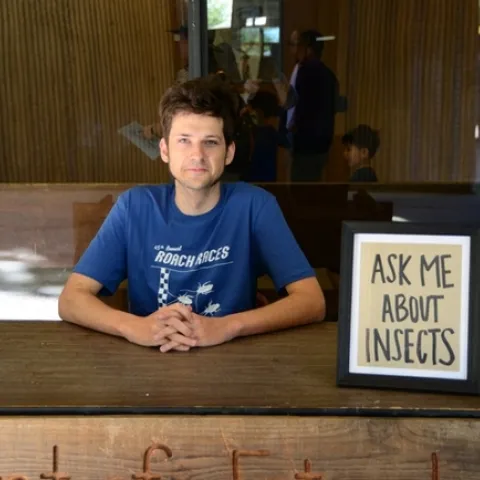
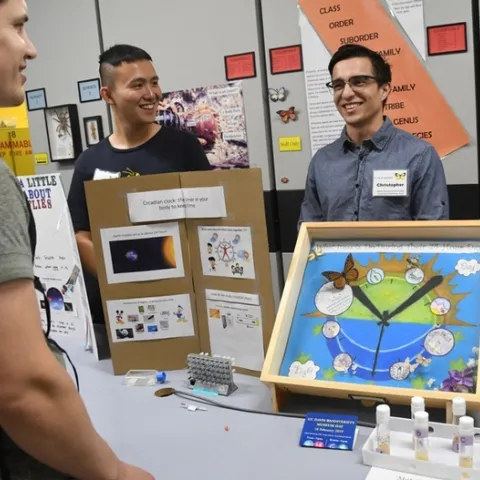
Something Wonderful Is Happening Saturday, Jan. 18 at Bohart Museum of Entomology! If you're a student and thinking about a science career, this is for you. If you're someone interested in all things science, and want to learn more, this is for you. And it's free.
On a day too cold for honey bees to fly and nearly too cold for bundled dignitaries to speak, officials celebrated the opening of the newly constructed USDA-ARS bee research facility on Bee Biology Road, UC Davis campus.
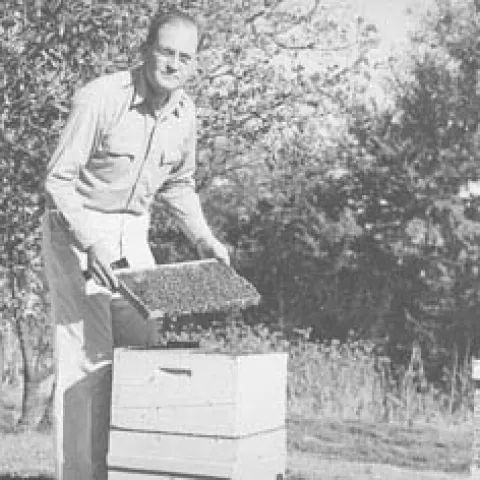
(Collaborative history of the UC Davis bee biology program.) George Haymaker Vansell (1892-1954) was a student at UC Davis who eventually helped with the instruction of entomology and apiculture beginning in 1920 and ending in 1931.
When you watch bats emerge at dusk in the summer from the Yolo Causeway, have you ever wondered what insects they eat? UC Davis doctoral candidate Ann Holmes has--and she's doing research on what's in their guano (feces).
At some point, all of us encounter a pest in our home, garden, or landscape. But you're not alone! UC IPM publishes Pest Notes a series of more than 150 papers reviewed by experts in the field to provide science-based information about pests and their management.
How do fruit flies tell time? How do monarch butterflies know when to migrate? How can assassin flies overcome prey much larger than they are? How do bark beetles wreak havoc in our forests? What insects do bats eat?