UC ANR is committed to providing an accessible and inclusive web experience for all users. If you encounter an accessibility barrier or need content in an alternative or remediated accessible format, please contact anraccessibility@ucanr.edu.
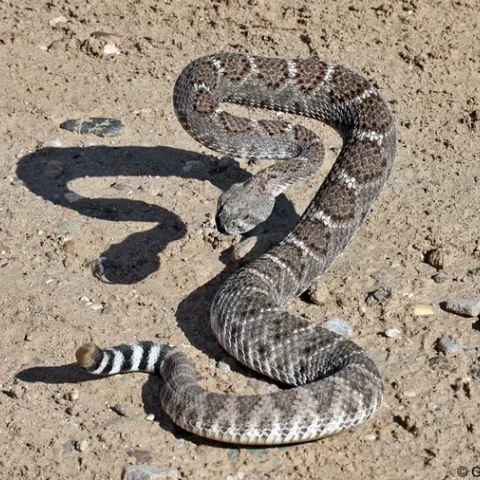
First, remember that the desire to avoid any kind of an interaction is mutual. Rattlesnakes are an important part of the ecosystem, feeding on rodents, birds, and other small animals.
Mark your calendar... Diagnosing Herbicide Symptoms 2020 course July 14-15, 2020 UC Davis Weed Day 2020 July 16, 2020 UC Davis Aquatic Weed School 2020 Sept. 2-3, 2020 UC Davis More information on these events to come.
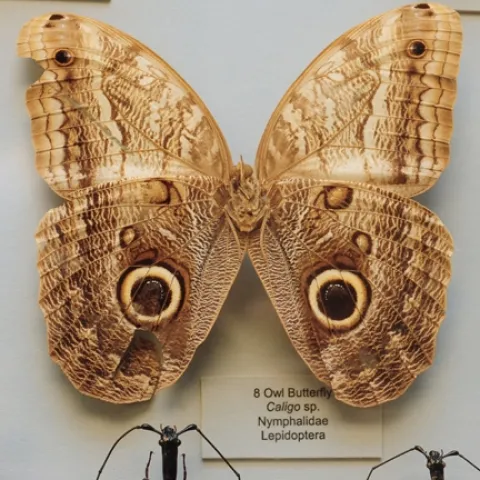
You'll see an owl butterfly at the Bohart Museum of Entomology. You'll see a great-horned owl at the Raptor Center. "Owl that" at more at the ninth annual UC Davis Biodiversity Museum Day on Saturday, Feb. 15 when 13 museums and collections showcase their projects. The event, to take place from 9 a.
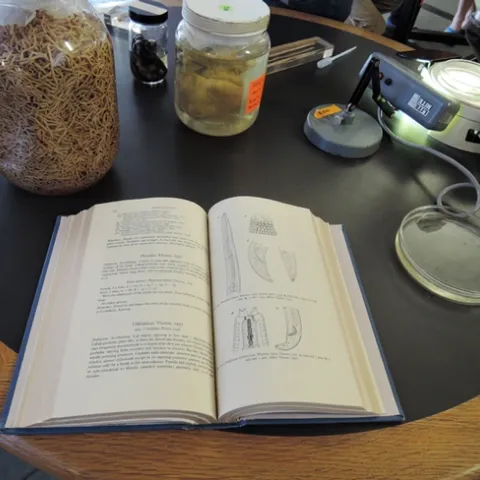
Ever watched a walking stick (stick insect) walk up your arm? Ever watched a honey bee collect nectar and pollen? Ever seen a nematode? You can do that and more at the ninth annual UC Davis Biodiversity Museum Day on Saturday, Feb. 15 when 13 museums and collections showcase their projects.
New Risk Assessments Just Posted for Invasive Weeds The U.S. Department of Agriculture's Animal and Plant Health Inspection Service ?recently posted Weed Risk Assessments for a dozen new weeds of concern. Eleven of the 12 are already documented in the West.
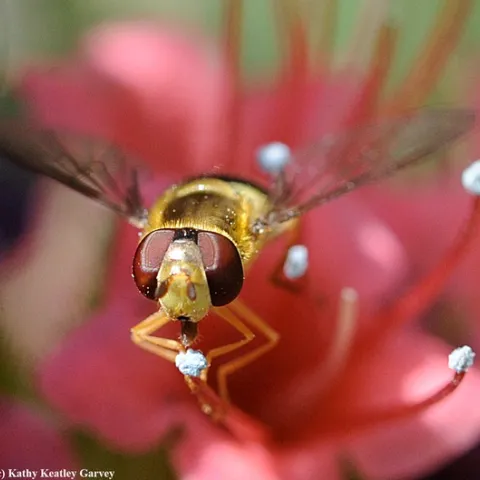
At first glance, they're often mistaken for bees, but bees they are not. They're flies. You've probably seen them hovering over flowers, which is why syprhids are commonly called "hover flies" or "flower flies." Enter Andrew Young.
We are pleased to share our 2019 Annual Report available in two formats! We have our print version and are excited to present our story map version! Special thanks to Michelle Nozzari for putting together the story map version and Deborah Curle for the print version.
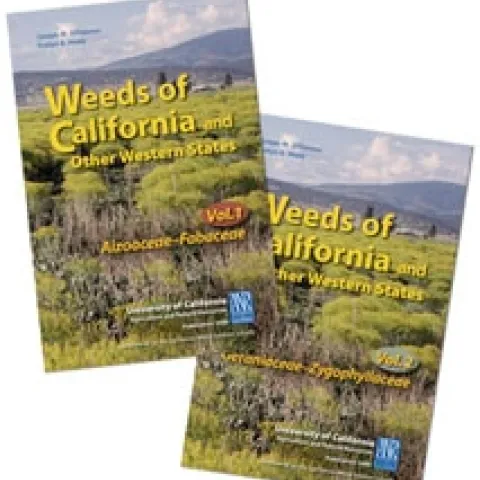
I just read Ben Faber's blog post titled "Weed ID in Your Hands" from the Topics in Subtropics blog. Ben mentions, "Who says you can't know all those wild things growing in the field you didn't put there? Here's a chance to learn what they are for cheap.
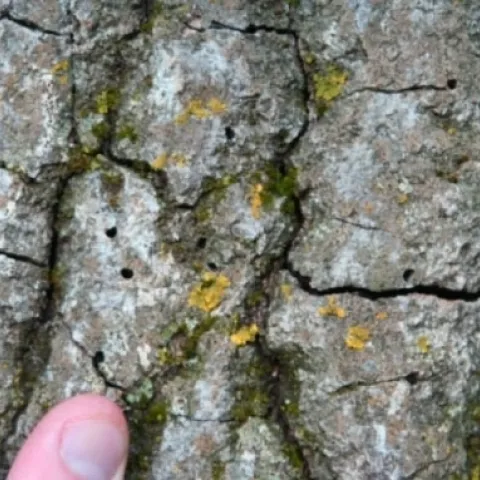
The Goldspotted Oak Borer (GSOB) (Agrilus auroguttatus) continues to kill native oaks in several areas of Southern California. Susceptible oaks include coast live oak (Quercus agrifolia), canyon live oak (Q. chrysolepis), and California black oak (Q. kelloggii).
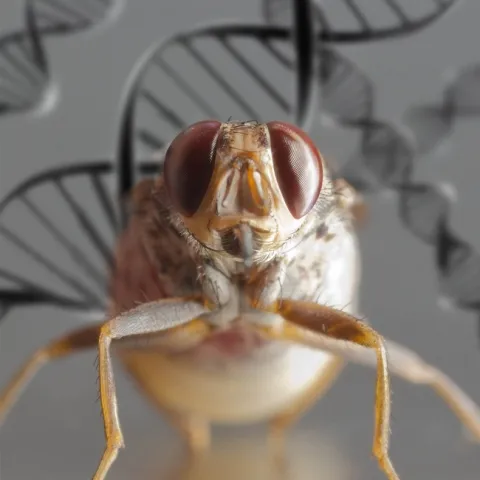
UC Davis medical entomologist-geneticist Geoffrey Attardo's tiny research subjects in Tupper Hall are receiving widespread attention on a very large scale. In less than 48 hours, nearly 500,000 people have seen thembut not in his restricted-access lab.