Pest Management & Plant Health

Primary Image
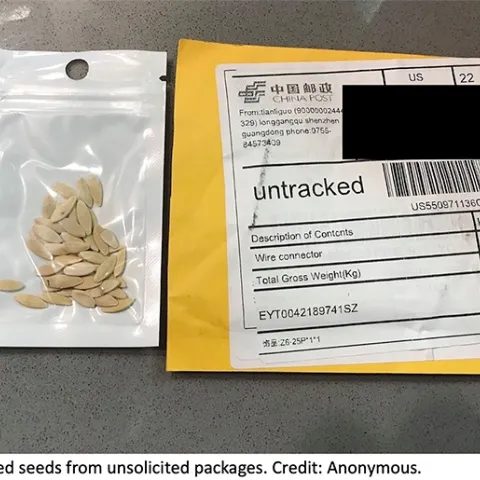
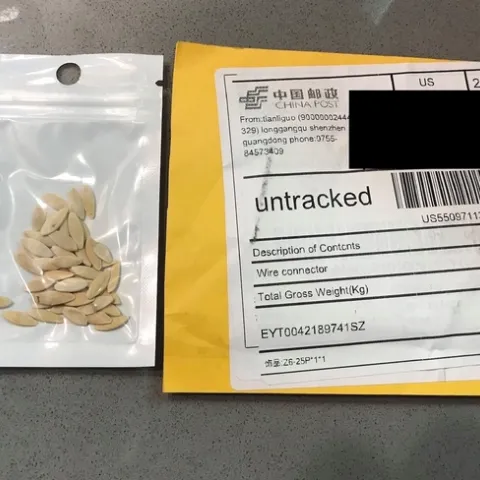
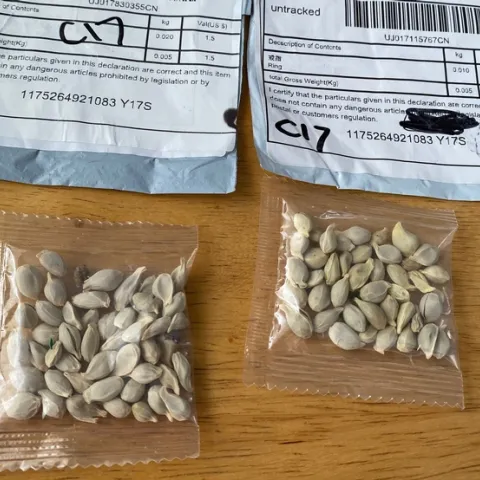
Unrequested package of seeds in a plastic bag next to the mailing envelope the seeds were delivered in. Credit: Anonymous
BLP's in OC: Article

Mysterious seeds in the mail?

July 30, 2020
By Tamara J Majcherek
Have you had unexpected seeds show up in the mail? Unknown seeds could be invasive plants, contain invasive insects, or have plant disease causing agents. Here's what the United States Department of Agriculture Animal Plant and Health Inspection Service (USDA APHIS) has to say about it.
View Article
Primary Image
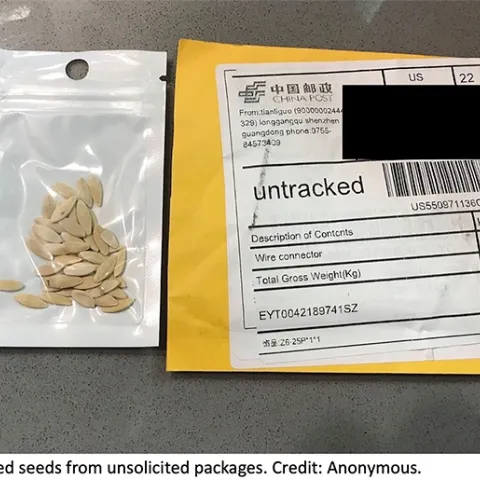
Unrequested package of seeds in a plastic bag next to the mailing envelope the seeds were delivered in. Credit: Anonymous
News from UC ANR South Coast REC and Beyond: Article

Mysterious seeds in the mail? Please Read...

July 30, 2020
By Tamara J Majcherek
Have you had unexpected seeds show up in the mail? Unknown seeds could be invasive plants, contain invasive insects, or have plant disease causing agents. Here's what the United States Department of Agriculture Animal Plant and Health Inspection Service (USDA APHIS) has to say about it.
View Article
Primary Image
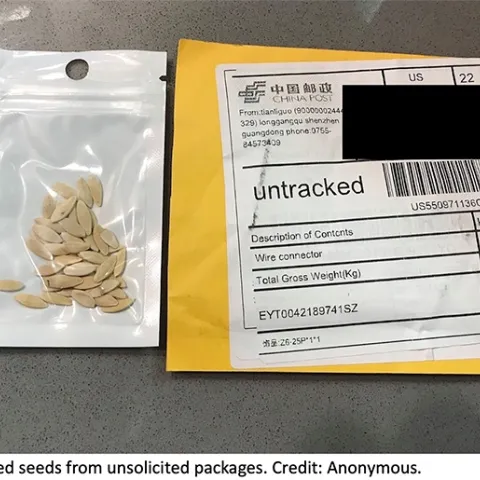
Unrequested package of seeds in a plastic bag next to the mailing envelope the seeds were delivered in. Credit Anonymous.
Southern IPM Activities: Article

Report Unsolicited Seeds to APHIS

July 29, 2020
By Cheryl A Reynolds
Author: UC Integrated Pest Management Program Have you had unexpected seeds show up in the mail? Unknown seeds could be invasive plants, contain invasive insects, or have plant disease causing agents.
View Article
Primary Image
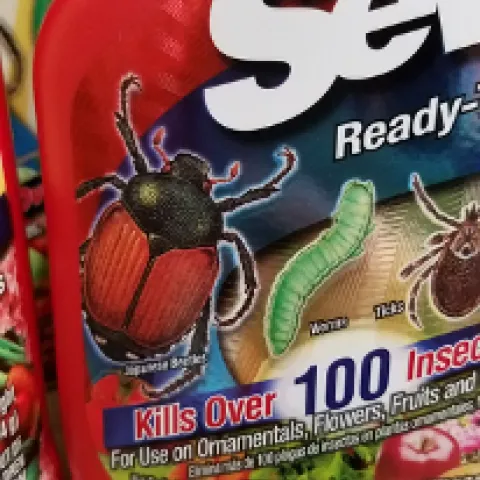
Products containing carbaryl, like some Sevin products, won't be sold in retail nursuries and garden centers.
Pests in the Urban Landscape: Article

Carbaryl Becomes Restricted Material

July 29, 2020
By Karey Windbiel-Rojas, Belinda Messenger-Sikes
Starting August 1, 2020, all pesticides containing the active ingredient carbaryl will be designated as restricted materials in California, except for baits labeled only for agricultural use.
View Article
Entomology & Nematology News: Article

Geoffrey Attardo: Focus on Tsetse Flies

July 29, 2020
By Kathy Keatley Garvey
(Editor's Note: Geoffrey Attardo, assistant professor, UC Davis Department of Entomology and Nematology, published this piece July 29, 2020 on The Conversation website. This article is republished from The Conversation under a Creative Commons license. Read the original article.
View Article
Primary Image
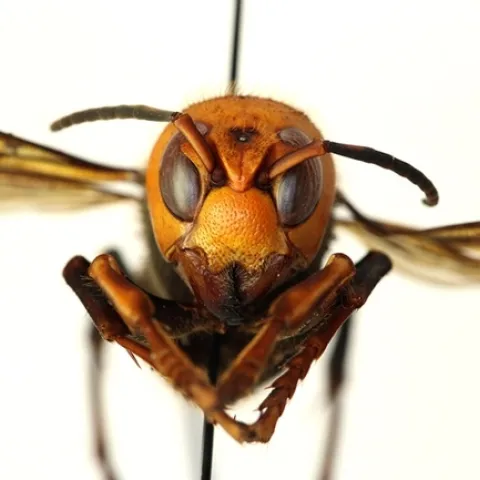
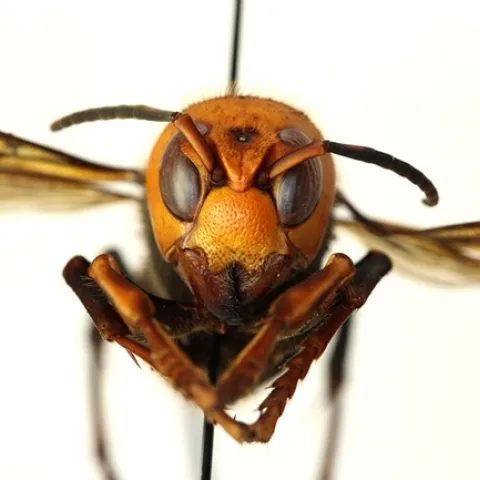
The Asian giant hornet (Photo courtesy of the Washington State Department of Agriculture)
Entomology & Nematology News: Article

Lynn Kimsey Fields Questions on Asian Giant Hornet

July 29, 2020
By Kathy Keatley Garvey
Noted hymenopterist Lynn Kimsey, director of the Bohart Museum of Entomology and professor of entomology, UC Davis Department of Entomology and Nematology, shed light on the Asian giant hornet in an interview with urban entomologist Michael Bentley on his BugBytes podcast. See https://bit.
View Article
Primary Image
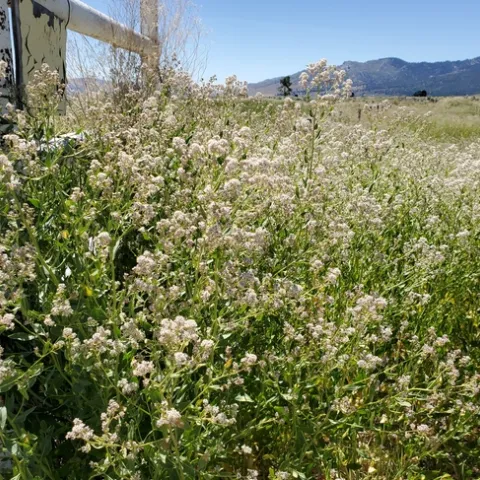
Perennial Pepperweed or Tall Whitetop
Intermountain REC News: Article

NOXIOUS WEED ALERT - PERENNIAL PEPPERWEED/TALL WHITETOP

July 29, 2020
By Thomas J Getts, Robert G Wilson
Perennial pepperweed (Lepidium latifolium) also known as tall whitetop is a root-creeping perennial weed. It is commonly found along roadsides, ditches, and drains. It is also a big problem in pastures, non-cropland, and even cropland that is not tilled on a yearly basis.
View Article
Primary Image
Unlabeled seeds from unsolicited packages. (Credit: Washington State Department of Agriculture.)
The Stanislaus Sprout: Article

Report Unsolicited Seeds to APHIS

July 29, 2020
By Anne E Schellman
[From Pests in the Urban Landscape blog] Have you had unexpected seeds show up in the mail? Unknown seeds could be invasive plants, contain invasive insects, or have plant disease causing agents.
View Article
Primary Image
Unlabeled seeds from unsolicited packages.
Pests in the Urban Landscape: Article

Report Unsolicited Seeds to APHIS

July 28, 2020
Have you had unexpected seeds show up in the mail? Unknown seeds could be invasive plants, contain invasive insects, or have plant disease causing agents. Here's what the United States Department of Agriculture Animal Plant and Health Inspection Service (USDA APHIS) has to say about it.
View Article