Pest Management & Plant Health

Primary Image
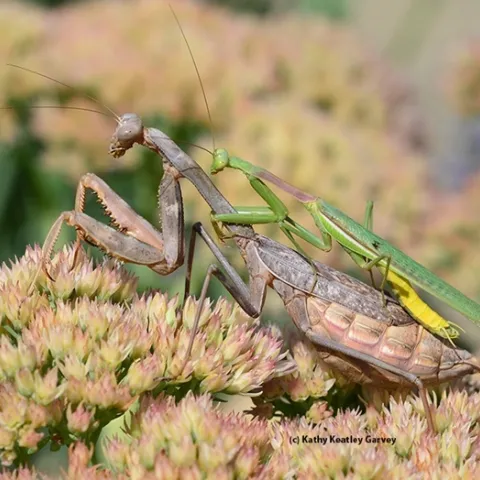
It's an urban myth that "Female mantids always eat males they mate with." Lynn Kimsey's response: "Only if the male isn't fast enough." (Photo by Kathy Keatley Garvey)
Bug Squad: Article

About Those Urban Myths in Entomology

March 23, 2021
By Kathy Keatley Garvey
Professor Lynn Kimsey of the UC Davis Department of Entomology and Nematology and director of the Bohart Museum of Entomology, knows her insects and she knows the urban myths associated with them.
View Article
Primary Image
CUTLINE: First-generation, vision-based, intelligent cultivators are now available to help control weeds in specialty crops. (Photo courtesy of Steve Fennimore, University of California, Davis.)
UC Weed Science (weed control, management, ecology, and minutia): Article

Can Artificial Intelligence Help Growers Win the Weed Wars?

March 21, 2021
By Gale Perez
From the Weed Science Society of America (WSSA) HEADLINES March 17, 2021 * * * * * * * * * * * WESTMINSTER, Colorado March 17, 2021 Weed control in vegetables, flowers and herbs can be incredibly labor intensive, experts with the Weed Science Society of America (WSSA) say.
View Article
Primary Image
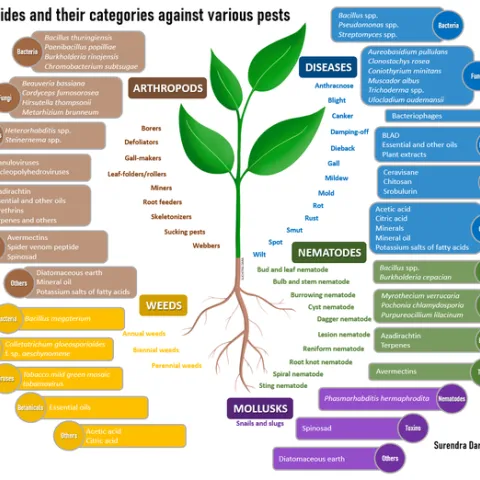
Biopesticide categories-Surendra Dara
E-Journal of Entomology and Biologicals: Article

Biopesticides: Categories and use strategies for IPM and IRM

March 18, 2021
Biopesticides contain active ingredients of natural or biological origin that include plant extracts, microorganisms, microbial metabolites, organic molecules, minerals, or other such natural materials that have pesticidal properties.
View Article
Primary Image
Three-spike goosegrass is among the most challenging weeds in orchards. (Photo courtesy of Brad Hanson/UC Davis)
UC Weed Science (weed control, management, ecology, and minutia): Article

Adviser helps growers tackle orchard weed management

March 18, 2021
By Gale Perez
From the Western Farm Press March 17, 2021 By Lee Allen ********** Brad Hanson gets down and dirty in his line of work as a weed specialist with the University of California, Davis Plant Sciences Department, typically conducting field trials in a 400-mile swath of the Central Valley.
View Article
Primary Image
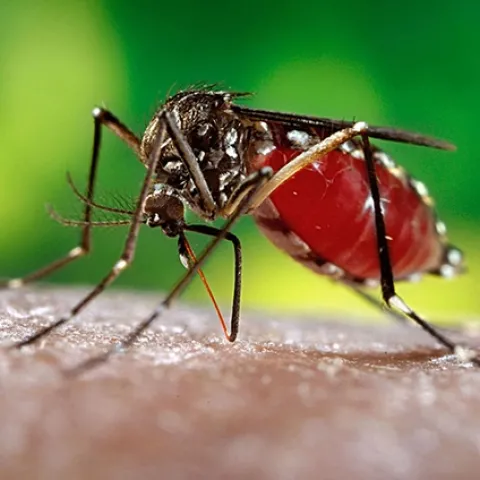
The yellow fever mosquito, Aedes aegypti, has been detected in 17 California counties since 2013. (CDC Photo)
Bug Squad: Article

Targeting the Yellow Fever Mosquito in California

March 16, 2021
By Kathy Keatley Garvey
If you've been following the startling spread of the yellow fever mosquito, Aedes aegypti, into California--it's been detected as far north as Shasta County since 2013--then you'll want to read about the innovative research underway by a team of UC Davis scientists led by medical entomologist-geneti...
View Article
Primary Image
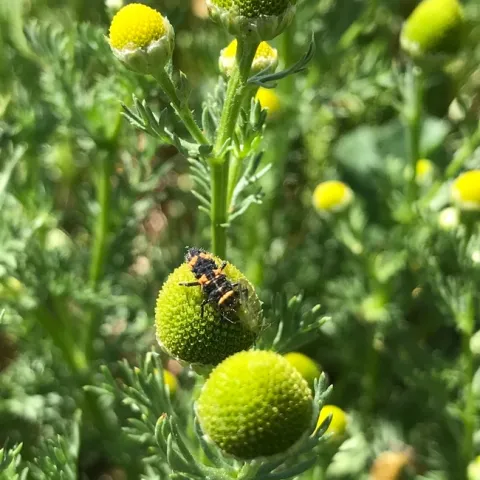
Lady beetle larva on top of yellow and green inflorescence.
Pests in the Urban Landscape: Article

Register Now: What is IPM Webinar

March 15, 2021
Have you registered for UCIPM Urban & Community Program's first open webinar? This Thursday, March 18 from 1:00-2:00pm PDT we will cover What is Integrated Pest Management? Click here to register. This week's webinar is the first of a new monthly webinar series that is free and open to the public.
View Article
Primary Image
Figure 1. Electric weed control unit manufacturer by Zasso operating at Lewis Brown Research Center in Corvallis, OR. The electricity is applied through the metal probes. The electric resistance heats up the plant, producing steam.
UC Weed Science (weed control, management, ecology, and minutia): Article

Managing herbicide resistance with electric weed control

March 11, 2021
By Gale Perez
From the Weeders of the West (WoW) blog March 11, 2021 Marcelo Moretti is a Professor in the Dept. of Horticulture at Oregon State University and an alumnus of UC Davis and California State University, Fresno.
View Article
Primary Image
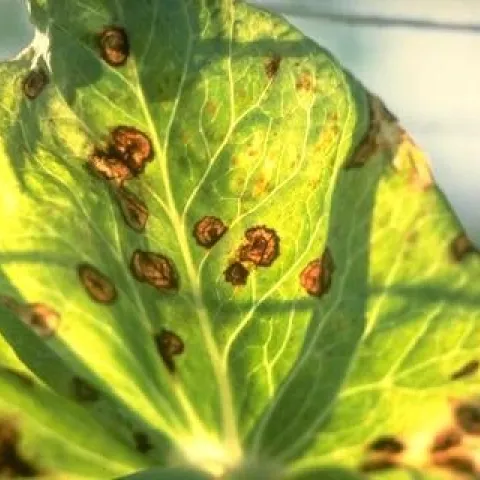
A yellow green sweet pea leaf with brown spots from a fungal disease.
Pests in the Urban Landscape: Article

Does my plant have a disease?

March 9, 2021
By Belinda Messenger-Sikes
Figuring out what's wrong with your plant takes a little detective work. Plants can look unhealthy for a number of reasons, including diseases, pest insects, or even environmental conditions like sunburn, too much water, not enough water, wind damage, and other issues.
View Article