UC ANR is committed to providing an accessible and inclusive web experience for all users. If you encounter an accessibility barrier or need content in an alternative or remediated accessible format, please contact anraccessibility@ucanr.edu.
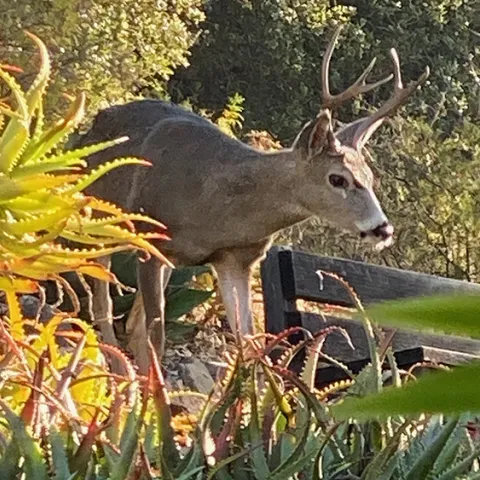
Two most common are mule deer and black-tailed deer. Both eat shrubs, vines, fruit and nut trees, garden vegetables, grasses, and small flowering plants. Deer dislike some plants, especially when other more palatable plants are available. Signs/Symptoms Hoof prints two to three inches long, split in the…
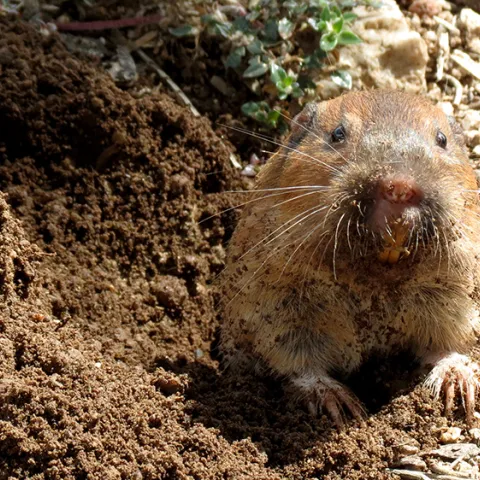
Gophers are small burrowing rodents that feed on the roots of plants. A single gopher can inflict considerable damage in a short time. They live up to three years and eat a wide variety of vegetation, usually what they encounter while digging. Sometimes gophers feed above ground, venturing only a…
Raccoons are smart, dexterous mammals that can become very aggressive when cornered. When searching for den or food, they can be extremely destructive to homes and gardens. Raccoons communicate using a variety of sounds including purring, growling, hissing, and whistling. They eat plants and animals,…
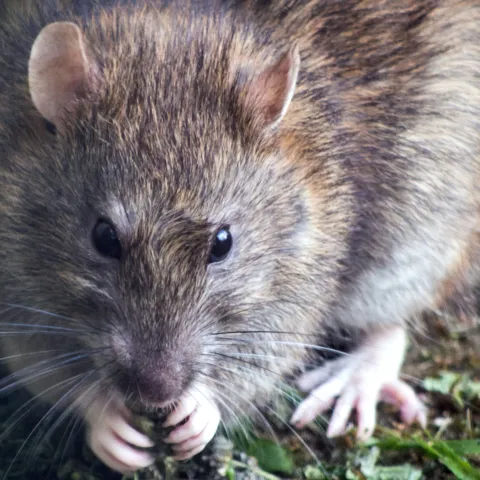
Rats are among the most common pests in Marin homes and gardens. Norway rats (Rattus norvegicus) also known as brown, sewer, or wharf rats, are mostly nocturnal. They constantly explore and learn about their environment, memorizing pathways, obstacles, and locations of food and water. Roof rats (Rattus…
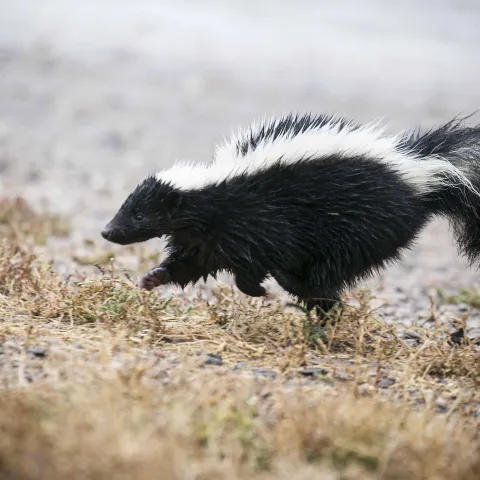
Triangular-shaped head, short legs and long, sharp, non-retractable claws. Spray can be squirted accurately as far as six to 10 feet away as a defense mechanism. Live in burrows. Eat a varied diet. Excellent sense of smell and good hearing, but very poor vision. Healthy skunks are mild-tempered. They prefer…
Solving Problems | Top 20 Problems | Garden Pests | Weeds & Invasives | Extreme Conditions | Other Garden Problems | Biological Control & Natural Enemies | Reducing Harmful Chemicals in the Garden Vertebrate Pests - Birds, Mammals, and Reptiles A vertebrate is an animal with a backbone…
By Susan Rosenthal Having covered the first two major salvia groups, the small leaf (woody stemmed) and deciduous perennial salvias, this month's plants of the month are in the third and final group - the rosette- and clump-forming salvias.Rosette-forming species include S. argenta, S lyrata, S…
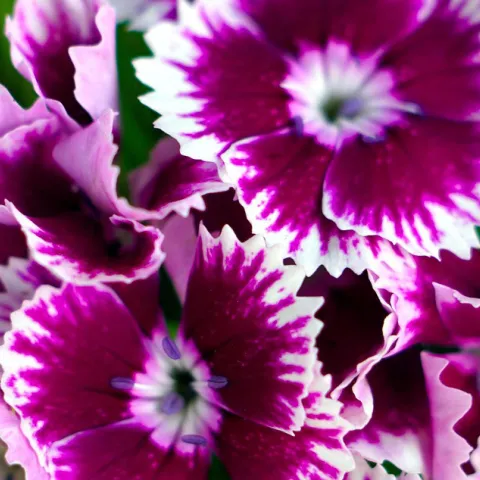
References to the plant genus Dianthus go back as far as the Greek botanist Theophrastus. He named these plants from the Caryophyllaceae family “divine flower” (dios = divine plus anthos = flower).
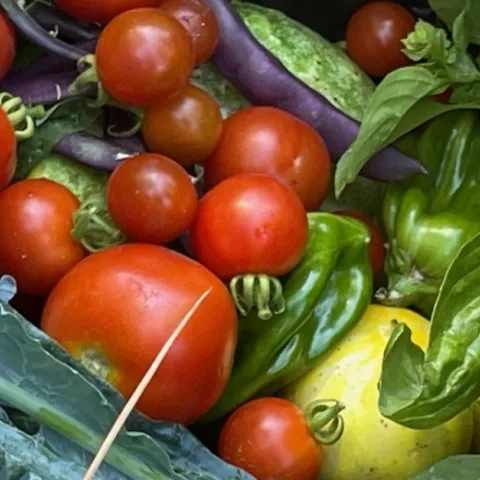
Just in time for Spring, Sonoma County Master Gardeners invite you to a Neighborhood Food Gardening Fair. The event will offer expert Master Gardener advice on seed starting and garden concerns. Free seeds while supplies last.
Yana Valachovic, a member of UC ANR's Fire Network with a specialty in community resilience and the built environment, visited the sites of the L.A. fires to look for examples where surviving homes withstood the ferocity of the fire and for signs of defensible space and home hardening in action.